Fostering the Use of Technology to Uphold Regulatory Effectiveness in Supervision Act
Summary
What This Bill Does
The FUTURES Act requires covered financial regulatory agencies to assess whether their technology and procurement practices are adequate for modern bank supervision. Congress finds that banking regulators often lack sufficient real-time information, that outdated technology creates vulnerabilities in risk and compliance monitoring, and that rapid financial-firm use of artificial intelligence requires regulators to have better technology, expertise, and skills. Within 180 days, each covered agency must assess how existing technologies challenge real-time supervision, including core IT infrastructure, supervisory technologies, market-risk monitoring tools, and data collection, storage, processing, and security. Each agency must also assess its procurement rules and protocols and identify opportunities within its authority to streamline them, including how procurement rules affect testing of new technology. Within 18 months after those assessments and every five years thereafter, the covered agencies must coordinate and jointly report to House Financial Services and Senate Banking committees on hardware and software used for supervision and advanced analytics, procurement practices, streamlining opportunities, technology categories purchased from vendors or developed internally or by contractors, and related supervisory modernization issues, while avoiding disclosures that would risk agency, regulated-entity, or market-participant systems.
Who Benefits and How
Federal banking regulators benefit from a structured review of supervisory technology gaps and procurement obstacles. Bank examination teams benefit if agencies modernize tools for real-time risk, compliance, and market monitoring. Congressional financial-services committees benefit from recurring reports on supervisory technology and procurement practices. Financial technology vendors benefit from agency attention to procurement streamlining and new supervisory technology testing. Depository institutions benefit if regulators use more accurate, timely, and secure supervisory data. Financial stability watchdogs benefit from stronger technology to identify trends, noncompliance, cybersecurity weaknesses, and AI-related risks.
Who Bears the Burden and How
Covered agency technology offices must complete 180-day assessments and support recurring joint reports. Agency procurement officials must examine rules, protocols, and streamlining opportunities. Banking supervisory staff must document technology limitations, data gaps, and analytics needs. Covered agencies must coordinate reports in a way that avoids sensitive system disclosures. Regulated entities may face more data-driven and real-time supervisory scrutiny if agencies modernize tools. Vendors and contractors may face procurement review, cybersecurity expectations, and performance scrutiny when agencies evaluate supervisory technology.
Key Provisions
- Requires covered banking regulators to assess supervisory technology challenges within 180 days.
- Requires assessment of core IT, supervisory tools, market-risk monitoring, data collection, storage, processing, and security.
- Requires agencies to assess procurement rules and identify streamlining opportunities within their authority.
- Requires a coordinated joint report within 18 months after assessments and every five years thereafter.
- Requires reporting on hardware, software, advanced analytics, procurement practices, vendors, contractors, and modernization needs.
- Protects sensitive technology, regulated-entity, and market-participant information from risky disclosure.
Evidence Chain:
This summary is generated from the full bill text using AI analysis. Expand "Detailed Analysis" below for identified beneficiaries/burden bearers with clause-level evidence links.
At a Glance
What This Bill Does
Requires federal banking regulators within 180 days to assess how existing supervisory technologies and procurement rules affect real-time supervision of regulated entities, including core IT, supervisory tools, market-risk monitoring, data collection, storage, processing, and security; requires a joint report within 18 months and every five years describing hardware, software, procurement practices, streamlining opportunities, advanced analytics, cybersecurity, vendor and contractor use, AI-related supervisory capability, and modernization needs without exposing sensitive system details.
Key Policy Areas
Financial Regulation, Banking Supervision, Technology Procurement, Cybersecurity
Primary Purpose
Requires federal banking regulators within 180 days to assess how existing supervisory technologies and procurement rules affect real-time supervision of regulated entities, including core IT, supervisory tools, market-risk monitoring, data collection, storage, processing, and security; requires a joint report within 18 months and every five years describing hardware, software, procurement practices, streamlining opportunities, advanced analytics, cybersecurity, vendor and contractor use, AI-related supervisory capability, and modernization needs without exposing sensitive system details.
Policy Domains
House resolution provisions
Identified Gains
- Federal banking regulators
- Bank examination teams
- Congressional financial services committees
- Financial technology vendors
- Depository institutions
- Financial stability watchdogs
Identified Costs
- Covered agency technology offices
- Agency procurement officials
- Banking supervisory staff
- Covered agencies preparing reports
- Regulated financial entities
- Supervisory technology contractors
Sponsors
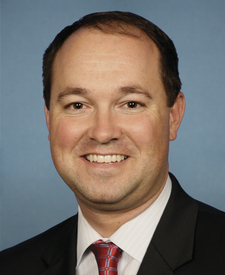

Legislative Progress
ReportedPlaced on the Union Calendar, Calendar No. 617.
Reported (Amended) by the Committee on Financial Services. H. Rept. …
Ordered to be Reported (Amended) by the Yeas and Nays: …
Committee Consideration and Mark-up Session Held
Referred to the House Committee on Financial Services.
Introduced in House
Mr. Stutzman (for himself and Mr. Foster) introduced the following …
Stakeholder Effects
cui bono?How this legislation distributes effects. Mention counts reflect frequency, not effect magnitude.
Agency procurement officials, Congressional financial services committees, Covered agency technology offices
Positive-direction: Congressional financial services committees, Federal banking regulators
Negative-direction: Agency procurement officials, Covered agency technology offices
Bill Structure & Actor Mappings
Who is "The Secretary" in each section?
- "house"
- → House Financial Services Committee
- "senate"
- → Senate Banking Committee
- "agencies"
- → Covered federal banking regulators
We use a combination of our own taxonomy and classification in addition to large language models to assess meaning and potential beneficiaries. High confidence means strong textual evidence. Always verify with the original bill text.
Learn more about our methodology