To amend the Export Control Reform Act of 2018 to provide for a ten-year statute of limitations for export control violations.
Summary
What This Bill Does
This bill amends section 1760 of the Export Control Reform Act of 2018 to establish a 10-year limitations period for export-control enforcement. A civil action, suit, or proceeding seeking any civil fine, penalty, or forfeiture under the section may not be entertained if it begins more than 10 years after the violation on which it is based. The bill specifies that commencement includes issuing a charging letter. For criminal enforcement, a person may not be prosecuted, tried, or punished for an offense under subsection (a) unless the indictment is found or the information is instituted within 10 years after the latest date of the violation on which it is based.
Who Benefits and How
BIS export enforcement staff benefit from a clear 10-year civil enforcement window and confirmation that a charging letter starts proceedings. Justice Department prosecutors benefit from a 10-year criminal charging period for export-control offenses. National-security investigators benefit because long-running export-diversion cases often require extended evidence collection. U.S. exporters benefit from a defined outer limit on civil and criminal exposure. Export compliance counsel benefit from clearer advice on record retention and limitations risk. Congressional export-control overseers benefit from a statutory enforcement timeline.
Who Bears the Burden and How
Companies and individuals accused of export-control violations face up to 10 years of civil or criminal exposure. Exporters must preserve records and compliance evidence for longer periods to defend against older allegations. BIS charging officials must track violation dates and charging-letter timing. Federal courts must apply the new limitation rule in civil enforcement. Criminal defense counsel must analyze latest-violation dates under the 10-year indictment rule. Export-control violators who relied on shorter general limitation periods lose that defense.
Key Provisions
- Establishes a 10-year limitation period for civil Export Control Reform Act fines, penalties, and forfeitures.
- Provides that issuing a charging letter commences a civil action, suit, or proceeding.
- Requires criminal indictment or information within 10 years after the latest violation date.
- Applies the 10-year rule to enforcement under section 1760 of the Export Control Reform Act.
Evidence Chain:
This summary is generated from the full bill text using AI analysis. Expand "Detailed Analysis" below for identified beneficiaries/burden bearers with clause-level evidence links.
At a Glance
What This Bill Does
Adds a 10-year statute of limitations to Export Control Reform Act civil and criminal enforcement by barring civil fines, penalties, forfeitures, actions, suits, or proceedings filed more than 10 years after the violation, treating a charging letter as commencement, and requiring criminal indictment or information within 10 years after the latest violation date.
Key Policy Areas
Export Controls, Trade Compliance, Criminal Enforcement, Civil Penalties
Primary Purpose
Adds a 10-year statute of limitations to Export Control Reform Act civil and criminal enforcement by barring civil fines, penalties, forfeitures, actions, suits, or proceedings filed more than 10 years after the violation, treating a charging letter as commencement, and requiring criminal indictment or information within 10 years after the latest violation date.
Policy Domains
House resolution provisions
Identified Gains
- BIS export enforcement staff
- Justice Department prosecutors
- National security investigators
- U.S. exporters with limitation clarity
- Export compliance counsel
- Congressional export control overseers
Identified Costs
- Companies accused of export violations
- Individuals accused of export violations
- Exporters preserving compliance records
- BIS charging officials
- Federal courts
- Criminal defense counsel
Sponsors

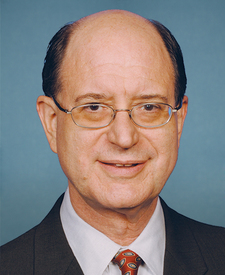
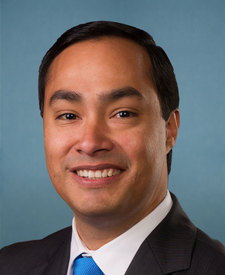

Legislative Progress
ReportedOrdered to be Reported by the Yeas and Nays: 44 …
Committee Consideration and Mark-up Session Held
Referred to the House Committee on Foreign Affairs.
Introduced in House
Mr. Mackenzie (for himself and Mr. Castro of Texas) introduced …
Stakeholder Effects
cui bono?How this legislation distributes effects. Mention counts reflect frequency, not effect magnitude.
BIS export enforcement staff, Justice Department prosecutors, National security investigators
Companies accused of export violations, Exporters preserving compliance records, U.S. exporters with limitation clarity
Positive-direction: U.S. exporters with limitation clarity
Negative-direction: Companies accused of export violations, Exporters preserving compliance records
Bill Structure & Actor Mappings
Who is "The Secretary" in each section?
- "bis"
- → BIS export enforcement staff
- "doj"
- → Department of Justice export-control prosecutors
We use a combination of our own taxonomy and classification in addition to large language models to assess meaning and potential beneficiaries. High confidence means strong textual evidence. Always verify with the original bill text.
Learn more about our methodology