MATCH Act
Summary
What This Bill Does
The MATCH Act addresses export controls on semiconductor manufacturing equipment and components. Its sense of Congress says such controls are one of the United States' most effective defenses of foundational technology, that advanced computing and artificial intelligence are transforming military affairs, and that U.S. and allied advantages in advanced-node integrated circuits, production equipment, and software should be protected. It names companies such as CXMT, Hua Hong, Huawei, SMIC, YMTC, AMEC, NAURA, Piotech, ACM Research, PNC Process Systems, Skyverse, SMEE, Kingsemi, and Hwatsing as engaged in advanced-node integrated-circuit production efforts tied to the People's Republic of China's military-civil fusion efforts. Substantively, within 60 days and annually thereafter, covered agency heads must identify all covered semiconductor manufacturing equipment and covered facilities and report them to Congress. They must immediately pursue allied countrywide controls and license requirements for covered facilities with a licensing policy of denial, brief Congress within 90 days on diplomatic progress and incentives, publish regulations within 150 days and annually to ensure U.S. controls cover U.S.-origin equipment and covered facilities in countries of concern, and either certify by day 150 that all allied supplier countries have implemented equivalent controls or report countries and gaps.
Who Benefits and How
U.S. semiconductor-equipment manufacturers benefit from a more coordinated allied control regime that may reduce diversion to PRC military-linked facilities. Allied supplier countries benefit from clear U.S. expectations and incentives for adopting controls. U.S. national-security agencies benefit from annual equipment and facility lists and required regulations. Congressional export-control committees benefit from 60-day lists, 90-day briefings, and 150-day certification or gap reports. Domestic advanced-node chip producers benefit if controls slow foreign military-civil fusion competitors. Export-control compliance teams benefit from clearer covered-equipment and covered-facility definitions once regulations are issued.
Who Bears the Burden and How
Covered agency heads must conduct annual reviews, diplomatic engagement, congressional briefings, regulations, certifications, and reports. BIS licensing staff must implement controls over U.S.-origin semiconductor manufacturing equipment and covered facilities in countries of concern. Semiconductor equipment exporters face broader countrywide controls, license requirements, and licensing-denial policies. Allied governments face U.S. diplomatic pressure to adopt equivalent controls and licensing policies. PRC semiconductor manufacturers named in the findings face higher risk of being cut off from U.S. and allied equipment and servicing. Covered facilities in countries of concern face comprehensive U.S. restrictions and servicing controls.
Key Provisions
- States congressional findings on semiconductor manufacturing equipment controls, advanced computing, and PRC military-civil fusion.
- Requires covered agency heads to identify covered equipment and facilities within 60 days and annually.
- Directs immediate diplomatic engagement for allied countrywide controls and license-denial policies.
- Requires a 90-day congressional briefing on allied-control diplomacy, incentives, lagging countries, and U.S. measures.
- Requires regulations within 150 days and annually to cover U.S.-origin equipment and covered facilities in countries of concern.
- Requires certification that allied supplier countries have implemented controls or reports identifying gaps.
Evidence Chain:
This summary is generated from the full bill text using AI analysis. Expand "Detailed Analysis" below for identified beneficiaries/burden bearers with clause-level evidence links.
At a Glance
What This Bill Does
Directs U.S. export-control agency heads to identify covered semiconductor manufacturing equipment and covered facilities within 60 days and annually, pursue allied countrywide controls and license-denial policies for covered facilities, brief Congress within 90 days on diplomatic progress and incentives, publish regulations within 150 days and annually to cover U.S.-origin equipment and facilities in countries of concern, certify allied controls or report gaps by day 150, and maintain ongoing semiconductor-equipment controls aimed at China-linked facilities and advanced-node production.
Key Policy Areas
Semiconductors, Export Controls, China, National Security
Primary Purpose
Directs U.S. export-control agency heads to identify covered semiconductor manufacturing equipment and covered facilities within 60 days and annually, pursue allied countrywide controls and license-denial policies for covered facilities, brief Congress within 90 days on diplomatic progress and incentives, publish regulations within 150 days and annually to cover U.S.-origin equipment and facilities in countries of concern, certify allied controls or report gaps by day 150, and maintain ongoing semiconductor-equipment controls aimed at China-linked facilities and advanced-node production.
Policy Domains
House resolution provisions
Identified Gains
- U.S. semiconductor equipment manufacturers
- Allied supplier countries
- U.S. national security agencies
- Congressional export control committees
- Domestic advanced node chip producers
- Export control compliance teams
Identified Costs
- Covered agency heads
- BIS licensing staff
- Semiconductor equipment exporters
- Allied governments
- PRC semiconductor manufacturers
- Covered facilities in countries of concern
Sponsors


Legislative Progress
ReportedOrdered to be Reported in the Nature of a Substitute …
Committee Consideration and Mark-up Session Held
Referred to the House Committee on Foreign Affairs.
Introduced in House
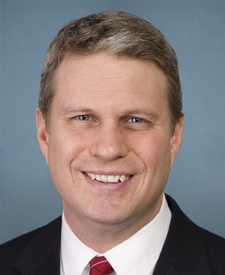
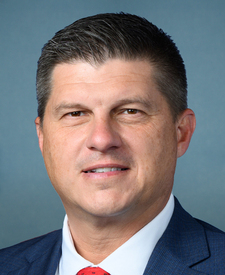
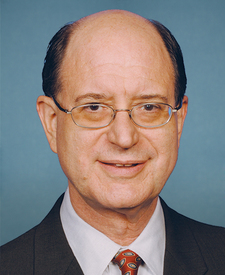
Mr. Baumgartner (for himself, Mr. Moolenaar, Mr. McCormick, Mr. Mannion, …
Stakeholder Effects
cui bono?How this legislation distributes effects. Mention counts reflect frequency, not effect magnitude.
BIS licensing staff, Congressional export control committees, Covered agency heads
Positive-direction: Congressional export control committees, U.S. national security agencies
Negative-direction: BIS licensing staff, Covered agency heads
Covered facilities in countries of concern, PRC semiconductor manufacturers, Semiconductor equipment exporters
Positive-direction: U.S. semiconductor equipment manufacturers
Negative-direction: Covered facilities in countries of concern, PRC semiconductor manufacturers, Semiconductor equipment exporters
Bill Structure & Actor Mappings
Who is "The Secretary" in each section?
- "bis"
- → BIS licensing staff
- "state"
- → State Department diplomatic staff
- "defense"
- → Defense technology security staff
- "commerce"
- → Commerce Department export control staff
We use a combination of our own taxonomy and classification in addition to large language models to assess meaning and potential beneficiaries. High confidence means strong textual evidence. Always verify with the original bill text.
Learn more about our methodology