Government Audit and Accountability of Federally Funded State-Administered Programs Act
Summary
What This Bill Does
The Government Audit and Accountability of Federally Funded State-Administered Programs Act requires the Comptroller General to create a High Risk List focused on federal funds administered by states and local governments. Within two years after enactment and periodically thereafter, GAO must submit to Congress a list identifying program areas and administrative practices that present the greatest integrity risk for federal pass-through and other state-administered programs. The list must identify systematic vulnerability patterns, assess best practices that strengthened integrity and reduced waste, fraud, and abuse, identify federal tools, resources, and technical assistance available to address those vulnerabilities, and recommend congressional action. GAO must primarily rely on existing publicly available oversight, audit, and investigative materials, including federal and state auditor, inspector general, and attorney general findings, single audit reports under 31 U.S.C. 7502, and other federal oversight and program-integrity data. GAO may supplement those materials with independent analysis of publicly available federal program data, but the bill does not authorize GAO to compel information from states or local governments or conduct independent audits of state or local programs.
Who Benefits and How
Congressional oversight committees benefit from a recurring GAO High Risk List focused on state-administered federal funds. Federal grant integrity officials benefit from GAO synthesis of vulnerability patterns, best practices, tools, and technical assistance. State auditors and inspectors general benefit because their existing findings can inform federal oversight without new federal audit compulsion. Taxpayer watchdog organizations benefit from a public framework for identifying waste, fraud, and abuse risks in pass-through programs. State and local program managers benefit from identified best practices and technical-assistance resources. Federal program offices benefit from recommendations that point Congress toward systemic fixes rather than isolated incidents.
Who Bears the Burden and How
The Comptroller General and GAO analysts must assemble the High Risk List, analyze public oversight materials, apply professional auditing and evaluation standards, identify vulnerability patterns, and prepare recommendations. Congressional committees must review and respond to recommendations. State-administered programs identified as high risk face oversight scrutiny. Federal grant-making agencies may need to provide tools, technical assistance, and program-integrity support. State and local governments may face public criticism if their administrative practices are identified as systematic vulnerabilities. Auditors and inspectors general may see their public findings used in broader federal high-risk analysis.
Key Provisions
- Requires GAO to submit a High Risk List for federally funded state-administered programs within two years and periodically thereafter.
- Covers federal funds administered by states and local governments, including pass-through programs subject to single audit rules.
- Requires identification of high-risk program areas, administrative practices, vulnerability patterns, best practices, tools, technical assistance, and congressional recommendations.
- Directs GAO to rely primarily on existing public oversight, audit, investigative, single-audit, and program-integrity materials.
- Allows supplemental analysis of public federal program data.
- Clarifies that GAO may not compel state or local information or conduct independent audits of state or local programs under this section.
Evidence Chain:
This summary is generated from the full bill text using AI analysis. Expand "Detailed Analysis" below for identified beneficiaries/burden bearers with clause-level evidence links.
At a Glance
What This Bill Does
Requires the Comptroller General to submit to Congress within two years and periodically thereafter a High Risk List for federally funded state-administered programs, identifying program areas and administrative practices that pose the greatest risk to federal funds administered by states and local governments, assessing integrity best practices, identifying federal tools and technical assistance, and recommending congressional responses using existing oversight, audit, investigative, single-audit, and program-integrity materials without authorizing GAO to compel state or local information or conduct independent state-program audits.
Key Policy Areas
Federal Grants, GAO Oversight, State Administration, Program Integrity
Primary Purpose
Requires the Comptroller General to submit to Congress within two years and periodically thereafter a High Risk List for federally funded state-administered programs, identifying program areas and administrative practices that pose the greatest risk to federal funds administered by states and local governments, assessing integrity best practices, identifying federal tools and technical assistance, and recommending congressional responses using existing oversight, audit, investigative, single-audit, and program-integrity materials without authorizing GAO to compel state or local information or conduct independent state-program audits.
Policy Domains
House resolution provisions
Identified Gains
- Congressional oversight committees
- Federal grant integrity officials
- State auditors
- Inspectors general
- Taxpayer watchdog organizations
- State program managers
- Local program managers
- Federal program offices
Identified Costs
- Comptroller General
- GAO analysts
- Congressional committees
- State administered programs identified as high risk
- Federal grant making agencies
- State governments with vulnerability patterns
- Local governments with vulnerability patterns
Sponsors
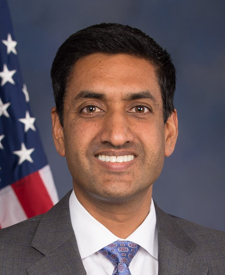
Ro Khanna
D-CA | Primary Sponsor
Legislative Progress
ReportedReceived in the Senate and Read twice and referred to …
Received; read twice and referred to the Committee on Homeland …
Motion to reconsider laid on the table Agreed to without …
On motion to suspend the rules and pass the bill, …
Passed/agreed to in House: On motion to suspend the rules …
DEBATE - The House proceeded with forty minutes of debate …
Considered under suspension of the rules. (consideration: CR H3933-3934)
Mr. Gill (TX) moved to suspend the rules and pass …
Ordered to be Reported (Amended) by the Yeas and Nays: …
Committee Consideration and Mark-up Session Held
Stakeholder Effects
cui bono?How this legislation distributes effects. Mention counts reflect frequency, not effect magnitude.
Comptroller General, Congressional oversight committees, Federal grant integrity officials
Positive-direction: Congressional oversight committees, Federal grant integrity officials, State auditors, Taxpayer watchdog organizations
Negative-direction: Comptroller General, Federal grant making agencies, GAO analysts, State administered programs identified as high risk
Bill Structure & Actor Mappings
Who is "The Secretary" in each section?
- "gao"
- → Government Accountability Office
- "congress"
- → Congressional oversight committees
- "comptroller"
- → Comptroller General of the United States
We use a combination of our own taxonomy and classification in addition to large language models to assess meaning and potential beneficiaries. High confidence means strong textual evidence. Always verify with the original bill text.
Learn more about our methodology