To amend the Internal Revenue Code of 1986 to define the term free trade agreement for purposes of the clean vehicle credit.
Analysis under review: This bill has generated analysis that may be too generic or incomplete. Clause-level evidence remains available below.
Summary
What This Bill Does
This bill restricts which countries count as 'free trade agreement' partners for purposes of the electric vehicle (EV) tax credit. Under current law, EVs qualify for a tax credit only if their battery critical minerals come from the US or a free trade agreement partner. This bill requires that a free trade agreement must be formally approved by Congress to count.
Who Benefits and How
Domestic critical mineral miners and processors benefit because fewer foreign competitors will qualify under the stricter definition. US-based EV battery manufacturers who source domestically also benefit from reduced foreign competition. Countries with formal Congressional-approved trade agreements (Canada, Mexico, Australia, etc.) maintain their competitive advantage.
Who Bears the Burden and How
EV manufacturers face higher costs and supply constraints because fewer countries' minerals will qualify for the tax credit. Countries like Japan that have executive agreements but not formal Congressional-approved trade deals may see their minerals disqualified. Consumers may face higher EV prices or fewer qualifying vehicle options.
Key Provisions
- Defines 'free trade agreement' as an international agreement approved by Congress
- Requires the agreement to eliminate duties on substantially all trade
- Applies to vehicles placed in service after enactment
Evidence Chain:
This summary is generated from the full bill text using AI analysis. Expand "Detailed Analysis" below for identified beneficiaries/burden bearers with clause-level evidence links.
At a Glance
What This Bill Does
Narrows the definition of 'free trade agreement' for clean vehicle tax credit eligibility to require formal Congressional approval, limiting executive branch discretion in determining which countries' critical minerals qualify for the EV tax credit.
Key Policy Areas
Taxation, Trade, Clean Energy, Automotive
Primary Purpose
Narrows the definition of 'free trade agreement' for clean vehicle tax credit eligibility to require formal Congressional approval, limiting executive branch discretion in determining which countries' critical minerals qualify for the EV tax credit.
Policy Domains
Main Body
Identified Gains
- Domestic critical mineral miners
- US-based battery manufacturers
- Countries with formal FTAs (Canada, Mexico, Australia)
Identified Costs
- EV manufacturers with diverse supply chains
- Countries with executive agreements only (e.g., Japan)
- Consumers seeking affordable EVs
Legislative Progress
ReportedReported with an amendment, committed to the Committee of the …
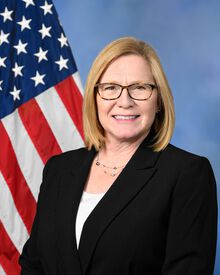
Mrs. Fischbach introduced the following bill; which was referred to …
Stakeholder Effects
cui bono?How this legislation distributes effects. Mention counts reflect frequency, not effect magnitude.
Domestic critical mineral miners and processors, Foreign critical mineral suppliers from non-FTA countries
Positive-direction: Domestic critical mineral miners and processors
Negative-direction: Foreign critical mineral suppliers from non-FTA countries
EV manufacturers with global supply chains, US-based EV battery manufacturers sourcing domestically
Positive-direction: US-based EV battery manufacturers sourcing domestically
Negative-direction: EV manufacturers with global supply chains
Countries with executive-only trade agreements (e.g., Japan)
Bill Structure & Actor Mappings
Who is "The Secretary" in each section?
Key Definitions
Terms defined in this bill
An international agreement approved by Congress that eliminates duties and other restrictive regulations of commerce on substantially all the trade between the United States and 1 or more other countries.
We use a combination of our own taxonomy and classification in addition to large language models to assess meaning and potential beneficiaries. High confidence means strong textual evidence. Always verify with the original bill text.
Learn more about our methodology