Bioindustrial Scale-Up for Supply Chains and Energy Resiliency Act of 2026
Summary
What This Bill Does
The Bioindustrial Scale-Up for Supply Chains and Energy Resiliency Act directs the Secretary of Energy to establish at least two precommercial bioindustrial technology maturation facilities by September 30, 2030. The facilities must operate as user facilities for governmental and nongovernmental customers and help biotechnology-based products move from research through pilot testing, demonstration, early manufacturing, and commercial deployment.
DOE must choose geographically diverse facilities based on industry infrastructure gaps, unique capabilities, available biological inputs, regional expertise, domestic supply-chain infrastructure, and workforce-development potential. The first facility must be planned and built within two years while planning proceeds for later facilities. Activities may include pilot projects, process scale-up, equipment and software development, waste-stream conversion, worker training, secure data exchange, cybersecurity, and techno-economic analysis. Facilities may use open-access policies, private cost sharing, and collaboration with National Laboratories, BioMADE, federal agencies, universities, rural communities, nonprofits, and state or local governments.
Within 90 days DOE must seek public information on existing facilities and collaboration practices, and within 180 days it must submit a strategic plan describing capacity needs, locations, timelines, equipment, network design, data sharing, and coordination with the Commerce and Defense Departments. Federal employee inventions produced at a covered facility enter the public domain, while nonfederal inventors retain protection under applicable law and their contracts. DOE must issue public annual reports for eight years. The bill authorizes $225.5 million for fiscal years 2026 through 2030.
Who Benefits and How
Bioindustrial manufacturers and biotechnology startups benefit from shared pilot-scale equipment, fermentation capacity, technical expertise, and lower-cost pathways to prove commercial scale. Universities, National Laboratories, and nonfederal researchers gain access to facilities and secure collaborative data systems. Rural communities and regions selected for facilities may gain workforce training, construction, and manufacturing jobs. Nonfederal inventors retain contractual intellectual-property protection.
Who Bears the Burden and How
DOE bioindustrial facility administrators must plan, build, operate, secure, and report on the facilities while coordinating a national network. Federal laboratories and partner agencies must contribute expertise and align capabilities. Federal appropriations bear the $225.5 million authorization, with private users potentially contributing through cost-sharing arrangements. Federal employees lose private ownership of facility inventions because those inventions enter the public domain.
Key Provisions
- Requires at least two precommercial bioindustrial user facilities by September 30, 2030.
- Requires the first facility to be planned and built within two years and later facilities to be planned concurrently.
- Directs DOE to consider industry gaps, geography, domestic inputs, supply-chain infrastructure, and workforce needs.
- Allows pilot projects, process scale-up, workforce training, secure data exchange, cybersecurity, and economic analysis.
- Permits open access, private cost sharing, and collaboration with laboratories, agencies, universities, rural communities, and industry.
- Requires a request for information within 90 days and a strategic plan within 180 days.
- Places federal employee inventions in the public domain while protecting nonfederal inventions under contracts and applicable law.
- Requires eight years of public reports and authorizes $225.5 million for fiscal years 2026 through 2030.
Evidence Chain:
This summary is generated from the full bill text using AI analysis. Expand "Detailed Analysis" below for identified beneficiaries/burden bearers with clause-level evidence links.
At a Glance
What This Bill Does
Requires the Department of Energy to establish at least two open-access bioindustrial technology maturation user facilities by September 2030 and authorizes $225.5 million for fiscal years 2026 through 2030.
Key Policy Areas
Biotechnology, Manufacturing, Energy, Federal Research Facilities, Workforce Development
Primary Purpose
Requires the Department of Energy to establish at least two open-access bioindustrial technology maturation user facilities by September 2030 and authorizes $225.5 million for fiscal years 2026 through 2030.
Policy Domains
Sections 2 and 3 bioindustrial technology maturation facilities
Identified Gains
- Bioindustrial manufacturers
- Biotechnology startups
- National Laboratory research teams
- University biotechnology researchers
- Rural facility host communities
- Nonfederal facility inventors
Identified Costs
- DOE bioindustrial facility administrators
- Federal laboratory support teams
- Federal bioindustrial appropriations accounts
- Federal employee inventors
- Private facility cost-sharing participants
Sponsors
Legislative Progress
In CommitteeReferred to the House Committee on Science, Space, and Technology.
Introduced in House
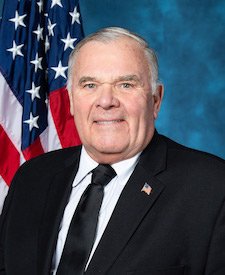
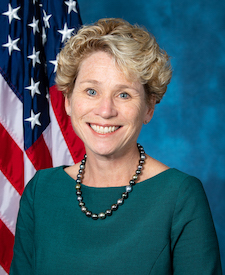
Mr. Baird (for himself, Ms. Houlahan, Mrs. Bice, and Mr. …
Stakeholder Effects
cui bono?How this legislation distributes effects. Mention counts reflect frequency, not effect magnitude.
Bioindustrial manufacturers seeking scale-up capacity, Biotechnology innovators seeking commercialization, Biotechnology startups using precommercial facilities
DOE bioindustrial facility administrators, Federal bioindustrial appropriations accounts, Federal employee inventors at covered facilities
Bill Structure & Actor Mappings
Who is "The Secretary" in each section?
- "secretary"
- → Secretary of Energy
- "department"
- → Department of Energy
- "covered_facility"
- → DOE bioindustrial technology maturation facility
Key Definitions
Terms defined in this bill
Use of living organisms, cells, tissues, enzymes, or cell-free systems to make nonpharmaceutical materials and products.
Use of biological systems to produce goods or services at commercial scale.
Infrastructure, data, or research resources available without licensing or intellectual-property barriers and equitably accessible to public and private entities.
Development, testing, and scale-up through prototyping, pilot demonstration, early manufacturing, and market entry.
We use a combination of our own taxonomy and classification in addition to large language models to assess meaning and potential beneficiaries. High confidence means strong textual evidence. Always verify with the original bill text.
Learn more about our methodology