SNAP Benefits Fairness Act of 2025
Summary
What This Bill Does
The SNAP Benefits Fairness Act of 2025 amends section 5(e)(6) of the Food and Nutrition Act of 2008. It strikes subparagraph (B) and redesignates the following subparagraphs, which removes an existing limitation in the excess shelter expense deduction structure for SNAP. The bill takes effect on the first January 1 after enactment.
Removing that limitation affects how shelter costs are deducted when calculating SNAP household income and benefit levels. Households with high rent, mortgage, utility, or other shelter expenses may receive larger deductions and therefore higher SNAP benefits if they qualify under the updated formula.
Who Benefits and How
SNAP households with high shelter costs benefit because removing the limitation can increase the shelter deduction used in benefit calculations. Low-income renters and homeowners participating in SNAP benefit if higher deductible shelter expenses reduce countable income. Anti-hunger organizations and housing stability advocates benefit from a formula change that better accounts for housing costs in food assistance eligibility and benefit amounts.
Who Bears the Burden and How
State SNAP eligibility agencies must update calculation systems, notices, and caseworker guidance for the amended deduction rule. SNAP caseworkers must apply the revised formula after the effective date. Federal SNAP benefit accounts bear higher costs if larger shelter deductions increase benefit amounts for eligible households.
Key Provisions
- Amends Food and Nutrition Act section 5(e)(6) by striking subparagraph (B).
- Redesignates following subparagraphs after the shelter deduction limitation is removed.
- Expands SNAP benefit calculations for households with qualifying high shelter expenses.
- Provides an effective date of the first January 1 after enactment.
Evidence Chain:
This summary is generated from the full bill text using AI analysis. Expand "Detailed Analysis" below for identified beneficiaries/burden bearers.
At a Glance
What This Bill Does
Amends the Food and Nutrition Act of 2008 to remove a SNAP excess shelter deduction limitation, with the change taking effect on the first January 1 after enactment.
Key Policy Areas
SNAP, Nutrition Assistance, Housing Costs, Low-Income Households
Primary Purpose
Amends the Food and Nutrition Act of 2008 to remove a SNAP excess shelter deduction limitation, with the change taking effect on the first January 1 after enactment.
Policy Domains
Sections 2 and 3 SNAP shelter deduction amendment and effective date
Identified Gains
Contextual inference, no direct clause citation- SNAP households with high shelter costs
- Low-income renters receiving SNAP
- Low-income homeowners receiving SNAP
- Anti-hunger organizations
Contextual inference, no direct clause citation
Identified Costs
Contextual inference, no direct clause citation- State SNAP eligibility agencies
- SNAP caseworkers
- Federal SNAP benefit accounts
Contextual inference, no direct clause citation
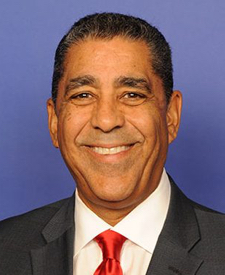
Sponsors




Legislative Progress
In CommitteeReferred to the Subcommittee on Nutrition and Foreign Agriculture.
Sponsor introductory remarks on measure. (CR H510-511)
Mrs. McIver (for herself and Ms. Brown) introduced the following …
Referred to the House Committee on Agriculture.
Introduced in House
Bill Structure & Actor Mappings
Who is "The Secretary" in each section?
- "household"
- → SNAP household with high shelter expenses
- "state_agency"
- → State SNAP eligibility agency
We use a combination of our own taxonomy and classification in addition to large language models to assess meaning and potential beneficiaries. High confidence means strong textual evidence. Always verify with the original bill text.
Learn more about our methodology