American Families First Assistance Act
Summary
What This Bill Does
The American Families First Assistance Act removes Temporary Assistance for Needy Families from the existing provision that authorizes states to determine eligibility for qualified aliens. It replaces that discretion with a federal rule: notwithstanding other law, a qualified alien is ineligible for TANF unless the person fits one of three specified exceptions.
The federal exclusion does not apply to a lawful permanent resident; a person within the Cuban and Haitian entrant category who is a national of Cuba; or a person lawfully residing in the United States under a Compact of Free Association. The exceptions remove the new federal bar but do not guarantee a cash payment. Applicants must still satisfy TANF financial, family, work, time-limit, residency, and state-plan rules.
Other qualified-alien categories are not excepted by the text. These include refugees, asylees, people granted withholding of removal, qualifying parolees, conditional entrants, Haitian entrants who are not Cuban nationals, and qualified battered or trafficking-related applicants unless they separately hold an excepted status. The bill governs the alien's eligibility; it does not expressly terminate assistance for a U.S.-citizen child in a mixed-status family.
Who Benefits and How
Federal and state TANF accounts may spend less on excluded adults and children. Citizen applicants and excepted qualified aliens may face less competition for a capped block-grant pool. Lawful permanent residents, qualifying Cuban nationals, and Compact residents retain a route to TANF under otherwise applicable rules.
Who Bears the Burden and How
Excluded low-income immigrants lose potential cash assistance and related services. States lose authority to adopt broader eligibility policies. TANF agencies must reprogram systems, verify detailed immigration categories, notify affected families, and handle appeals. Charities and local emergency-assistance programs may absorb added demand, and mixed-status households may face more complex benefit calculations.
Key Provisions
- Repeals state discretion over qualified-alien TANF eligibility.
- Prohibits TANF eligibility for most qualified aliens.
- Protects lawful permanent residents from the new federal bar.
- Protects qualifying Cuban nationals from the new federal bar.
- Protects lawful Compact residents from the new federal bar.
- Preserves ordinary TANF financial and program requirements.
- Requires states to distinguish detailed immigration categories.
- Limits the exclusion to the alien's TANF eligibility.
- Provides no express bar on benefits for eligible citizen children.
Evidence Chain:
This summary is generated from the full bill text using AI analysis. Expand "Detailed Analysis" below for identified beneficiaries/burden bearers with clause-level evidence links.
At a Glance
What This Bill Does
Replaces state discretion over qualified-alien TANF eligibility with a nationwide exclusion, while preserving potential eligibility for lawful permanent residents, qualifying Cuban nationals, and people lawfully residing under a Compact of Free Association.
Key Policy Areas
Temporary Assistance for Needy Families, Immigrant Benefit Eligibility, State Welfare Administration, Federal Block Grants, Family Cash Assistance
Primary Purpose
Replaces state discretion over qualified-alien TANF eligibility with a nationwide exclusion, while preserving potential eligibility for lawful permanent residents, qualifying Cuban nationals, and people lawfully residing under a Compact of Free Association.
Policy Domains
Section 2 federal TANF exclusion and narrow status exceptions
Identified Gains
- Federal TANF accounts avoiding excluded payments
- State TANF accounts retaining block-grant funds
- Citizen TANF applicants sharing capped funds
- Lawful permanent residents retaining potential eligibility
- Qualifying Cuban nationals retaining potential eligibility
- Compact residents retaining potential eligibility
Identified Costs
- Refugees seeking TANF assistance
- Asylees seeking TANF assistance
- Haitian entrants outside the Cuban exception
- Qualified battered immigrants seeking TANF
- State TANF agencies verifying immigration categories
- States losing broader eligibility discretion
- Charities serving excluded immigrant families
- Mixed-status families navigating benefit rules
Sponsors
Legislative Progress
In CommitteeReferred to the House Committee on Ways and Means.
Introduced in House
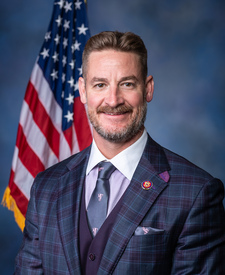
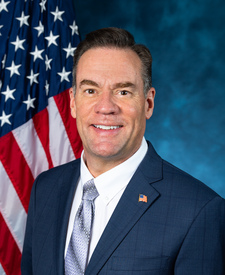
Mr. Steube (for himself and Mr. Burchett) introduced the following …
Stakeholder Effects
cui bono?How this legislation distributes effects. Mention counts reflect frequency, not effect magnitude.
Asylees seeking TANF assistance, Compact-resident TANF applicants, Haitian entrants outside the exception
State TANF accounts, State TANF eligibility staff, States offering broader alien eligibility
Citizen TANF applicants, Mixed-status immigrant families, Qualified-alien children outside exceptions
Positive-direction: Citizen TANF applicants
Negative-direction: Mixed-status immigrant families, Qualified-alien children outside exceptions
Bill Structure & Actor Mappings
Who is "The Secretary" in each section?
- "administrator"
- → State TANF agency verifying immigration status
- "cuban_applicant"
- → Qualifying Cuban national applying for TANF
- "compact_resident"
- → Compact resident applying for TANF
- "excluded_applicant"
- → Qualified-alien TANF applicant outside an exception
- "permanent_resident"
- → Lawful permanent resident applying for TANF
Note: {'scope_ids': ['qualified_alien_tanf_exclusion'], 'description': 'The listed statuses avoid the new federal exclusion but do not guarantee TANF; ordinary state-plan and individual eligibility rules remain, and the text does not expressly deny assistance payable to a separately eligible U.S.-citizen child.'}
Key Definitions
Terms defined in this bill
A noncitizen within the benefit-eligibility categories defined in section 431 of the 1996 welfare law.
The new rule making a qualified alien ineligible for TANF unless a listed status exception applies.
Lawful permanent residence, qualifying Cuban nationality under paragraph 7, or lawful Compact of Free Association residence under paragraph 8.
We use a combination of our own taxonomy and classification in addition to large language models to assess meaning and potential beneficiaries. High confidence means strong textual evidence. Always verify with the original bill text.
Learn more about our methodology