Kids in Classes Act
Summary
What This Bill Does
The Kids in Classes Act requires every local educational agency receiving Title I funding to establish a failure-to-open direct-payment plan by the first school year beginning after enactment. Maintaining and agreeing to carry out the plan becomes a condition of Title I eligibility.
The plan activates when a covered public elementary or secondary school fails for more than three days in a school year to offer in-person instruction to every student who wants to attend, if the failure is related to a public-health emergency or collective-bargaining action. A parent must receive the school's per-student, per-school-day Title I amount multiplied by the number of affected closure days. Payments should be made each closure day to the greatest extent practicable.
Parents may use the money for curriculum, books, instructional or online materials, educational technology, tutoring, classes outside the home, private-school tuition, testing, diagnostic tools, or educational therapies for students with disabilities. Parents must submit receipts showing qualified use or return unused amounts within 30 days after in-person instruction resumes.
The findings state that prolonged closures impose larger learning and future-earnings losses on low-income students, students of color, students with lower mathematics performance, English learners, and students receiving subsidized meals.
Who Benefits and How
Parents of Title I students receive direct funding to replace instruction during qualifying closures. Low-income students and English learners gain resources for tutoring, curriculum, technology, and alternative classes. Students with disabilities gain access to funded diagnostics and educational therapies. Private schools, tutors, educational-technology vendors, curriculum publishers, and therapy providers may receive parent-directed spending.
Who Bears the Burden and How
Local educational agencies must create plans, calculate daily per-student amounts, make rapid payments, collect receipts, recover unused money, and maintain Title I compliance. Covered public schools lose control of the affected per-day Title I allocation during qualifying closures. Parents must document every eligible expenditure or return funds within 30 days. Education Department Title I staff must oversee the new eligibility condition. School systems affected by public-health emergencies or collective-bargaining actions face added fiscal pressure to maintain in-person instruction.
Key Provisions
- Conditions Title I eligibility on a failure-to-open direct-payment plan.
- Triggers payments after more than three qualifying closure days.
- Calculates payments from each school's daily per-student Title I allocation.
- Requires parent payments each closure day when practicable.
- Authorizes spending on specified instructional, tuition, testing, and therapy expenses.
- Requires receipts or return of unused funds within 30 days after reopening.
- Defines covered schools, covered funding amounts, and qualified educational expenses.
Evidence Chain:
This summary is generated from the full bill text using AI analysis. Expand "Detailed Analysis" below for identified beneficiaries/burden bearers with clause-level evidence links.
At a Glance
What This Bill Does
Conditions Title I eligibility on local educational agencies establishing daily direct-payment plans that transfer a closed school's per-student Title I allocation to parents for qualified educational expenses after more than three days without optional in-person instruction because of a public-health emergency or collective-bargaining action.
Key Policy Areas
Title I Funding, In-Person Instruction, Parent-Directed Education Spending, School Closures, Educational Equity
Primary Purpose
Conditions Title I eligibility on local educational agencies establishing daily direct-payment plans that transfer a closed school's per-student Title I allocation to parents for qualified educational expenses after more than three days without optional in-person instruction because of a public-health emergency or collective-bargaining action.
Policy Domains
Section 3 Title I closure-payment condition
Identified Gains
- Parents of Title I students
- Low-income students affected by closures
- English learners affected by closures
- Students with disabilities needing educational therapies
- Tutoring providers serving closed-school students
- Private schools accepting displaced students
- Educational-technology vendors
- Curriculum publishers
Identified Costs
- Local educational agency payment staff
- Title I schools closed beyond three days
- School-system receipt-review staff
- Parents documenting educational purchases
- Parents returning unused closure funds
- Education Department Title I administrators
- School labor-relations planners
- School public-health planners
Sponsors
Legislative Progress
In CommitteeIntroduced in House
Referred to the House Committee on Education and Workforce.
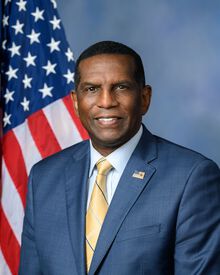
Mr. Owens introduced the following bill; which was referred to …
Stakeholder Effects
cui bono?How this legislation distributes effects. Mention counts reflect frequency, not effect magnitude.
English learners affected by closures, Low-income students affected by closures, Private schools accepting displaced students
Positive-direction: English learners affected by closures, Low-income students affected by closures, Private schools accepting displaced students, Students with disabilities needing educational therapies, Tutoring providers serving closed-school students
Negative-direction: Title I schools closed beyond three days
Parents documenting educational purchases, Parents of Title I students
Local educational agency payment staff
Bill Structure & Actor Mappings
Who is "The Secretary" in each section?
- "school"
- → Title I-funded public elementary or secondary school
- "student"
- → Student seeking in-person instruction
- "overseer"
- → Department of Education Title I program
- "recipient"
- → Parent of a student attending a covered school
- "administrator"
- → Local educational agency receiving Title I funds
Note: {'scope_ids': ['title_i_closure_payments'], 'description': 'Title I funds normally remain under school-system control, but after the statutory closure threshold the per-student daily amount must be paid to parents and restricted to documented qualified expenses.'}
Key Definitions
Terms defined in this bill
A public elementary or secondary school receiving Title I funds.
Specified curriculum, instructional materials, technology, online resources, tutoring, outside classes, private tuition, testing, diagnostics, or disability educational therapies.
A covered school's Title I allocation divided first by enrolled students and then by funded school days.
We use a combination of our own taxonomy and classification in addition to large language models to assess meaning and potential beneficiaries. High confidence means strong textual evidence. Always verify with the original bill text.
Learn more about our methodology