HR7907-119

In Committee

AI-Ready Bio-Data Standards Act

119th Congress Introduced Mar 12, 2026

Summary

What This Bill Does

The AI-Ready Bio-Data Standards Act gives the National Institute of Standards and Technology two years to facilitate definitions, standards, data-management resources, and cybersecurity frameworks that make biological datasets from qualifying federally funded research usable for training artificial-intelligence models. NIST must define AI-ready, biomanufacturing, biotechnology, and qualified federally funded research. Qualification factors include the amount of federal funding, a recipient's capability and expertise, dataset size, and any additional factor NIST selects.

NIST must design the framework so it does not demand expertise or resources beyond those available to covered research recipients. Within one year of enactment it must inventory existing biotechnology standards and federally funded biological datasets, then publish the inventory on a NIST website within another year. NIST and the National Science Foundation must test the framework within two years for clarity, usability, and undue burden. NIST must review it within one year after establishment and annually thereafter.

Federal research-funding agencies may ask NIST for help developing biological-data standards and management plans for AI training and may transfer resources for that work. NIST must create a public central repository for agency standards and plans, a public database through which agencies may publish AI-ready biological datasets, and an agency request mechanism. It must solicit public input and consult USDA, Defense, Energy, NASA, NIH, NSF, other agencies, biotechnology companies, and academics.

Within 180 days NIST must establish an advisory group of at least 12 federal, academic, private-sector, and publisher representatives. The group recommends standards and journal guidelines and reports to NIST. The Federal Acquisition Regulatory Council must revise acquisition rules as needed. NIST provides an interim report after one year and annual reports beginning after two years; GAO reports after five years on effectiveness and recipient burden. The section terminates ten years after enactment.

Who Benefits and How

Artificial-intelligence developers and biotechnology researchers gain more consistently formatted biological datasets and a public point of access. Federal research agencies receive NIST advice, shared standards, management-plan resources, and a central repository. Researchers reusing federally funded biological data face lower discovery and interoperability costs. Federal research sponsors gain a tested framework and recurring burden review. The public gains access to inventories, agency standards, and datasets that agencies publish.

Who Bears the Burden and How

Recipients of qualifying federal research funding may need to format, curate, document, and secure biological datasets under new standards. NIST must hire staff, convene consultations, build repositories, provide agency assistance, review standards annually, and report to Congress. NSF must conduct testing with NIST. Participating agencies must develop standards and plans, publish materials, or transfer resources when requesting assistance. Advisory-group members, the Federal Acquisition Regulatory Council, academic publishers, and GAO receive implementation or review work.

Key Provisions

  • Establishes definitions and standards for AI-ready biological datasets within two years.
  • Conditions covered research on funding, recipient capability, expertise, dataset size, and NIST-selected factors.
  • Requires data-management resources and cybersecurity frameworks.
  • Requires an inventory, public website, standards repository, and public dataset database.
  • Tests clarity, applicability, and recipient burden with NSF.
  • Lets federal agencies request NIST assistance and transfer supporting resources.
  • Creates a 12-member-or-larger advisory group within 180 days.
  • Requires acquisition-rule revisions, annual NIST reports, and a five-year GAO review.
  • Terminates the framework ten years after enactment.

Evidence Chain:

This summary is generated from the full bill text using AI analysis. Expand "Detailed Analysis" below for identified beneficiaries/burden bearers with clause-level evidence links.

At a Glance

What This Bill Does

Directs NIST to establish and maintain a ten-year federal framework for making qualifying federally funded biological datasets usable for artificial-intelligence training, including common definitions, standards, cybersecurity resources, testing, public inventories and repositories, agency assistance, an advisory group, acquisition-rule revisions, and recurring oversight reports.

Key Policy Areas

Biological Data Standards, Artificial Intelligence Research, Federally Funded Research, Biotechnology Data Infrastructure, Federal Data Governance

Primary Purpose

Directs NIST to establish and maintain a ten-year federal framework for making qualifying federally funded biological datasets usable for artificial-intelligence training, including common definitions, standards, cybersecurity resources, testing, public inventories and repositories, agency assistance, an advisory group, acquisition-rule revisions, and recurring oversight reports.

Policy Domains

Biological Data Standards Artificial Intelligence Research Federally Funded Research Biotechnology Data Infrastructure Federal Data Governance

Section 2 AI-ready biological data framework

Identified Gains
  • AI developers using biological datasets
  • Biotechnology researchers reusing federal data
  • Federal research agencies requesting NIST assistance
  • Researchers discovering public biological datasets
  • Research sponsors comparing data standards
  • Academic journals developing dataset guidelines
  • Public users of the NIST dataset database
Model: codex-gpt-5 | Version: bill_summary_v2 | Source: ih
AI developers using biological datasets:
Public users of the NIST dataset database:
Research sponsors comparing data standards:
Biotechnology researchers reusing federal data:
Academic journals developing dataset guidelines:
Researchers discovering public biological datasets:
Federal research agencies requesting NIST assistance:
Identified Costs
  • Federally funded biological-data producers
  • NIST biological-data standards staff
  • NSF framework-testing staff
  • Federal research-agency data officers
  • AI-ready data advisory-group members
  • Federal acquisition-rule staff
  • GAO biotechnology-review staff
Model: codex-gpt-5 | Version: bill_summary_v2 | Source: ih
NSF framework-testing staff:
Federal acquisition-rule staff:
GAO biotechnology-review staff:
AI-ready data advisory-group members:
NIST biological-data standards staff:
Federal research-agency data officers:
Federally funded biological-data producers:

Legislative Progress

In Committee
Introduced Committee Passed
Mar 12, 2026

Referred to the House Committee on Science, Space, and Technology.

Mar 12, 2026

Introduced in House

Mar 12, 2026

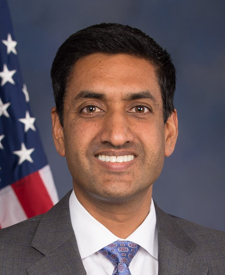
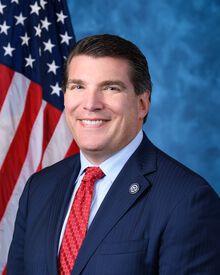
Mr. Khanna (for himself and Mr. Obernolte) introduced the following …

Stakeholder Effects

cui bono?

How this legislation distributes effects. Mention counts reflect frequency, not effect magnitude.

Government
7 mentions across 1 clause
+2 positive -5 negative

Federal acquisition-rule staff, Federal research agencies requesting NIST assistance, Federal research-agency data officers

Positive-direction: Federal research agencies requesting NIST assistance, Research sponsors comparing data standards

Negative-direction: Federal acquisition-rule staff, Federal research-agency data officers, GAO biotechnology-review staff, NIST biological-data standards staff, NSF framework-testing staff

Research & Science
4 mentions across 1 clause
+2 positive -2 negative

AI-ready data advisory-group members, Biotechnology researchers reusing federal data, Federally funded biological-data producers

Positive-direction: Biotechnology researchers reusing federal data, Researchers discovering public biological datasets

Negative-direction: AI-ready data advisory-group members, Federally funded biological-data producers

Technology
1 mention across 1 clause
+1 positive

AI developers using biological datasets

Media & Entertainment
1 mention across 1 clause
+1 positive

Academic journals developing dataset guidelines

Rural Communities
1 mention across 1 clause
+1 positive

Public users of the NIST dataset database

2/2
sections analyzed
Full impact breakdown

Bill Structure & Actor Mappings

Who is "The Secretary" in each section?

Domains
Biological Data Standards Artificial Intelligence Research Federal Data Governance
Actor Mappings
"agency_user"
→ Federal department or agency funding qualified research
"test_partner"
→ Administrator of the National Science Foundation
"oversight_body"
→ Comptroller General of the United States
"standards_lead"
→ Director of the National Institute of Standards and Technology
"covered_recipient"
→ Recipient of funding for qualified federally funded research

Note: {'scope_ids': ['ai_ready_biological_data_framework'], 'description': "The bill requires AI-ready standards but directs NIST to test and revise them when compliance exceeds recipients' available resources or expertise; agencies retain discretion over publishing datasets and NIST may reject an otherwise qualifying dataset after consulting the responsible chief data officer."}

Key Definitions

Terms defined in this bill

4 terms
"artificial intelligence-ready" §ai_ready

A biological dataset generated and formatted for effective AI-model training and for advances in AI and biotechnology research, subject to agency data-officer review.

"biological data" §biological_data

Measured, collected, or aggregated information, including associated descriptors, derived from a biological system's structure, function, or process.

"biological dataset" §biological_dataset

A discrete collection of biological data.

"qualified federally funded research" §qualified_research

Federally funded research meeting NIST-established conditions based on funding amount, recipient capability and expertise, dataset size, and other appropriate factors.

We use a combination of our own taxonomy and classification in addition to large language models to assess meaning and potential beneficiaries. High confidence means strong textual evidence. Always verify with the original bill text.

Learn more about our methodology