Justice for Hind Rajab Act
Summary
What This Bill Does
The Justice for Hind Rajab Act focuses on the January 29, 2024 attacks in Gaza City that killed Hind Rajab, members of her family, and two Palestine Red Crescent paramedics. The bill's findings attribute factual and casualty statements to cited government information, Gaza health authorities, press reports, forensic analysis, and satellite imagery. They also recite the existing Leahy Law restriction on assistance to a foreign security-force unit when the Secretary of State has credible information that the unit committed a gross human-rights violation.
Within 30 days, the Secretary of State must certify to designated congressional committees that, if credible information indicates the attacks could be war crimes and involved United States-origin weapons, United States citizens, or United States-trained IDF personnel, the Secretary will refer the findings to the Attorney General within 15 days. The Attorney General must separately certify within 30 days that DOJ will review any referral and initiate an investigation and prosecutions under the War Crimes Act as appropriate and within United States court jurisdiction.
Within 45 days, State, in consultation with Justice and the Secretary of War, must report all available federal information on the responsible units, operational motivation, Israeli investigations, involvement of United States citizens, weapons, ammunition, or training, State Department inquiries, intelligence requests, Leahy Law reviews, civilian-harm reviews, and DOJ records.
A nonbinding sense of Congress states that Israel should compensate the families of Hind Rajab and the killed paramedics and that the State Department should also compensate them if United States citizens serving in the IDF were involved.
The bill makes it United States policy to collect, analyze, and preserve evidence of possible war crimes and atrocities during the Israel-Hamas war for domestic, foreign, and international proceedings; pursue accountability under the War Crimes Act; protect civilians and medical personnel under the Geneva Conventions; and have the Attorney General investigate credible allegations of war crimes committed by United States citizens in Gaza.
Who Benefits and How
The families of Hind Rajab and the killed paramedics gain mandated federal review, reporting, and a congressional call for compensation. Civilian and medical-personnel victims gain a policy of evidence preservation and accountability. Federal and international war-crimes investigators gain access to preserved evidence. Congressional foreign-affairs, judiciary, armed-services, and intelligence committees receive certifications and detailed information needed for oversight and Leahy Law decisions.
Who Bears the Burden and How
State Department, Justice Department, defense, and intelligence staff must collect records, assess credible information, identify security-force units, evaluate United States weapons and training links, certify actions, and meet 30- and 45-day deadlines. DOJ war-crimes prosecutors must review referrals and investigate or prosecute where appropriate and jurisdictionally available. United States citizens or IDF personnel credibly linked to the attacks face investigation and possible prosecution. Agencies preserving conflict evidence bear continuing operational and security costs. The compensation language itself is nonbinding and does not appropriate funds.
Key Provisions
- Requires a State Department certification within 30 days.
- Requires conditional referral of credible war-crimes findings to the Attorney General.
- Requires a Justice Department certification, investigation review, and appropriate prosecution action.
- Directs a detailed interagency report within 45 days.
- Requires review of United States weapons, citizen, training, and Leahy Law connections.
- Calls nonbindingly for compensation to specified victim families.
- Establishes a policy of collecting and preserving war-crimes evidence.
- Directs investigation of credible allegations involving United States citizens in Gaza.
- Defines covered committees, atrocities, and war crimes.
Evidence Chain:
This summary is generated from the full bill text using AI analysis. Expand "Detailed Analysis" below for identified beneficiaries/burden bearers with clause-level evidence links.
At a Glance
What This Bill Does
Requires State Department and Justice Department certifications, a 45-day federal report, conditional referral and prosecution review, and ongoing evidence preservation concerning the January 29, 2024 Gaza City attacks and other possible war crimes involving United States weapons, training, or citizens.
Key Policy Areas
War Crimes Accountability, Gaza Conflict Oversight, Foreign Security Assistance, Human Rights Vetting, Evidence Preservation, Civilian Harm Investigation
Primary Purpose
Requires State Department and Justice Department certifications, a 45-day federal report, conditional referral and prosecution review, and ongoing evidence preservation concerning the January 29, 2024 Gaza City attacks and other possible war crimes involving United States weapons, training, or citizens.
Policy Domains
Section 4 interagency report on the attacks
Identified Gains
- Congressional foreign-affairs committees
- Congressional armed-services committees
- Congressional intelligence committees
- Congressional judiciary committees
- Leahy Law oversight programs
- Families seeking information about the attacks
Identified Costs
- State Department report-drafting staff
- Justice Department records staff
- Defense Department incident-review staff
- Intelligence-community records staff
- Leahy Law vetting staff
- IDF units identified in the report
- United States defense suppliers linked to the attacks
Section 3 certifications, referral, and prosecution review
Identified Gains
- Hind Rajab's surviving family members
- Families of killed Palestine Red Crescent paramedics
- War-crimes accountability organizations
- Congressional foreign-affairs committees
- Congressional judiciary committees
- Justice Department war-crimes prosecutors
Identified Costs
- State Department certification staff
- Justice Department referral-review staff
- Justice Department war-crimes prosecutors
- United States citizens credibly implicated
- IDF personnel credibly implicated
- Federal courts reviewing war-crimes jurisdiction
Section 6 evidence-preservation and accountability policy
Identified Gains
- Civilian victims of alleged war crimes
- Medical personnel protected by humanitarian law
- Domestic war-crimes courts
- Foreign war-crimes courts
- International criminal tribunals
- Justice Department atrocity investigators
- Humanitarian-law evidence repositories
Identified Costs
- Federal conflict-evidence preservation staff
- Justice Department atrocity investigators
- United States citizens facing credible allegations
- Federal intelligence declassification staff
- Federal evidence-security accounts
Section 5 nonbinding compensation resolution
Identified Gains
Contextual inference, no direct clause citation- Hind Rajab's surviving family members
- Families of killed Palestine Red Crescent paramedics
- Civilian-harm compensation advocates
- Palestinian medical-worker support organizations
Contextual inference, no direct clause citation
Identified Costs
Contextual inference, no direct clause citation- Government of Israel compensation officials
- State Department compensation-policy staff
- Federal officials determining citizen involvement
- Potential federal compensation accounts
Contextual inference, no direct clause citation
Sponsors
Legislative Progress
In CommitteeReferred to the Committee on Foreign Affairs, and in addition …
Introduced in House
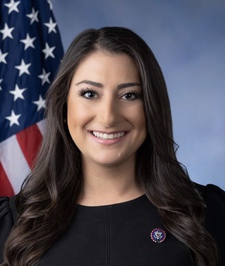
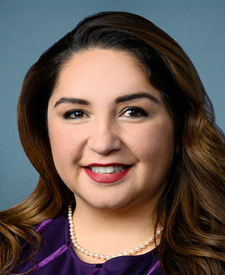
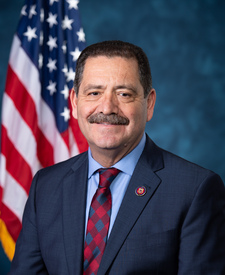
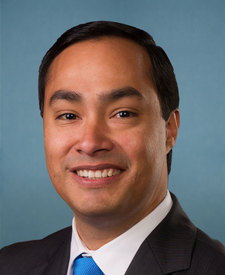
Ms. Jacobs (for herself, Mr. Castro of Texas, and Ms. …
Stakeholder Effects
cui bono?How this legislation distributes effects. Mention counts reflect frequency, not effect magnitude.
Congressional armed-services committees, Congressional foreign-affairs committees, Congressional intelligence committees
Positive-direction: Congressional armed-services committees, Congressional foreign-affairs committees, Congressional intelligence committees, Congressional judiciary committees, Domestic war-crimes courts, Foreign war-crimes courts
Negative-direction: Defense Department incident-review staff, Federal conflict-evidence preservation staff, Federal evidence-security accounts, Federal intelligence declassification staff, Intelligence-community records staff, Justice Department atrocity investigators, Justice Department records staff, Justice Department referral-review staff, Justice Department war-crimes prosecutors, Leahy Law vetting staff, State Department certification staff, State Department report-drafting staff
Civilian victims of alleged war crimes, Hind Rajab's surviving family members, United States citizens credibly implicated
Positive-direction: Civilian victims of alleged war crimes, Hind Rajab's surviving family members
Negative-direction: United States citizens credibly implicated, United States citizens facing credible allegations
IDF personnel credibly implicated, IDF units identified in the report, United States defense suppliers linked to the attacks
Families of killed Palestine Red Crescent paramedics, Families seeking information about the attacks
Bill Structure & Actor Mappings
Who is "The Secretary" in each section?
- "victim"
- → Hind Rajab family member or Palestine Red Crescent paramedic
- "subject"
- → Person responsible for the January 29, 2024 attacks
- "certifier"
- → Secretary of State
- "recipient"
- → Appropriate congressional committee
- "prosecutor"
- → Attorney General and Department of Justice
- "subject"
- → IDF or Israeli security-force unit involved in the attacks
- "reporter"
- → Secretary of State
- "recipient"
- → Appropriate congressional committee
- "consultant"
- → Attorney General, Secretary of War, or intelligence-community component
- "beneficiary"
- → Family of Hind Rajab or a killed Palestine Red Crescent paramedic
- "foreign_payer"
- → Government of Israel
- "conditional_payer"
- → Department of State
- "court"
- → Domestic, foreign, or international tribunal
- "subject"
- → United States citizen facing a credible war-crimes allegation in Gaza
- "investigator"
- → Attorney General
- "evidence_holder"
- → Federal agency possessing conflict evidence
- "protected_person"
- → Civilian or medical worker protected by humanitarian law
Note: {'scope_ids': ['gaza_attack_referral'], 'description': 'Referral is conditioned on credible information indicating both a possible war crime and a specified United States weapons, citizen, or training nexus; investigation and prosecution remain limited to appropriate actions within United States court jurisdiction.'}
Key Definitions
Terms defined in this bill
The meaning assigned in 18 U.S.C. 2441(c).
The meaning assigned in the Elie Wiesel Genocide and Atrocities Prevention Act of 2018.
The listed Senate and House foreign-relations, judiciary, armed-services, and intelligence committees.
We use a combination of our own taxonomy and classification in addition to large language models to assess meaning and potential beneficiaries. High confidence means strong textual evidence. Always verify with the original bill text.
Learn more about our methodology