Truman Scholarship Clean House Act
Summary
What This Bill Does
The Truman Scholarship Clean House Act changes how the Harry S. Truman Scholarship Foundation is governed and how Truman Scholars are selected, disciplined, and publicly documented. It defines when a person is affiliated with a political party, including party registration, elected or appointed office, candidacy, campaign or office staff work, fundraising staff work, and judicial appointment by a party officeholder. It replaces the Foundation board structure with a 13-member board: four congressional appointees, eight presidentially appointed Senate-confirmed members capped at four from the same party, and the Secretary of Education or designee as a non-chair ex officio member. It also creates six-year staggered terms, limits members to two consecutive terms, and allows removal only by a two-thirds board vote. For scholar selection, the bill requires full-time undergraduate or Puerto Rico/Islands senior-level status, public-service graduate-study plans, academic excellence, and U.S. citizen, national, or Northern Mariana Islands permanent-resident status. Regional Review Panels must have at least five annually appointed members and no more than half from the same political party, and they must judge applicants on community service, leadership, academic performance, writing and analytical skills, and suitability for public service. The bill bars selection or continued payments for students tied to suspended organizations, school discipline, felony convictions, false or incomplete reports, missed reports, delayed scholarship use beyond four years without extension, or employment/public-service failures, but requires notice, hearing opportunity, and written reasons before payments stop. It also requires the Foundation to keep press releases, program announcements, and recipient biographies publicly available in unaltered form and to identify edits.
Who Benefits and How
Truman Scholarship applicants benefit from more explicit eligibility rules and published selection criteria, which make the scholarship process easier to understand. Truman Scholars with existing awards benefit because the Act does not invalidate or alter scholarships awarded before enactment. Truman Foundation board members benefit from defined appointment channels, term lengths, vacancy rules, and removal procedures. Congressional appointing leaders benefit from direct appointment seats on the Foundation board. The Secretary of Education benefits from a formal ex officio seat while avoiding chair eligibility. Public-service scholarship watchdogs, journalists, and alumni benefit from required preservation of Foundation press releases, program announcements, and recipient biographies on a public website.
Who Bears the Burden and How
The Truman Scholarship Foundation must administer new board appointments, staggered terms, political-affiliation screening, two-thirds votes for regional panel appointments, hearing procedures, written termination notices, appeals-related employment review, and public-website preservation rules. Regional Review Panels must apply politically balanced membership rules and new applicant-selection criteria. Scholarship applicants and awardees face narrower eligibility and continued-payment rules, including loss of payment risk for felony convictions, school discipline, leadership in suspended organizations, missed reports, false or incomplete reports, or delayed scholarship use. Presidential and congressional appointing offices must fill board seats under the new structure. Foundation website administrators must keep original and edited public materials online without hiding or deleting them.
Key Provisions
- Defines political-party affiliation for Truman Foundation governance and review-panel balance.
- Establishes a 13-member Truman Foundation board with congressional appointees, presidential Senate-confirmed members, and the Secretary of Education as an ex officio non-chair member.
- Requires staggered six-year board terms, a two-consecutive-term limit, vacancy appointment rules, and two-thirds board votes for removal.
- Establishes student eligibility rules tied to undergraduate status, public-service graduate plans, academic excellence, and U.S. citizenship or qualifying residency.
- Requires politically balanced Regional Review Panels to select scholars using community-service, leadership, academic, writing, analytical, and public-service criteria.
- Bars selection or continued payments for specified student misconduct, felony convictions, false reports, missed reports, delayed scholarship use, or public-service employment failures.
- Requires reasonable notice, hearing opportunity, and written reasons before scholarship payments are stopped.
- Requires public preservation of Foundation press releases, program announcements, and recipient biographies, including visible edit histories.
Evidence Chain:
This summary is generated from the full bill text using AI analysis. Expand "Detailed Analysis" below for identified beneficiaries/burden bearers with clause-level evidence links.
At a Glance
What This Bill Does
Rewrites Harry S Truman Memorial Scholarship Act governance, eligibility, termination, and transparency rules by defining political-party affiliation, restructuring the Truman Foundation board, requiring politically balanced regional review panels, tightening scholar eligibility and scholarship-termination grounds, creating hearing and written-notice protections, preserving public program materials online, and applying the new rules only to future scholarships.
Key Policy Areas
Education, Federal Governance, Government Ethics, Transparency
Primary Purpose
Rewrites Harry S Truman Memorial Scholarship Act governance, eligibility, termination, and transparency rules by defining political-party affiliation, restructuring the Truman Foundation board, requiring politically balanced regional review panels, tightening scholar eligibility and scholarship-termination grounds, creating hearing and written-notice protections, preserving public program materials online, and applying the new rules only to future scholarships.
Policy Domains
House resolution provisions
Identified Gains
- Truman Scholarship applicants
- Existing Truman Scholars
- Truman Foundation board members
- Congressional appointing leaders
- Secretary of Education
- Scholarship transparency watchdogs
- Truman alumni
Identified Costs
- Truman Scholarship Foundation staff
- Regional Review Panels
- Scholarship applicants with disqualifying conduct
- Truman Scholars facing termination review
- Presidential appointment staff
- Congressional appointment staff
- Foundation website administrators
Sponsors
Legislative Progress
ReportedPlaced on the Union Calendar, Calendar No. 633.
Reported (Amended) by the Committee on Education and Workforce. H. …
Ordered to be Reported (Amended) by the Yeas and Nays: …
Committee Consideration and Mark-up Session Held
Referred to the House Committee on Education and Workforce.
Introduced in House
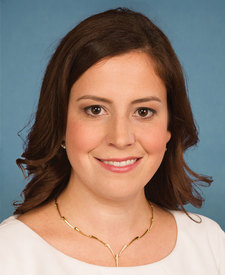
Ms. Stefanik introduced the following bill; which was referred to …
Stakeholder Effects
cui bono?How this legislation distributes effects. Mention counts reflect frequency, not effect magnitude.
Eligible public service students, Existing Truman Scholars, Regional Review Panels
Positive-direction: Eligible public service students, Existing Truman Scholars, Scholarship transparency watchdogs, Truman alumni
Negative-direction: Regional Review Panels, Student applicants with disqualifying conduct, Truman Foundation board members, Truman Scholars facing termination review, Truman Scholarship Foundation staff, Truman Scholarship applicants
Congressional appointing leaders, Congressional appointment staff, Presidential appointment staff
Positive-direction: Congressional appointing leaders
Negative-direction: Congressional appointment staff, Presidential appointment staff, Secretary of Education
Bill Structure & Actor Mappings
Who is "The Secretary" in each section?
- "board"
- → Truman Foundation Board of Trustees
- "secretary"
- → Secretary of Education
- "foundation"
- → Harry S. Truman Scholarship Foundation
- "regional_panels"
- → Truman Regional Review Panels
We use a combination of our own taxonomy and classification in addition to large language models to assess meaning and potential beneficiaries. High confidence means strong textual evidence. Always verify with the original bill text.
Learn more about our methodology