Student Aid Fraud Oversight and Accountability Act of 2026
Summary
What This Bill Does
The Student Aid Fraud Oversight and Accountability Act of 2026 amends Higher Education Act program review rules. It adds a new priority category for institutions identified by the Secretary of Education because they disbursed federal student aid on or after October 1, 2026 to a student whose FAFSA application presented a reasonable suspicion of identity fraud under the Secretary's identity fraud detection system.
An institution is excluded from identification if it shows that, before disbursing aid to each flagged student, it confirmed the student's identity through in-person verification or live synchronous audiovisual verification, notified the Secretary that the identity was verified, and maintained a verification record. Identification may be used to inform program reviews, audits, investigations, and other authorized oversight, but it does not by itself determine that the institution violated title IV requirements.
Who Benefits and How
Department of Education program review staff benefit from a new priority category for institutions connected to suspected identity-fraud disbursements. Federal taxpayers benefit if oversight reduces improper student aid disbursements. Legitimate student aid applicants benefit if fraud controls protect aid funds and program integrity. Institutions that verify identity before disbursement benefit from an exclusion from the new identification category. Congressional education oversight staff benefit from a clearer trigger for audits, investigations, and program reviews.
Who Bears the Burden and How
Institutions of higher education must verify flagged students before disbursing aid if they want to avoid identification. College financial aid offices must conduct in-person or live audiovisual verification, notify the Secretary, and maintain records. Institutions identified under the new category face greater risk of program review, audit, or investigation. Department of Education oversight staff must maintain the identification process. Student aid applicants flagged for suspected identity fraud may face verification delays before receiving aid. Fraudulent applicants face higher risk of blocked disbursement and institutional scrutiny.
Key Provisions
- Adds institutions linked to suspected identity-fraud disbursements to Higher Education Act program review priority.
- Requires identification of institutions disbursing aid after October 1, 2026 to flagged applicants.
- Provides an exclusion for institutions that verify student identity before disbursement, notify the Secretary, and keep records.
- Provides that identification may inform program reviews, audits, investigations, and other oversight.
- Provides that identification alone is not a determination that the institution violated title IV.
Evidence Chain:
This summary is generated from the full bill text using AI analysis. Expand "Detailed Analysis" below for identified beneficiaries/burden bearers with clause-level evidence links.
At a Glance
What This Bill Does
Requires the Secretary of Education to identify institutions that disburse federal student aid after October 1, 2026 to students whose FAFSA applications presented reasonable suspicion of identity fraud unless the institution verified identity before disbursement, adds those institutions to program review priority, and clarifies that identification may inform oversight but is not itself a violation finding.
Key Policy Areas
Federal Student Aid, Higher Education Oversight, Fraud Prevention
Primary Purpose
Requires the Secretary of Education to identify institutions that disburse federal student aid after October 1, 2026 to students whose FAFSA applications presented reasonable suspicion of identity fraud unless the institution verified identity before disbursement, adds those institutions to program review priority, and clarifies that identification may inform oversight but is not itself a violation finding.
Policy Domains
Bill provisions
Identified Gains
- Department of Education program review staff
- Federal taxpayers
- Legitimate student aid applicants
- Institutions verifying identity before disbursement
- Congressional education oversight staff
Identified Costs
- Institutions of higher education
- College financial aid offices
- Institutions identified for program review
- Department of Education oversight staff
- Student aid applicants flagged for identity fraud
- Fraudulent student aid applicants
Sponsors
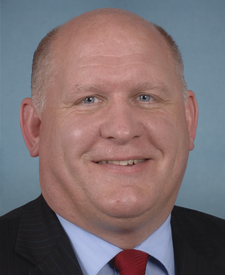

Legislative Progress
ReportedPlaced on the Union Calendar, Calendar No. 582.
Reported (Amended) by the Committee on Education and Workforce. H. …
Additional sponsor: Ms. Foxx
Reported with an amendment, committed to the Committee of the …
Committee Consideration and Mark-up Session Held
Ordered to be Reported (Amended) by the Yeas and Nays: …
Referred to the House Committee on Education and Workforce.
Mr. Thompson of Pennsylvania introduced the following bill; which was …
Introduced in House
Stakeholder Effects
cui bono?How this legislation distributes effects. Mention counts reflect frequency, not effect magnitude.
College financial aid offices, Institutions of higher education, Legitimate student aid applicants
Positive-direction: Legitimate student aid applicants
Negative-direction: College financial aid offices, Institutions of higher education, Student aid applicants flagged for identity fraud
Bill Structure & Actor Mappings
Who is "The Secretary" in each section?
- "secretary"
- → Secretary of Education
We use a combination of our own taxonomy and classification in addition to large language models to assess meaning and potential beneficiaries. High confidence means strong textual evidence. Always verify with the original bill text.
Learn more about our methodology