Incentivizing Safe and Sound Banking Act
Summary
What This Bill Does
The Incentivizing Safe and Sound Banking Act expands federal bank-enforcement orders to include a prohibition on selling securities of an insured depository institution or its affiliates when those securities were received as compensation. A discretionary order may reach current or former officers, directors, and other institution-affiliated parties who own covered compensation securities.
The bill also creates an automatic sale prohibition for senior executive officers of a covered banking institution. It applies when the institution has a composite or component supervisory rating of 3, 4, or 5, or receives a matter requiring immediate attention or comparable notice and fails to fix the issue by the agency's deadline. The executive may not sell compensation-derived securities of the institution or an affiliate until the matter is resolved to the appropriate federal banking agency's satisfaction.
A covered institution is a bank holding company with more than $50 billion in consolidated assets, its bank subsidiary, or a bank or savings association above the same threshold. The automatic restriction therefore does not apply to every community bank or to securities an executive acquired outside compensation.
Who Benefits and How
Depositors and customers of large banking institutions benefit from incentives for senior executives to remedy serious supervisory problems before cashing out compensation stock. Federal deposit-insurance programs and bank supervisors gain an enforcement tool that keeps executive financial exposure tied to resolution of safety concerns. Bank shareholders may face lower governance risk if executives cannot sell covered compensation during unresolved distress.
Who Bears the Burden and How
Senior executive officers at covered institutions lose liquidity in compensation-derived securities while a qualifying rating or unresolved supervisory matter remains. Current and former bank officers, directors, and institution-affiliated parties may be restricted by a discretionary enforcement order. Large-bank compliance officers and transfer agents must identify covered securities and block prohibited sales. Federal banking-agency staff must determine when restrictions begin and when remediation is satisfactory.
Key Provisions
- Expands bank-enforcement orders to prohibit sales of compensation-derived securities.
- Covers securities of an insured institution and its affiliates.
- Applies discretionary orders to current or former officers, directors, and institution-affiliated parties.
- Creates an automatic ban for senior executives after specified supervisory ratings.
- Triggers the ban after an urgent supervisory matter is not fixed by the agency deadline.
- Keeps the automatic ban in force until the banking agency is satisfied with remediation.
- Limits automatic coverage to banking organizations with more than $50 billion in assets.
- Excludes securities not received as compensation from the stated restriction.
Evidence Chain:
This summary is generated from the full bill text using AI analysis. Expand "Detailed Analysis" below for identified beneficiaries/burden bearers with clause-level evidence links.
At a Glance
What This Bill Does
Authorizes federal banking agencies to block sales of compensation-derived bank securities and automatically bars senior executives at banking institutions with more than $50 billion in assets from selling such securities after specified poor ratings or an unremediated urgent supervisory matter.
Key Policy Areas
Banking Regulation, Executive Compensation, Federal Deposit Insurance, Financial Stability, Supervisory Enforcement
Primary Purpose
Authorizes federal banking agencies to block sales of compensation-derived bank securities and automatically bars senior executives at banking institutions with more than $50 billion in assets from selling such securities after specified poor ratings or an unremediated urgent supervisory matter.
Policy Domains
Section 2 supervisory restrictions on compensation-stock sales
Identified Gains
- Depositors at covered banking institutions
- Customers of covered banking institutions
- Federal deposit-insurance programs
- Federal banking supervisors
- Shareholders of covered banking institutions
Identified Costs
- Senior executive officers at covered banks
- Former bank officers subject to enforcement orders
- Bank directors subject to enforcement orders
- Large-bank compliance officers
- Bank securities transfer agents
- Federal banking-agency remediation staff
Sponsors
Legislative Progress
In CommitteeReferred to the House Committee on Financial Services.
Introduced in House
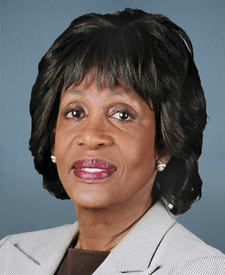
Ms. Waters introduced the following bill; which was referred to …
Stakeholder Effects
cui bono?How this legislation distributes effects. Mention counts reflect frequency, not effect magnitude.
Bank directors subject to enforcement orders, Bank securities transfer agents, Customers of covered banking institutions
Positive-direction: Customers of covered banking institutions, Depositors at covered banking institutions, Shareholders of covered banking institutions
Negative-direction: Bank directors subject to enforcement orders, Bank securities transfer agents, Former bank officers subject to enforcement orders, Large-bank compliance officers, Senior executive officers at covered banks
Federal banking supervisors, Federal banking-agency remediation staff, Federal deposit-insurance programs
Positive-direction: Federal banking supervisors, Federal deposit-insurance programs
Negative-direction: Federal banking-agency remediation staff
Bill Structure & Actor Mappings
Who is "The Secretary" in each section?
- "banking_agency"
- → Appropriate federal banking agency issuing or administering the restriction
- "senior_executive"
- → Senior executive officer holding institution or affiliate securities received as compensation
- "covered_institution"
- → Banking organization with more than $50 billion in consolidated assets
Key Definitions
Terms defined in this bill
A bar on a senior executive's sale of compensation-derived institution or affiliate securities until a qualifying supervisory issue is resolved.
A bank holding company above $50 billion in assets, its bank subsidiary, or a bank or savings association above that threshold.
We use a combination of our own taxonomy and classification in addition to large language models to assess meaning and potential beneficiaries. High confidence means strong textual evidence. Always verify with the original bill text.
Learn more about our methodology