SUPER BUGS Act of 2026
Summary
What This Bill Does
The SUPER BUGS Act requires the Secretary of State, consulting the HHS Secretary and other selected agencies, to formulate an international strategy within 18 months. The strategy must seek foreign-country, multilateral-organization, and other support for developing and commercializing qualified pandemic or epidemic products, including products for antimicrobial-resistant pathogens with pandemic potential or identified as priority pathogens.
The strategy must explain processes for international arrangements and strive for equitable contributions based on participant budgets and technical expertise. It must balance global priorities with national and regional concerns, strengthen partner-country prevention, detection, and containment capacity, harmonize overlapping efforts, close gaps, avoid duplication, and distribute funds efficiently.
Arrangements should allocate joint or individual responsibility for particular products, support stewardship, and identify priority actions for scarce funds. The strategy must consider contracts with U.S. companies, broader private-sector participation, public-private partnerships, alternative payment models, coverage and reimbursement pathways, and streamlined regulatory approvals. It must align with named U.S. antimicrobial-resistance and biodefense strategies.
After formulating the strategy, the Secretary of State must seek arrangements with foreign countries, multilateral organizations, and other appropriate entities to implement it. "Priority pathogens" is tied to current CDC and HHS lists, and "qualified pandemic or epidemic product" uses the Public Health Service Act definition. The bill authorizes strategy and diplomacy but states no appropriation, mandatory foreign contribution, guaranteed U.S. company contract, product approval, reimbursement entitlement, procurement amount, or deadline for final arrangements.
Who Benefits and How
Pandemic-product developers, antimicrobial researchers, biotechnology firms, U.S. manufacturers, and public-private partnerships gain a coordinated route to foreign support and commercialization planning. Partner-country health systems may gain sustainable detection and response capacity. Patients, military personnel, and the U.S. public may face lower outbreak risk.
Who Bears the Burden and How
State, HHS, and other agencies must design, coordinate, negotiate, and report the strategy. Foreign governments and multilateral organizations may be asked for equitable financial or technical contributions. Regulators and payers may face pressure to create faster approval and reimbursement pathways. Competing global-health priorities may lose scarce funding, and any later public commitments can create taxpayer costs.
Key Provisions
- Requires an international strategy within 18 months.
- Covers qualified pandemic and epidemic products.
- Includes antimicrobial-resistant pathogens with pandemic potential.
- Incorporates current CDC and HHS priority-pathogen lists.
- Seeks foreign and multilateral support.
- Promotes contributions based on budgets and expertise.
- Balances global, national, and regional priorities.
- Strengthens partner-country public-health capacity.
- Requires coordination to avoid gaps and duplication.
- Allocates responsibility for particular products.
- Requires product stewardship planning.
- Prioritizes scarce development funds.
- Considers contracts with U.S. companies.
- Considers public-private partnerships and alternative payments.
- Considers coverage, reimbursement, and streamlined approvals.
- Aligns with U.S. resistance and biodefense strategies.
- Directs efforts to negotiate implementation arrangements.
- Provides no stated appropriation or guaranteed contract.
Evidence Chain:
This summary is generated from the full bill text using AI analysis. Expand "Detailed Analysis" below for identified beneficiaries/burden bearers with clause-level evidence links.
At a Glance
What This Bill Does
Requires the State Department within 18 months to formulate and submit an international strategy for foreign, multilateral, and private support of pandemic and epidemic product development, including antimicrobial-resistance products, and directs efforts to form coordinated arrangements for financing, responsibility allocation, stewardship, partner-country capacity, and commercialization.
Key Policy Areas
Global Health Security, Antimicrobial Resistance, Pandemic Countermeasures, International Development, Medical Product Commercialization
Primary Purpose
Requires the State Department within 18 months to formulate and submit an international strategy for foreign, multilateral, and private support of pandemic and epidemic product development, including antimicrobial-resistance products, and directs efforts to form coordinated arrangements for financing, responsibility allocation, stewardship, partner-country capacity, and commercialization.
Policy Domains
Sections 2 through 4 findings, definitions, 18-month international strategy, contribution and coordination principles, product responsibility and stewardship, commercialization tools, U.S. strategy alignment, and implementation arrangements
Identified Gains
- Pandemic countermeasure developers
- Antimicrobial-resistance researchers
- United States biotechnology companies
- United States medical manufacturers
- Partner-country public-health systems
- Multilateral global-health organizations
- Patients threatened by resistant infections
- United States military health programs
Identified Costs
- Department of State global-health staff
- Department of Health and Human Services
- Foreign governments asked to contribute
- Multilateral organizations asked to contribute
- Regulators considering streamlined approvals
- Health payers considering new reimbursement pathways
- Competing global-health funding priorities
- Federal taxpayers financing later commitments
Sponsors
Legislative Progress
In CommitteeReferred to the House Committee on Foreign Affairs.
Introduced in House
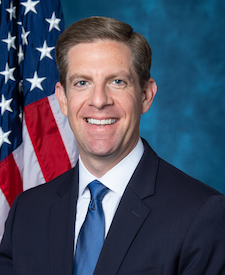
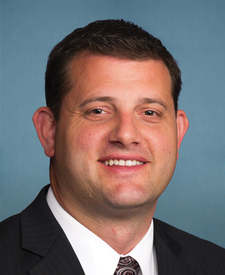
Mr. Levin (for himself and Mr. Valadao) introduced the following …
Stakeholder Effects
cui bono?How this legislation distributes effects. Mention counts reflect frequency, not effect magnitude.
Centers for Disease Control and Prevention, Congressional foreign-relations committees, Congressional health-policy committees
Pandemic countermeasure developers, United States biotechnology companies
Antimicrobial-resistance researchers
Patients threatened by resistant infections, United States medical manufacturers, United States residents
Competing global-health funding priorities, Partner-country public-health systems
Positive-direction: Partner-country public-health systems
Negative-direction: Competing global-health funding priorities
Bill Structure & Actor Mappings
Who is "The Secretary" in each section?
- "developer"
- → Company or researcher developing a covered product
- "foreign_partner"
- → Country asked to join and contribute to arrangements
- "state_secretary"
- → Secretary of State formulating and pursuing the strategy
- "health_secretary"
- → HHS Secretary consulting on pathogens and products
- "multilateral_partner"
- → International organization participating in implementation
- "partner_health_system"
- → Public-health system receiving capacity support
Note: {'scope_ids': ['international_pandemic_product_strategy'], 'description': 'The Secretary must create a strategy and seek arrangements but cannot compel foreign contributions; the bill identifies possible contracts, payments, reimbursement, and regulatory pathways without funding them, awarding them, or changing approval standards directly.'}
Key Definitions
Terms defined in this bill
A pathogen on the latest CDC antibiotic-resistance threats report or current HHS qualifying-pathogen list.
A product within the existing Public Health Service Act emergency-countermeasure definition incorporated by reference.
A contemplated agreement with countries, multilateral organizations, or other entities assigning support, responsibility, funding, or commercialization roles.
We use a combination of our own taxonomy and classification in addition to large language models to assess meaning and potential beneficiaries. High confidence means strong textual evidence. Always verify with the original bill text.
Learn more about our methodology