HR7876-119

In Committee

Secret Service-Local Law Enforcement Partnership Act of 2026

119th Congress Introduced Mar 9, 2026

Summary

What This Bill Does

The Secret Service-Local Law Enforcement Partnership Act of 2026 creates the Extraordinary Protection Reimbursement Program. DHS awards reimbursement grants to state, local, Tribal, and territorial governments for law-enforcement protection directly tied to non-governmental properties designated for protection by the Secret Service and used by people covered under specified federal protection categories.

Only state, local, Tribal, or territorial law-enforcement agencies may apply. They must certify that the request covers costs above ordinary operations and directly attributable to eligible protection. Personnel reimbursements are limited to hours spent protecting the property or its immediate area. Equipment must be explicitly needed for protection, and the Secret Service Director must verify that need. Reimbursement applies only while the protectee is physically present at or traveling to or from the property.

A non-governmental property is an owned or leased property designated by the Secret Service, excluding hotels and other temporary accommodations used for fewer than 30 days. DHS must report within 180 days on implementation of recommendations from a July 2023 DHS Inspector General report and then ensure continued implementation. The text does not expressly make grant obligations contingent on that report despite the section heading referring to a limitation.

The DHS Inspector General must audit the program every fiscal year and report within 90 days of the next fiscal year. DHS must annually report total grants and, for each grantee, identity, amount, protection hours, equipment, and equipment-need certification.

The bill authorizes $61 million for each of fiscal years 2026, 2027, and 2028, totaling $183 million if fully appropriated. DHS Management or FEMA administers the money as directed by the Secretary in coordination with the Secret Service.

Who Benefits and How

Eligible law-enforcement agencies recover extraordinary personnel and equipment costs. Host governments and local taxpayers avoid carrying the entire federal-protection burden. Officers may receive funded protection hours and equipment. Protected persons receive coordinated security at designated residences or offices. Equipment vendors may receive orders from grant recipients.

Who Bears the Burden and How

Federal homeland-security accounts bear costs if the authorization is appropriated. Applicants must separate extraordinary costs from normal operations and document time and equipment. Secret Service staff must validate equipment needs. DHS or FEMA grant administrators must review and report every award. DHS Inspector General staff must audit annually, while grantees must support itemized public oversight reports.

Key Provisions

  • Creates the Extraordinary Protection Reimbursement Program.
  • Restricts eligibility to state, local, Tribal, and territorial law-enforcement agencies.
  • Requires costs to exceed ordinary law-enforcement operations.
  • Restricts personnel reimbursement to direct protection hours.
  • Requires Secret Service validation of equipment needs.
  • Limits reimbursement to periods of protectee presence or travel.
  • Excludes short-term hotels and temporary accommodations.
  • Requires annual Inspector General audits and DHS grant reports.
  • Requires continued implementation of specified Inspector General recommendations.
  • Authorizes $61 million annually for fiscal years 2026 through 2028.

Evidence Chain:

This summary is generated from the full bill text using AI analysis. Expand "Detailed Analysis" below for identified beneficiaries/burden bearers with clause-level evidence links.

At a Glance

What This Bill Does

Creates a $61 million annual reimbursement grant for state, local, Tribal, and territorial law-enforcement costs protecting designated non-governmental properties used by specified Secret Service protectees, with strict cost eligibility, audits, reports, and Inspector General recommendation implementation.

Key Policy Areas

Secret Service Protection, Local Law Enforcement Grants, Presidential Protection, DHS Oversight, Public Safety Funding

Primary Purpose

Creates a $61 million annual reimbursement grant for state, local, Tribal, and territorial law-enforcement costs protecting designated non-governmental properties used by specified Secret Service protectees, with strict cost eligibility, audits, reports, and Inspector General recommendation implementation.

Policy Domains

Secret Service Protection Local Law Enforcement Grants Presidential Protection DHS Oversight Public Safety Funding

Section 8 fiscal years 2026 through 2028 authorization

Identified Gains
  • Eligible state protection-grant recipients
  • Eligible local protection-grant recipients
  • Eligible Tribal protection-grant recipients
  • Eligible territorial protection-grant recipients
  • DHS extraordinary-protection program
Model: codex-gpt-5 | Version: bill_summary_v2 | Source: ih
DHS extraordinary-protection program:
Eligible local protection-grant recipients:
Eligible state protection-grant recipients:
Eligible Tribal protection-grant recipients:
Eligible territorial protection-grant recipients:
Identified Costs
  • Federal homeland-security grant accounts
  • DHS Management Directorate grant staff
  • FEMA grant-administration staff
  • Secret Service grant-coordination staff
Model: codex-gpt-5 | Version: bill_summary_v2 | Source: ih
FEMA grant-administration staff:
DHS Management Directorate grant staff:
Secret Service grant-coordination staff:
Federal homeland-security grant accounts:

Sections 2 through 4 protection grant eligibility and use

Identified Gains
  • State law-enforcement agencies protecting designated properties
  • Local law-enforcement agencies protecting designated properties
  • Tribal law-enforcement agencies protecting designated properties
  • Territorial law-enforcement agencies protecting designated properties
  • Local taxpayers in host jurisdictions
  • Officers assigned to extraordinary protection
  • Secret Service protectees at designated properties
Model: codex-gpt-5 | Version: bill_summary_v2 | Source: ih
Local taxpayers in host jurisdictions: , ,
Officers assigned to extraordinary protection: , ,
Secret Service protectees at designated properties: , ,
Local law-enforcement agencies protecting designated properties: , ,
State law-enforcement agencies protecting designated properties: , ,
Tribal law-enforcement agencies protecting designated properties: , ,
Territorial law-enforcement agencies protecting designated properties: , ,
Identified Costs
  • Federal extraordinary-protection grant accounts
  • DHS protection-grant administrators
  • Law-enforcement grant applicants
  • Secret Service equipment-certification staff
  • Grantee timekeeping staff
  • Grantee equipment-record staff
Model: codex-gpt-5 | Version: bill_summary_v2 | Source: ih
Grantee timekeeping staff: , ,
Grantee equipment-record staff: , ,
Law-enforcement grant applicants: , ,
DHS protection-grant administrators: , ,
Secret Service equipment-certification staff: , ,
Federal extraordinary-protection grant accounts: , ,

Section 6 annual audits and grant reports

Identified Gains
  • Congressional appropriations committees
  • Congressional homeland-security committees
  • Taxpayers reviewing protection grants
  • DHS grant-integrity programs
Model: codex-gpt-5 | Version: bill_summary_v2 | Source: ih
DHS grant-integrity programs:
Taxpayers reviewing protection grants:
Congressional appropriations committees:
Congressional homeland-security committees:
Identified Costs
  • DHS Inspector General audit staff
  • DHS annual grant-report staff
  • Protection-grant recipient reporting staff
  • Secret Service certification-record staff
Model: codex-gpt-5 | Version: bill_summary_v2 | Source: ih
DHS annual grant-report staff:
DHS Inspector General audit staff:
Secret Service certification-record staff:
Protection-grant recipient reporting staff:

Section 5 Inspector General recommendation implementation

Identified Gains
  • Congressional homeland-security committees
  • Congressional appropriations committees
  • Taxpayers funding protection reimbursements
  • DHS protection-program oversight offices
Model: codex-gpt-5 | Version: bill_summary_v2 | Source: ih
Congressional appropriations committees:
DHS protection-program oversight offices:
Congressional homeland-security committees:
Taxpayers funding protection reimbursements:
Identified Costs
  • DHS Inspector General recommendation staff
  • DHS congressional-reporting staff
  • DHS protection-program managers
  • Secret Service program-coordination staff
Model: codex-gpt-5 | Version: bill_summary_v2 | Source: ih
DHS protection-program managers:
DHS congressional-reporting staff:
Secret Service program-coordination staff:
DHS Inspector General recommendation staff:

Legislative Progress

In Committee
Introduced Committee Passed
Mar 9, 2026

Referred to the House Committee on the Judiciary.

Mar 9, 2026

Introduced in House

Mar 9, 2026

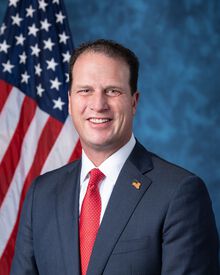
Mr. Landsman (for himself and Mr. Pfluger) introduced the following …

Stakeholder Effects

cui bono?

How this legislation distributes effects. Mention counts reflect frequency, not effect magnitude.

Government
23 mentions across 6 clauses
+9 positive -14 negative

Congressional appropriations committees, Congressional homeland-security committees, DHS Inspector General audit staff

Positive-direction: Congressional appropriations committees, Congressional homeland-security committees, DHS grant-integrity programs, Eligible Tribal protection-grant recipients, Secret Service protectees at designated properties, Tribal law-enforcement agencies protecting designated properties

Negative-direction: DHS Inspector General audit staff, DHS Inspector General recommendation staff, DHS Management Directorate grant staff, DHS annual grant-report staff, DHS congressional-reporting staff, DHS grant-eligibility reviewers, DHS protection-grant administrators, DHS protection-program managers, FEMA grant-administration staff, Federal extraordinary-protection grant accounts, Federal homeland-security grant accounts, Secret Service certification-record staff, Secret Service equipment-certification staff, Secret Service grant-coordination staff

State & Local Government
15 mentions across 5 clauses
+8 positive -4 negative ~3 mixed

Agencies seeking reimbursement for ordinary operations, Eligible local protection-grant recipients, Eligible state protection-grant recipients

Positive-direction: Eligible local protection-grant recipients, Eligible state protection-grant recipients, Eligible territorial protection-grant recipients, Law-enforcement agencies buying protection equipment, Law-enforcement agencies with extraordinary protection costs, Local law-enforcement agencies protecting designated properties, State law-enforcement agencies protecting designated properties, Territorial law-enforcement agencies protecting designated properties

Negative-direction: Agencies seeking reimbursement for ordinary operations, Government applicants without law-enforcement status, Protection costs outside protectee presence periods, Protection-grant recipient reporting staff

Taxpayers
4 mentions across 4 clauses
+4 positive

Local taxpayers funding extraordinary protection, Local taxpayers in host jurisdictions, Taxpayers funding protection reimbursements

General Public
1 mention across 1 clause
+1 positive

Officers assigned to extraordinary protection

Safety Equipment
1 mention across 1 clause
+1 positive

Protection-equipment suppliers

6/8
sections analyzed
Full impact breakdown

Bill Structure & Actor Mappings

Who is "The Secretary" in each section?

Domains
Secret Service Protection Local Law Enforcement Grants Presidential Protection
Actor Mappings
"applicant"
→ State, local, Tribal, or territorial law-enforcement agency
"protectee"
→ Person protected under a listed 18 U.S.C. 3056 category
"validator"
→ Secret Service Director
"administrator"
→ Department of Homeland Security
Domains
DHS Oversight Secret Service Protection Program Management
Actor Mappings
"reporter"
→ DHS Secretary
"reviewer"
→ Congressional homeland-security and appropriations committees
"implementer"
→ DHS protection-program staff
Domains
DHS Oversight Local Law Enforcement Grants Government Transparency
Actor Mappings
"auditor"
→ DHS Inspector General
"grantee"
→ Law-enforcement agency receiving reimbursement
"reporter"
→ DHS Secretary
"recipient"
→ Congressional oversight committee
Domains
Public Safety Funding Local Law Enforcement Grants Federal Appropriations
Actor Mappings
"recipient"
→ Eligible law-enforcement agency
"coordinator"
→ United States Secret Service
"appropriator"
→ Congress
"administrator"
→ DHS Management Directorate or FEMA

Key Definitions

Terms defined in this bill

3 terms
"eligible protection period" §eligible_period

Time when the protected person is physically present at or traveling to or from the designated property.

"eligible extraordinary protection cost" §extraordinary_cost

A cost above typical law-enforcement operations that is directly attributable to protecting a designated property.

"non-governmental property" §non_governmental_property

Secret Service-designated owned or leased non-governmental property, excluding a hotel or other temporary accommodation used for fewer than 30 days.

We use a combination of our own taxonomy and classification in addition to large language models to assess meaning and potential beneficiaries. High confidence means strong textual evidence. Always verify with the original bill text.

Learn more about our methodology