HR7874-119

In Committee

Mail Ballot Integrity Act

119th Congress Introduced Mar 9, 2026

Summary

What This Bill Does

The Mail Ballot Integrity Act prohibits a state or political subdivision from sending a ballot for a federal election to anyone who did not request it. A voter must submit an in-person, mailed, or electronic request affirming under penalty of perjury that the voter meets at least one statutory eligibility category.

Eligible categories include active-duty service members and their families; students, instructors, professors, and clergy living outside the county; voters temporarily absent during early voting and election day; certain recent long-distance movers; qualifying institutionalized voters; overseas voters; voters with late-known hospitalization or bed restriction; qualifying disabled voters; incarcerated voters not serving a felony sentence; address-confidentiality participants; and voters age 65 or older.

Disability eligibility requires listed current documentation from a government benefit, mobility program, rehabilitation program, or qualifying health professional. A state may maintain an ongoing mail-ballot list only for voters who continue to meet a statutory category under state-law review.

The Act applies to federal elections from enactment. It preempts broader state universal-mail and no-excuse absentee rules for federal ballots, while leaving in-person voting and mail ballots for enumerated voters available.

Who Benefits and How

Voters concerned about unsolicited ballots and election administrators focused on chain-of-custody gain a request-and-affirmation rule. Active-duty families, eligible absent voters, disabled voters with documentation, overseas voters, address-confidentiality participants, nonfelony incarcerated voters, and people age 65 or older retain mail access. States may preserve qualified-voter lists.

Who Bears the Burden and How

Voters outside the listed categories lose mail-voting access even if state law currently permits no-excuse voting. Younger voters, workers with ordinary scheduling conflicts, caregivers, and voters lacking required disability documents may need to vote in person. State and local officials must redesign requests, verify categories, maintain qualified lists, collect perjury affirmations, and separate federal ballots from different state-election rules. Litigation and voter education costs may rise.

Key Provisions

  • Prohibits unsolicited mail ballots in federal elections.
  • Requires an affirmative written or electronic ballot request.
  • Requires an eligibility statement under penalty of perjury.
  • Limits eligibility to enumerated voter categories.
  • Requires specified current documentation for disability eligibility.
  • Allows continuing lists only for voters who remain qualified.
  • Preempts broader state mail-voting rules for federal ballots.
  • Applies beginning on enactment.
  • Preserves mail access for qualifying military, absent, disabled, and older voters.

Evidence Chain:

This summary is generated from the full bill text using AI analysis. Expand "Detailed Analysis" below for identified beneficiaries/burden bearers with clause-level evidence links.

At a Glance

What This Bill Does

Prohibits unsolicited mail ballots in federal elections and restricts requested mail ballots to voters who submit a perjury affirmation and fit enumerated military, education, clergy, absence, relocation, institutional, overseas, medical, disability, incarceration, confidentiality, or age criteria.

Key Policy Areas

Federal Elections, Mail Ballot Eligibility, Absentee Voting, Voter Verification, State Election Administration

Primary Purpose

Prohibits unsolicited mail ballots in federal elections and restricts requested mail ballots to voters who submit a perjury affirmation and fit enumerated military, education, clergy, absence, relocation, institutional, overseas, medical, disability, incarceration, confidentiality, or age criteria.

Policy Domains

Federal Elections Mail Ballot Eligibility Absentee Voting Voter Verification State Election Administration

Section 2 federal mail-ballot request and eligibility limits

Identified Gains
  • Voters concerned about unsolicited ballots
  • Election officials verifying individual requests
  • Active-duty families retaining mail access
  • Overseas voters retaining mail access
  • Disabled voters with qualifying documentation
  • Address-confidentiality participants
  • Voters age 65 or older
Model: codex-gpt-5 | Version: bill_summary_v2 | Source: ih
Voters age 65 or older:
Address-confidentiality participants:
Overseas voters retaining mail access:
Active-duty families retaining mail access:
Voters concerned about unsolicited ballots:
Disabled voters with qualifying documentation:
Election officials verifying individual requests:
Identified Costs
  • No-excuse mail voters outside listed categories
  • Younger voters with scheduling conflicts
  • Caregivers lacking a statutory excuse
  • Disabled voters lacking current documentation
  • State election offices redesigning ballot requests
  • Local officials verifying eligibility categories
  • States operating universal-mail elections
  • Election courts resolving federal-state conflicts
Model: codex-gpt-5 | Version: bill_summary_v2 | Source: ih
Caregivers lacking a statutory excuse:
Younger voters with scheduling conflicts:
States operating universal-mail elections:
Disabled voters lacking current documentation:
No-excuse mail voters outside listed categories:
Local officials verifying eligibility categories:
Election courts resolving federal-state conflicts:
State election offices redesigning ballot requests:

Legislative Progress

In Committee
Introduced Committee Passed
Mar 9, 2026

Referred to the House Committee on House Administration.

Mar 9, 2026

Introduced in House

Mar 9, 2026

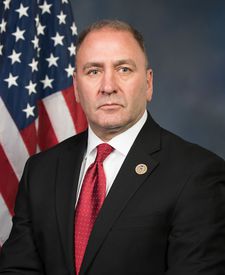
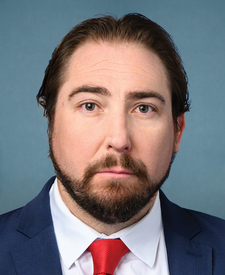
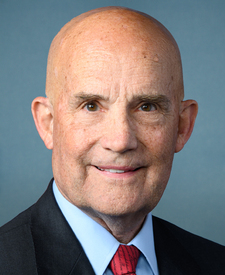
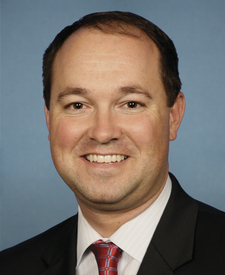
Mr. Higgins of Louisiana (for himself, Mr. Stutzman, Mr. Gosar, …

Stakeholder Effects

cui bono?

How this legislation distributes effects. Mention counts reflect frequency, not effect magnitude.

Rural Communities
4 mentions across 1 clause
+2 positive -2 negative

No-excuse mail voters outside listed categories, Overseas voters retaining mail access, Voters concerned about unsolicited ballots

Positive-direction: Overseas voters retaining mail access, Voters concerned about unsolicited ballots

Negative-direction: No-excuse mail voters outside listed categories, Younger voters with scheduling conflicts

State & Local Government
4 mentions across 1 clause
+1 positive -3 negative

Election officials verifying individual requests, Local officials verifying eligibility categories, State election offices redesigning ballot requests

Positive-direction: Election officials verifying individual requests

Negative-direction: Local officials verifying eligibility categories, State election offices redesigning ballot requests, States operating universal-mail elections

General Public
3 mentions across 1 clause
+2 positive -1 negative

Address-confidentiality participants, Disabled voters lacking current documentation, Disabled voters with qualifying documentation

Positive-direction: Address-confidentiality participants, Disabled voters with qualifying documentation

Negative-direction: Disabled voters lacking current documentation

Military
1 mention across 1 clause
+1 positive

Active-duty families retaining mail access

Social Security
1 mention across 1 clause
+1 positive

Voters age 65 or older

Low-Income Households
1 mention across 1 clause
-1 negative

Caregivers lacking a statutory excuse

Judiciary
1 mention across 1 clause
-1 negative

Election courts resolving federal-state conflicts

1/2
sections analyzed
Full impact breakdown

Bill Structure & Actor Mappings

Who is "The Secretary" in each section?

Domains
Federal Elections Mail Ballot Eligibility Absentee Voting Voter Verification State Election Administration
Actor Mappings
"requester"
→ Voter requesting a federal mail ballot
"administrator"
→ State or local election official
"excluded_voter"
→ Voter outside the enumerated categories
"retained_voter"
→ Voter meeting an enumerated eligibility category
"document_provider"
→ Health professional documenting disability

Note: {'scope_ids': ['federal_mail_ballot_restrictions'], 'description': 'The restrictions govern federal elections and mail ballots, not in-person voting; listed categories retain access, but ordinary no-excuse eligibility and unsolicited universal-mail systems are displaced for covered elections.'}

Key Definitions

Terms defined in this bill

3 terms
"eligible mail voter" §eligible_voter

A registered voter fitting at least one listed military, absence, disability, institutional, confidentiality, medical, overseas, or age category.

"qualified continuing list" §continuing_list

A state-maintained list limited to prior requesters who continue to satisfy a listed category under state law.

"mail-ballot request" §request_requirement

An in-person, mailed, or electronic request containing a perjury affirmation of statutory eligibility.

We use a combination of our own taxonomy and classification in addition to large language models to assess meaning and potential beneficiaries. High confidence means strong textual evidence. Always verify with the original bill text.

Learn more about our methodology