ICE Standards Act
Summary
What This Bill Does
The ICE Standards Act requires DHS to report within 180 days on the standards, policies, and practices governing immigration-officer training. Every immigration officer must then complete annual web-based, classroom, and tactical instruction on use-of-force policy, legal developments, sound judgment, de-escalation, First Amendment rights, and Fourth Amendment search-and-seizure requirements.
DHS must require body-worn cameras for all immigration officers and dashboard cameras for vehicles used in federal immigration operations. Officers may review recorded footage. Officers generally must display their identity or agency on a uniform, and a uniform may not identify the wearer simply as police unless it clearly names the employing agency. Identification may be omitted for a public-safety or national-security threat, when operational safety requires it, or with prior written supervisory approval.
ICE and CBP officers generally may not conduct immigration-enforcement actions in schools, hospitals, mental-health facilities, places of worship or religious study, or polling and voting sites. Exceptions cover specified exigencies, imminent threats to people or criminal evidence, and situations lacking a safe alternative location. Officers must make reasonable de-escalation efforts before using force and verify citizenship before arrest; a United States national may not be deported.
DHS must notify local law-enforcement agencies at least one day before a federal immigration operation in their jurisdiction and make every effort to coordinate operations with state and local authorities.
Who Benefits and How
People at schools, medical facilities, places of worship, and voting sites gain protection from routine immigration actions. United States citizens and nationals gain arrest-verification and deportation safeguards. Journalists, demonstrators, and lawful assemblies gain required constitutional training for officers. Local law-enforcement agencies receive advance notice and an opportunity to coordinate. Camera suppliers may receive additional equipment demand.
Who Bears the Burden and How
ICE and CBP officers must complete annual training, use cameras, display identification, attempt de-escalation, verify citizenship, and avoid protected areas unless an exception applies. DHS training, procurement, records, legal, and reporting staff must implement the standards. Supervisors must document identification exceptions. Federal enforcement planners must notify local agencies a day in advance, which may constrain rapid operations outside the listed exigencies. Federal accounts bear camera, training, storage, and administration costs.
Key Provisions
- Requires DHS to report immigration-officer training standards within 180 days.
- Mandates annual use-of-force, de-escalation, and constitutional-rights training.
- Requires body-worn cameras and vehicle dashboard cameras.
- Requires visible officer or agency identification with narrow exceptions.
- Prohibits routine immigration actions in enumerated protected areas.
- Requires reasonable de-escalation before force and citizenship verification before arrest.
- Prohibits deportation of United States nationals.
- Requires advance notice to local law enforcement and operational coordination.
Evidence Chain:
This summary is generated from the full bill text using AI analysis. Expand "Detailed Analysis" below for identified beneficiaries/burden bearers with clause-level evidence links.
At a Glance
What This Bill Does
Imposes annual training, camera, identification, de-escalation, citizenship-verification, protected-area, and local-coordination standards on federal immigration officers and requires DHS to report existing training practices within 180 days.
Key Policy Areas
Immigration Enforcement, Use of Force, Body-Worn Cameras, Protected Areas, Civil Liberties, Intergovernmental Coordination
Primary Purpose
Imposes annual training, camera, identification, de-escalation, citizenship-verification, protected-area, and local-coordination standards on federal immigration officers and requires DHS to report existing training practices within 180 days.
Policy Domains
Section 2 protected-area and arrest safeguards
Identified Gains
- Students present at protected schools
- Patients present at protected medical facilities
- Worshippers present at protected religious sites
- Voters present at polling places
- United States citizens facing immigration arrest
- United States nationals facing deportation
Identified Costs
- ICE protected-area operation planners
- CBP protected-area operation planners
- Immigration officers verifying citizenship
- Immigration officers documenting exigencies
- DHS legal-compliance staff
Section 2 training, camera, and identification standards
Identified Gains
- People interacting with immigration officers
- Journalists observing immigration operations
- Demonstrators near immigration operations
- Lawful assemblies near immigration operations
- DHS misconduct-review staff
- Body-worn camera suppliers
- Dashboard camera suppliers
Identified Costs
- ICE officers completing annual training
- CBP officers completing annual training
- DHS training administrators
- DHS camera-procurement staff
- DHS video-records staff
- Supervisors approving identification exceptions
- Federal immigration-enforcement accounts
Section 2 advance notice and coordination
Identified Gains
- Local law-enforcement agencies receiving notice
- Local emergency-response planners
- Residents affected by federal immigration operations
- Federal officers receiving local operational context
Identified Costs
- DHS operation-notification staff
- Federal immigration-operation planners
- ICE intergovernmental-affairs staff
- CBP intergovernmental-affairs staff
Legislative Progress
In CommitteeReferred to the House Committee on the Judiciary.
Introduced in House
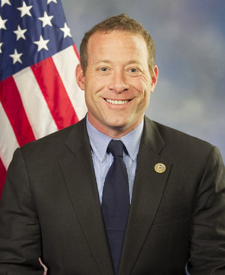
Mr. Gottheimer introduced the following bill; which was referred to …
Stakeholder Effects
cui bono?How this legislation distributes effects. Mention counts reflect frequency, not effect magnitude.
CBP officers completing annual training, DHS training administrators, DHS video-records staff
United States citizens facing immigration arrest, United States nationals facing deportation
Body-worn camera suppliers, Dashboard camera suppliers
Patients present at protected medical facilities
Worshippers present at protected religious sites
Local law-enforcement agencies receiving notice
Bill Structure & Actor Mappings
Who is "The Secretary" in each section?
- "agency"
- → U.S. Immigration and Customs Enforcement or U.S. Customs and Border Protection
- "officer"
- → Federal immigration officer
- "supervisor"
- → Supervisory officer approving an identification exception
- "administrator"
- → Secretary of Homeland Security
- "officer"
- → ICE or CBP officer conducting an immigration action
- "arrestee"
- → Individual whose citizenship must be verified before arrest
- "national"
- → United States national protected from deportation
- "protected_person"
- → Person present in an enumerated protected area
- "notifier"
- → Secretary of Homeland Security
- "recipient"
- → Local law-enforcement agency
- "coordinator"
- → Federal immigration operations staff
Note: {'scope_ids': ['immigration_training_recording'], 'description': 'Visible identification is the default, but the bill permits omission for specified threats, operational safety, or prior written supervisory approval.'}
Key Definitions
Terms defined in this bill
A school, hospital, medical or mental-health facility, place of worship or religious study, polling place, or voting site.
A circumstance involving a public-safety or national-security threat, operational necessity, or prior written supervisory approval in which visible identification is not required.
A specified exigency, imminent threat to a person or criminal evidence, or lack of a safe alternative enforcement location.
We use a combination of our own taxonomy and classification in addition to large language models to assess meaning and potential beneficiaries. High confidence means strong textual evidence. Always verify with the original bill text.
Learn more about our methodology