American Consumer Tariff Rebate Act of 2026
Summary
What This Bill Does
The American Consumer Tariff Rebate Act directs the Treasury Secretary to make a one-time payment for each eligible Federal individual income tax return using the most recent taxable year for which sufficient information is available. A return with adjusted gross income above $400,000 receives no payment. Total base rebates and child bonuses together may not exceed $231.35 billion.
Treasury must calculate a base amount by dividing $231.35 billion by weighted counts of all eligible returns before applying the high-income exclusion. Single and married-filing-separately returns receive one base amount, heads of household receive 1.5 times that amount, and married-joint and qualifying-surviving-spouse returns receive twice that amount. Because the base calculation disregards the income cutoff, amounts not paid to high-income filers are not added back to the base rebate.
An eligible return below the income cutoff that claims qualified children also receives up to $125 per child. The child bonus may use only amounts left unpaid because of the $400,000 cutoff. If those savings are insufficient, every child bonus is reduced proportionally. Treasury should combine the bonus and base rebate when practicable.
The IRS must issue payments automatically by direct deposit, check, or prepaid debit card and Treasury must create a simplified filing process for otherwise eligible nonfilers. Treasury may issue implementation rules and use administratively practical rounding without breaching the cap. Reports are due 90 days after enactment and every 60 days thereafter until distribution is complete.
The bill does not change the underlying tariff rates, require proof of a household's actual tariff costs, guarantee a full $125 child bonus, provide a phaseout below the $400,000 cutoff, or separately state an administrative appropriation.
Who Benefits and How
Eligible taxpayers at or below the income cutoff receive automatic cash payments. Joint filers and surviving spouses receive twice the base amount, heads of household receive one and one-half times the base amount, and families claiming qualified children receive an additional proratable payment. Eligible nonfilers gain a simplified way to claim the rebate.
Who Bears the Burden and How
Treasury and the IRS must calculate the weighted base amount, identify eligible returns, operate multiple payment channels, create a nonfiler process, prevent the aggregate cap from being exceeded, and report repeatedly to Congress. Returns above $400,000 lose access to the rebate, while implementation and payment processing impose Federal administrative costs.
Key Provisions
- Establishes a $231.35 billion aggregate payment cap.
- Excludes returns above $400,000 of adjusted gross income.
- Requires weighted base rebates by filing status.
- Provides up to $125 for each qualified child.
- Limits child bonuses to high-income exclusion savings.
- Requires pro rata child-bonus reductions when necessary.
- Requires automatic IRS distribution.
- Creates a simplified procedure for eligible nonfilers.
- Authorizes guidance and administratively practical rounding.
- Requires reports every 60 days after an initial 90-day report.
- Changes no tariff rate and requires no proof of individual tariff loss.
Evidence Chain:
This summary is generated from the full bill text using AI analysis. Expand "Detailed Analysis" below for identified beneficiaries/burden bearers with clause-level evidence links.
At a Glance
What This Bill Does
Directs Treasury to distribute up to $231.35 billion in one-time tariff rebates using the most recent usable individual returns, excludes returns above $400,000 of adjusted gross income, weights base payments by filing status, and uses only the excluded high-income allocation for a proratable $125-per-child bonus.
Key Policy Areas
Federal Direct Payments, Tariff Policy, Individual Income Tax Administration, Child Benefits, Treasury Administration
Primary Purpose
Directs Treasury to distribute up to $231.35 billion in one-time tariff rebates using the most recent usable individual returns, excludes returns above $400,000 of adjusted gross income, weights base payments by filing status, and uses only the excluded high-income allocation for a proratable $125-per-child bonus.
Policy Domains
Sections 2 through 8 findings, definitions, capped filing-status rebates, income exclusion, child bonus, distribution methods, administration, and recurring reports
Identified Gains
- Eligible single filers receiving base rebates
- Eligible married joint filers receiving weighted rebates
- Eligible heads of household receiving weighted rebates
- Eligible qualifying surviving spouses receiving weighted rebates
- Families claiming qualified children
- Eligible nonfilers using simplified filing
Identified Costs
- Taxpayers with adjusted gross income above $400,000
- Treasury Department payment administrators
- Internal Revenue Service payment administrators
- Federal taxpayers financing rebate administration
- Congressional committees reviewing distribution reports
Sponsors
Legislative Progress
In CommitteeReferred to the House Committee on Ways and Means.
Introduced in House
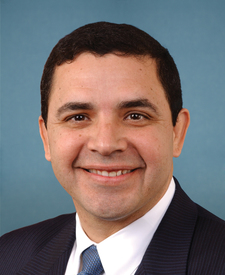
Mr. Cuellar introduced the following bill; which was referred to …
Stakeholder Effects
cui bono?How this legislation distributes effects. Mention counts reflect frequency, not effect magnitude.
Children on eligible tax returns, Eligible heads of household, Eligible heads of household receiving weighted rebates
Taxpayers with adjusted gross income above $400,000 faces effects in multiple directions
Congressional Budget Office, Congressional tax-writing committees, Internal Revenue Service payment administrators
Internal Revenue Service payment administrators, Treasury Department payment administrators face effects in multiple directions
Positive-direction: Congressional tax-writing committees
Negative-direction: Internal Revenue Service reporting staff
Eligible taxpayers receiving paper checks, Eligible taxpayers receiving prepaid cards, Eligible taxpayers with bank accounts
Government accountability researchers, Treasury payment contractors
Bill Structure & Actor Mappings
Who is "The Secretary" in each section?
- "irs"
- → Internal Revenue Service using return information and distributing payments
- "congress"
- → Recipient of recurring distribution reports
- "nonfiler"
- → Otherwise eligible person using the simplified filing process
- "secretary"
- → Secretary of the Treasury responsible for the payment program
- "eligible_return"
- → Federal individual return used to calculate a rebate
- "qualified_child"
- → Child generating a potential $125 bonus
Note: {'scope_ids': ['tariff_rebate_payments'], 'description': 'The bill frames payments as restitution for tariff costs but allocates them through return status and child counts rather than measured tariff exposure; the $400,000 exclusion finances only the child bonus and the aggregate cap can reduce that bonus.'}
Key Definitions
Terms defined in this bill
The quotient of $231.35 billion and the weighted count of all eligible returns before the income exclusion.
Up to $125 per qualified child, funded solely from base amounts not paid because of the income cutoff and reduced pro rata if needed.
IEEPA duties imposed by presidential action and subsequently determined to lack congressional authorization.
We use a combination of our own taxonomy and classification in addition to large language models to assess meaning and potential beneficiaries. High confidence means strong textual evidence. Always verify with the original bill text.
Learn more about our methodology