HR7854-119

In Committee

Medicines for the People Act

119th Congress Introduced Mar 5, 2026

Summary

What This Bill Does

The Medicines for the People Act creates the National Institute for Biomedical Research and Development within the Public Health Service Act. The Institute conducts full-cycle development of drugs, devices, and biologics through federal laboratories, contracts, acquired technologies, new facilities, clinical trials, health technology assessments, and commercialization. It must prioritize public-health impact, unmet need, and scientific opportunity.

The federal government owns patents and trade secrets arising from Institute-conducted or funded work, including contracted work. The Institute has a right of first refusal for rights to qualifying NIH-supported inventions. Institute patents generally go to the Medicines Patent Pool. Public and nonprofit entities receive no-cost licenses; for-profit licenses must use public-interest terms such as non-exclusivity, cost-plus pricing, and reciprocity. If practicable, approved Institute products are publicly manufactured and sold at cost. If public manufacturing is impracticable, the Director may license private production, must prefer nonprofit manufacturing before for-profit production, and reinvests royalties in research.

The Institute must openly publish preclinical, clinical, safety, effectiveness, cost, contract, license, and research-priority information after deidentifying patient data. Funded researchers must share scientific data, preserve it in suitable repositories, and deposit peer-reviewed manuscripts in PubMed Central. The Institute may not claim trade-secret or confidential-commercial-information protection for covered products.

HHS must establish a 15-member voting board within 180 days, with civil-society, independent patient, public-health, and Institute representation. Membership limits restrict for-profit participation, pharmaceutical lobbyists, certain covered-entity executives, and specified post-government influence activity. The Secretary supervises the board and must publicly explain rejected or materially modified decisions.

Beginning within five years, the Director must annually evaluate product development, public data, licenses, patents, and estimated public-program savings, report to Congress, and publish the results. The bill authorizes $90 billion for fiscal year 2027, available until spent. Authorization permits a later appropriation but does not itself guarantee that the full amount will be provided.

Who Benefits and How

Patients may gain access to federally developed medicines at at-cost or cost-plus prices. Public and nonprofit manufacturers receive free licenses, and the Medicines Patent Pool gains access to federal patents. Biomedical researchers gain open clinical and scientific data. Medicare, Medicaid, and other public health programs may save money if lower-price products displace higher-cost alternatives. Independent patient advocates and civil-society representatives receive guaranteed board seats.

Who Bears the Burden and How

Institute-funded contractors and HHS extramural grantees must transfer intellectual-property and technical rights, disclose data, and support technology transfer. For-profit licensees face nonexclusive, cost-plus, and reciprocity terms, while existing manufacturers may compete with at-cost public production. Pharmaceutical lobbyists and specified covered-entity executives face board-eligibility limits. Institute, NIH, HHS, GSA, data, patent, manufacturing, and reporting staff carry extensive implementation duties. Federal health accounts bear costs if the $90 billion authorization is appropriated.

Key Provisions

  • Creates a federal full-cycle biomedical research institute.
  • Authorizes direct research, contracts, acquisitions, clinical trials, and manufacturing facilities.
  • Requires federal ownership of intellectual property from Institute-funded work.
  • Provides a federal right of first refusal for qualifying NIH-supported inventions.
  • Requires open publication of research, clinical, cost, contract, and licensing data.
  • Restricts licenses through nonexclusive, cost-plus, and reciprocity terms.
  • Requires at-cost public manufacturing when practicable.
  • Establishes a 15-member governing board with conflict restrictions.
  • Requires annual evaluations and public reports beginning within five years.
  • Authorizes $90 billion for fiscal year 2027, available until expended.

Evidence Chain:

This summary is generated from the full bill text using AI analysis. Expand "Detailed Analysis" below for identified beneficiaries/burden bearers with clause-level evidence links.

At a Glance

What This Bill Does

Creates a federally directed, full-cycle biomedical research and manufacturing institute that owns resulting intellectual property, publishes research data, licenses on public-interest terms, sells practicable public production at cost, and is authorized $90 billion for fiscal year 2027.

Key Policy Areas

Biomedical Research, Drug Pricing, Public Manufacturing, Medical Intellectual Property, Clinical Data Transparency, Federal Health Spending

Primary Purpose

Creates a federally directed, full-cycle biomedical research and manufacturing institute that owns resulting intellectual property, publishes research data, licenses on public-interest terms, sells practicable public production at cost, and is authorized $90 billion for fiscal year 2027.

Policy Domains

Biomedical Research Drug Pricing Public Manufacturing Medical Intellectual Property Clinical Data Transparency Federal Health Spending

Section 464z-12 governing board

Identified Gains
  • Independent patient advocacy organizations
  • Civil-society medicine-access representatives
  • Public health officials serving on the board
  • Institute staff serving on the board
  • Patients represented in Institute governance
Model: codex-gpt-5 | Version: bill_summary_v2 | Source: ih
Institute staff serving on the board:
Independent patient advocacy organizations:
Patients represented in Institute governance:
Public health officials serving on the board:
Civil-society medicine-access representatives:
Identified Costs
  • HHS board-appointment staff
  • Pharmaceutical manufacturer lobbyists
  • Covered-entity senior executives
  • Former executive-agency employees on the board
  • General Services Administration support staff
  • Institute governing-board members
Model: codex-gpt-5 | Version: bill_summary_v2 | Source: ih
HHS board-appointment staff:
Covered-entity senior executives:
Institute governing-board members:
Pharmaceutical manufacturer lobbyists:
General Services Administration support staff:
Former executive-agency employees on the board:

Section 464z-11 Institute powers and public-access rules

Identified Gains
  • Patients using Institute-developed medicines
  • Caregivers purchasing Institute-developed products
  • Public medical-product manufacturers
  • Nonprofit medical-product manufacturers
  • Medicines Patent Pool
  • Biomedical researchers using open Institute data
  • Public health care programs purchasing medicines
  • Low-income country medicine purchasers
Model: codex-gpt-5 | Version: bill_summary_v2 | Source: ih
Medicines Patent Pool: ,
Public medical-product manufacturers: ,
Low-income country medicine purchasers: ,
Nonprofit medical-product manufacturers: ,
Patients using Institute-developed medicines: ,
Biomedical researchers using open Institute data: ,
Public health care programs purchasing medicines: ,
Caregivers purchasing Institute-developed products: ,
Identified Costs
  • Institute-funded biomedical contractors
  • HHS extramural biomedical grantees
  • Owners of NIH-supported invention rights
  • For-profit Institute patent licensees
  • Manufacturers competing with at-cost federal products
  • Institute patent-management staff
  • Institute data-publication staff
  • NIH technology-transfer staff
Model: codex-gpt-5 | Version: bill_summary_v2 | Source: ih
NIH technology-transfer staff: ,
Institute data-publication staff: ,
Institute patent-management staff: ,
HHS extramural biomedical grantees: ,
For-profit Institute patent licensees: ,
Institute-funded biomedical contractors: ,
Owners of NIH-supported invention rights: ,
Manufacturers competing with at-cost federal products: ,

Section 464z-13 annual evaluation and reporting

Identified Gains
  • Congressional health oversight committees
  • Biomedical policy researchers
  • Patients monitoring Institute performance
  • Public health program administrators
Model: codex-gpt-5 | Version: bill_summary_v2 | Source: ih
Biomedical policy researchers:
Public health program administrators:
Congressional health oversight committees:
Patients monitoring Institute performance:
Identified Costs
  • Institute evaluation staff
  • Institute patent-record staff
  • Institute congressional-reporting staff
  • Institute public-web staff
Model: codex-gpt-5 | Version: bill_summary_v2 | Source: ih
Institute evaluation staff:
Institute public-web staff:
Institute patent-record staff:
Institute congressional-reporting staff:

Section 464z-14 fiscal year 2027 authorization

Identified Gains
  • National Institute for Biomedical Research and Development
  • Institute biomedical research programs
  • Institute public-manufacturing facilities
  • Biomedical contractors receiving Institute work
  • Patients using funded medical products
Model: codex-gpt-5 | Version: bill_summary_v2 | Source: ih
Institute biomedical research programs:
Patients using funded medical products:
Institute public-manufacturing facilities:
Biomedical contractors receiving Institute work:
National Institute for Biomedical Research and Development:
Identified Costs
  • Federal biomedical-research accounts
  • Congressional appropriations committees
  • HHS financial-management staff
  • Institute budget-execution staff
Model: codex-gpt-5 | Version: bill_summary_v2 | Source: ih
HHS financial-management staff:
Institute budget-execution staff:
Federal biomedical-research accounts:
Congressional appropriations committees:

Legislative Progress

In Committee
Introduced Committee Passed
Mar 5, 2026

Referred to the Committee on Energy and Commerce, and in …

Mar 5, 2026

Introduced in House

Mar 5, 2026

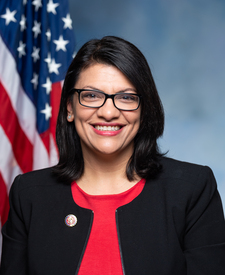
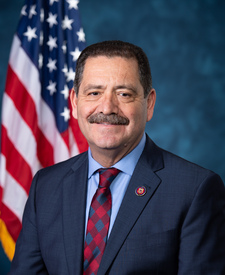
Ms. Tlaib (for herself, Ms. Lee of Pennsylvania, and Mrs. …

Stakeholder Effects

cui bono?

How this legislation distributes effects. Mention counts reflect frequency, not effect magnitude.

Government
18 mentions across 5 clauses
+4 positive -13 negative ~1 mixed

Congressional health oversight committees, Federal biomedical-research accounts, Former executive-agency employees on the board

Positive-direction: Congressional health oversight committees, National Institute for Biomedical Research and Development, Public health care programs purchasing medicines, Public health program administrators

Negative-direction: Federal biomedical-research accounts, Former executive-agency employees on the board, General Services Administration support staff, HHS board-appointment staff, HHS financial-management staff, Institute congressional-reporting staff, Institute data-publication staff, Institute evaluation staff, Institute patent-management staff, Institute patent-record staff, Institute public-web staff

Research & Science
9 mentions across 4 clauses
+5 positive -2 negative ~2 mixed

Biomedical contractors receiving Institute work, Biomedical policy researchers, Biomedical researchers using open Institute data

Positive-direction: Biomedical contractors receiving Institute work, Biomedical policy researchers, Biomedical researchers using open Institute data, Institute biomedical research programs

Negative-direction: HHS extramural biomedical grantees

Pharmaceuticals
8 mentions across 3 clauses
+2 positive -4 negative ~2 mixed

For-profit Institute patent licensees, Manufacturers competing with at-cost federal products, Medicines Patent Pool

Positive-direction: Medicines Patent Pool

Negative-direction: Manufacturers competing with at-cost federal products, Owners of NIH-supported invention rights, Pharmaceutical manufacturer lobbyists

Healthcare Beneficiaries
6 mentions across 5 clauses
+6 positive

Caregivers purchasing Institute-developed products, Patients monitoring Institute performance, Patients represented in Institute governance

Healthcare
5 mentions across 3 clauses
+5 positive

Institute public-manufacturing facilities, Nonprofit medical-product manufacturers, Public medical-product manufacturers

Patient Advocacy
1 mention across 1 clause
+1 positive

Independent patient advocacy organizations

Nonprofits
1 mention across 1 clause
+1 positive

Civil-society medicine-access representatives

General Public
1 mention across 1 clause
+1 positive

Public health officials serving on the board

5/6
sections analyzed
Full impact breakdown

Bill Structure & Actor Mappings

Who is "The Secretary" in each section?

Domains
Biomedical Research Drug Pricing Public Manufacturing Medical Intellectual Property Clinical Data Transparency
Actor Mappings
"patient"
→ Person using an Institute-developed medical product
"director"
→ Director of the National Institute for Biomedical Research and Development
"licensee"
→ Public, nonprofit, or for-profit licensee of Institute patents
"researcher"
→ Public or private entity conducting Institute-funded research
"manufacturer"
→ Public or private manufacturer of an Institute-developed product
Domains
Biomedical Research Governance Federal Ethics Patient Representation
Actor Mappings
"voting_member"
→ Member of the 15-person governing board
"support_agency"
→ General Services Administration
"appointing_official"
→ HHS Secretary
"patient_representative"
→ Independent patient advocate
Domains
Biomedical Research Governance Government Transparency Medical Intellectual Property
Actor Mappings
"reader"
→ Member of the public using annual metrics
"evaluator"
→ Institute Director
"recipient"
→ Congress
Domains
Federal Health Spending Biomedical Research Public Manufacturing
Actor Mappings
"recipient"
→ National Institute for Biomedical Research and Development
"appropriator"
→ Congress
"financial_manager"
→ HHS financial-management office

Note: {'scope_ids': ['public_biomedical_institute'], 'description': 'The Institute uses at-cost public manufacturing when practicable; when it is not practicable, private licensing is permitted with a nonprofit preference and public-interest terms.'}

Key Definitions

Terms defined in this bill

4 terms
"covered entity for board restrictions" §covered_entity

A for-profit company or specified financial institution operating under a listed federal settlement or subject to a listed enforcement action.

"scientific data" §scientific_data

Data accepted by the scientific community as sufficient to validate and replicate research findings, whether or not used in a publication.

"for-profit public-interest license" §public_interest_license

A license for Institute patents using protections that include non-exclusivity, cost-plus pricing, and reciprocity.

"health technology assessment" §health_technology_assessment

A formal multidisciplinary process using explicit methods to determine a medical product's value across clinical, economic, ethical, social, legal, organizational, environmental, patient, and caregiver effects.

We use a combination of our own taxonomy and classification in addition to large language models to assess meaning and potential beneficiaries. High confidence means strong textual evidence. Always verify with the original bill text.

Learn more about our methodology