HR7842-119

In Committee

Alien Banking Act

119th Congress Introduced Mar 5, 2026

Summary

What This Bill Does

The Alien Banking Act adds immigration status to federal customer-identification programs. Any individual who is physically present in the United States and seeks to open an account must attest under penalty of perjury, using a checkbox or similar affirmation, that the person is a U.S. citizen, lawful permanent resident, or otherwise lawfully present under a definition set by DHS in consultation with Treasury.

A financial institution may not open or maintain an account for an individual who fails to provide the attestation. Because the rule says maintain, it can reach existing individual accounts after the effective date, although the bill does not state how or when institutions must obtain attestations from current customers. Lawfully present noncitizens remain eligible to attest and hold accounts.

A person who knowingly makes a false attestation faces a civil penalty from $10,000 to $50,000 and a criminal penalty of up to five years in prison, with a fine capped at $250,000. Civil forfeiture may reach every asset in the connected account regardless of when deposited, plus property traceable to the account. Upon conviction, a court must order the same broad criminal forfeiture.

A financial institution with reason to believe an attestation is false must report that belief to DHS and the Attorney General. Treasury, consulting DHS and DOJ, must issue regulations within 180 days, including model attestation language and reporting guidelines. The new provisions take effect one year after enactment.

Current customer-identification rules already require institutions to collect and verify identity information. The bill adds a status attestation and suspicion-reporting duty; its text does not require documentary proof of immigration status or direct electronic verification. Failure to attest, not a finding of unlawful presence, triggers the account prohibition.

Who Benefits and How

Immigration-enforcement agencies gain a new self-attestation and financial reporting channel. Prosecutors and investigators gain civil, criminal, and forfeiture tools for knowing false statements. Financial institutions receive model language and reporting guidance, and federal forfeiture accounts may receive seized assets.

Who Bears the Burden and How

People without lawful status lose access to covered accounts and face pressure toward cash or informal finance. Citizens and lawfully present customers must make an additional sworn statement. Banks, credit unions, brokerages, and other covered institutions must redesign onboarding, collect attestations from existing customers, monitor suspicion, report to government, and close or refuse accounts. False-suspicion reports create privacy and discrimination risks.

Key Provisions

  • Requires a sworn lawful-presence attestation at account opening.
  • Includes citizens, permanent residents, and other lawfully present people.
  • Bars opening an account without an attestation.
  • Bars maintaining an account without an attestation.
  • Establishes civil penalties from $10,000 to $50,000.
  • Establishes imprisonment for up to five years.
  • Authorizes forfeiture of all connected account property.
  • Requires reporting of suspected false attestations.
  • Requires model language and reporting guidance within 180 days.
  • Delays the new rules for one year.
  • Requires no documentary status proof in the statutory text.

Evidence Chain:

This summary is generated from the full bill text using AI analysis. Expand "Detailed Analysis" below for identified beneficiaries/burden bearers with clause-level evidence links.

At a Glance

What This Bill Does

Adds a lawful-presence attestation under penalty of perjury to financial-institution customer-identification programs, bars opening or maintaining an account when an individual fails to attest, creates civil, criminal, and sweeping forfeiture penalties for knowing false attestations, requires suspicious-attestation reports, and directs implementing regulations before a one-year effective date.

Key Policy Areas

Bank Customer Identification, Immigration Status, Financial Access, Asset Forfeiture, Bank Reporting

Primary Purpose

Adds a lawful-presence attestation under penalty of perjury to financial-institution customer-identification programs, bars opening or maintaining an account when an individual fails to attest, creates civil, criminal, and sweeping forfeiture penalties for knowing false attestations, requires suspicious-attestation reports, and directs implementing regulations before a one-year effective date.

Policy Domains

Bank Customer Identification Immigration Status Financial Access Asset Forfeiture Bank Reporting

Sections 2 through 4 attestation, account prohibition, penalties, forfeiture, reporting, regulations, and effective date

Identified Gains
  • DHS immigration-enforcement investigators
  • Justice Department prosecutors
  • Federal asset-forfeiture programs
  • Financial institutions receiving model language
  • Bank compliance teams receiving reporting guidance
  • Lawful customers seeking standardized attestations
Model: codex-gpt-5 | Version: bill_summary_v2 | Source: ih
Justice Department prosecutors: ,
Federal asset-forfeiture programs: ,
DHS immigration-enforcement investigators: ,
Financial institutions receiving model language: ,
Bank compliance teams receiving reporting guidance: ,
Lawful customers seeking standardized attestations: ,
Identified Costs
  • People lacking lawful immigration status
  • Existing customers asked to attest
  • Lawfully present noncitizen customers
  • Banks maintaining individual accounts
  • Credit unions maintaining individual accounts
  • Brokerages subject to customer-identification rules
  • Customers falsely suspected of misrepresentation
  • Treasury rulemaking staff
  • Federal courts handling forfeiture cases
Model: codex-gpt-5 | Version: bill_summary_v2 | Source: ih
Treasury rulemaking staff: ,
Existing customers asked to attest: ,
Banks maintaining individual accounts: ,
Lawfully present noncitizen customers: ,
Federal courts handling forfeiture cases: ,
People lacking lawful immigration status: ,
Credit unions maintaining individual accounts: ,
Customers falsely suspected of misrepresentation: ,
Brokerages subject to customer-identification rules: ,

Legislative Progress

In Committee
Introduced Committee Passed
Mar 5, 2026

Referred to the House Committee on Financial Services.

Mar 5, 2026

Introduced in House

Mar 5, 2026

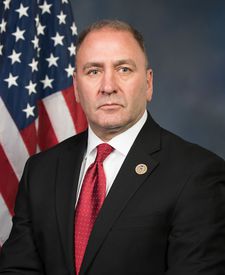
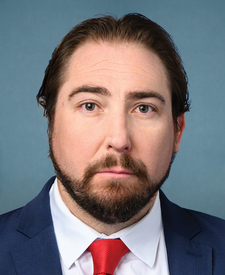
Mr. Ogles (for himself, Mr. Crane, and Mr. Higgins of …

Stakeholder Effects

cui bono?

How this legislation distributes effects. Mention counts reflect frequency, not effect magnitude.

Financial Services
13 mentions across 2 clauses
+2 positive -8 negative ~3 mixed

Bank compliance teams receiving guidance, Banks maintaining individual accounts, Brokerages subject to identification rules

Positive-direction: Bank compliance teams receiving guidance, Financial institutions receiving model language

Negative-direction: Banks maintaining individual accounts, Brokerages subject to identification rules, Cash-dependent households excluded from banking, Credit unions maintaining individual accounts, Customers falsely suspected of misrepresentation, Existing customers asked to attest, Financial-institution reporting teams, People lacking lawful immigration status

Government
9 mentions across 2 clauses
+5 positive -4 negative

DHS immigration-enforcement investigators, DHS investigators receiving standardized reports, DHS lawful-presence definition staff

Positive-direction: DHS immigration-enforcement investigators, DHS investigators receiving standardized reports, Federal asset-forfeiture programs, Justice Department prosecutors

Negative-direction: DHS lawful-presence definition staff, Federal courts handling forfeiture cases, Justice Department regulatory staff, Treasury rulemaking staff

Technology
1 mention across 1 clause
+1 positive

Bank compliance software vendors

Law Enforcement
1 mention across 1 clause
-1 negative

People knowingly making false attestations

Nonprofits
1 mention across 1 clause
-1 negative

Financial privacy advocacy organizations

2/4
sections analyzed
Full impact breakdown

Bill Structure & Actor Mappings

Who is "The Secretary" in each section?

Domains
Bank Customer Identification Immigration Status Financial Access Asset Forfeiture Bank Reporting
Actor Mappings
"court"
→ Federal court ordering criminal forfeiture after conviction
"customer"
→ Individual present in the United States seeking or holding an account
"enforcer"
→ DHS or Justice official receiving reports or enforcing penalties
"secretary"
→ Treasury Secretary issuing implementation rules
"institution"
→ Financial institution operating a customer-identification program

Note: {'scope_ids': ['financial_account_lawful_presence_attestation'], 'description': 'The bill is styled as status verification but statutorily requires an attestation rather than documentary proof; its account ban is triggered by failure to attest, reaches maintenance of existing accounts, and permits forfeiture of all account property without limiting it to proceeds of the false statement.'}

Key Definitions

Terms defined in this bill

3 terms
"lawful-presence attestation" §attestation

A sworn checkbox or similar affirmation that an account applicant is a U.S. citizen, lawful permanent resident, or otherwise lawfully present as federally defined.

"failure-to-attest account prohibition" §account_prohibition

The ban on opening or maintaining an individual account when the customer fails to provide the required attestation.

"connected account property" §forfeitable_property

All property in an account linked to a knowing false attestation regardless of deposit timing, plus property otherwise traceable to the account.

We use a combination of our own taxonomy and classification in addition to large language models to assess meaning and potential beneficiaries. High confidence means strong textual evidence. Always verify with the original bill text.

Learn more about our methodology