Federal Funds Whistleblower Protection Extension Act
Summary
What This Bill Does
The Federal Funds Whistleblower Protection Extension Act protects an employee, contractor, subgrantee, or agent of a state or local government or nonfederal entity that administers or receives federal financial assistance. A protected disclosure is lawful information the person reasonably believes shows federal-fund waste, fraud, abuse, a related federal-law violation, or gross program mismanagement.
A state or local officer, employee, or agent connected to federal-assistance administration may not take or fail to take a personnel action because of a protected disclosure. Covered actions include termination, suspension, demotion, reassignment, pay or benefit reduction, major duty changes, intimidation, threats, harassment, or another materially adverse action.
The criminal-penalty section first says a covered official who knowingly retaliates is subject to penalties, but then establishes a negligence tier up to $50,000, a knowing tier up to $100,000 and one year in prison, and an intentional concealment or personal-benefit tier up to $250,000 and five years. The threshold clause and negligence tier conflict, leaving uncertainty about whether merely negligent retaliation is actually an offense.
A federal agency or inspector general that finds reasonable cause may refer retaliation to the Attorney General; referral is discretionary. Each state or local government receiving federal financial assistance must certify compliance. Failure may lead to corrective action, suspension, or termination of funding for the affected program.
The bill does not create a private right of action, reinstatement process, backpay remedy, administrative complaint deadline, mandatory investigation, burden-of-proof framework, or protection for unlawful disclosures. Funding suspension can affect program beneficiaries as well as the noncompliant government.
Who Benefits and How
State, local, contractor, subgrantee, and nonprofit workers gain a federal prohibition and potential criminal deterrent against retaliation. Federal agencies, inspectors general, taxpayers, and program beneficiaries may gain earlier disclosure of misuse and mismanagement.
Who Bears the Burden and How
Covered officials face fines, prison, and referral risk. States and localities must certify compliance, train personnel, investigate concerns, and protect funding. Federal agencies and DOJ must assess and prosecute referrals. Beneficiaries and service providers can lose support if funding is suspended or terminated.
Key Provisions
- Defines covered workers broadly.
- Protects lawful reasonable-belief disclosures.
- Covers waste, fraud, abuse, violations, and gross mismanagement.
- Prohibits adverse personnel actions.
- Includes intimidation, threats, and harassment.
- Creates a negligence fine tier.
- Creates knowing-retaliation fines and imprisonment.
- Creates heightened concealment and personal-gain penalties.
- Authorizes federal agency referrals.
- Authorizes inspector-general referrals.
- Requires state and local compliance certification.
- Authorizes corrective action requirements.
- Authorizes suspension of federal funds.
- Authorizes termination of affected-program funding.
- Creates no private damages or reinstatement action.
- Leaves a knowing-versus-negligent drafting conflict.
Evidence Chain:
This summary is generated from the full bill text using AI analysis. Expand "Detailed Analysis" below for identified beneficiaries/burden bearers with clause-level evidence links.
At a Glance
What This Bill Does
Extends whistleblower protection to workers, contractors, subgrantees, and agents administering or receiving federal assistance through state or local programs, prohibits materially adverse retaliation, creates contested negligence, knowing, and concealment penalty tiers, permits federal criminal referrals, and makes compliance certification a condition of federal funding.
Key Policy Areas
Whistleblower Protection, Federal Financial Assistance, State and Local Government Employment, Criminal Retaliation Penalties, Federal Funding Conditions
Primary Purpose
Extends whistleblower protection to workers, contractors, subgrantees, and agents administering or receiving federal assistance through state or local programs, prohibits materially adverse retaliation, creates contested negligence, knowing, and concealment penalty tiers, permits federal criminal referrals, and makes compliance certification a condition of federal funding.
Policy Domains
Sections 2 and 3 covered people and disclosures, adverse-action prohibition, criminal penalty tiers, referral authority, federal-funding certification and consequences, and conforming table amendment
Identified Gains
- State employees reporting federal-fund misuse
- Local employees reporting federal-fund misuse
- Contractors making protected disclosures
- Subgrantees making protected disclosures
- Nonprofit workers administering federal assistance
- Federal inspectors general
- Federal taxpayers
- Beneficiaries of well-managed federal programs
Identified Costs
- State officials accused of retaliation
- Local officials accused of retaliation
- State governments certifying compliance
- Local governments certifying compliance
- Federal agencies reviewing referrals
- Department of Justice prosecutors
- Programs exposed to funding suspension
- Beneficiaries of noncompliant programs
Sponsors
Legislative Progress
In CommitteeReferred to the House Committee on Oversight and Government Reform.
Introduced in House
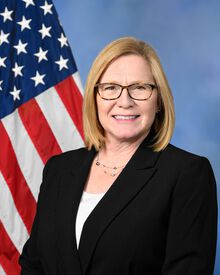
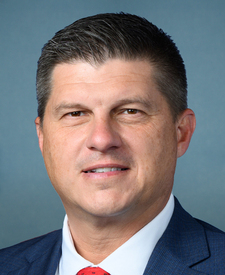
Mrs. Fischbach (for herself and Mr. Finstad) introduced the following …
Stakeholder Effects
cui bono?How this legislation distributes effects. Mention counts reflect frequency, not effect magnitude.
Local employees administering federal funds, Local employees reporting federal-fund misuse, Local governments certifying compliance
Positive-direction: Local employees administering federal funds, Local employees reporting federal-fund misuse, State employees administering federal funds, State employees reporting federal-fund misuse
Negative-direction: Local governments certifying compliance, Local officials accused of retaliation, Local officials overseeing federal assistance, Officials concealing federal-fund misuse, State governments certifying compliance, State officials accused of retaliation, State officials overseeing federal assistance
Beneficiaries of noncompliant programs, Programs exposed to funding suspension, Service providers funded by affected programs
Positive-direction: Taxpayers, Whistleblowers in federally funded programs
Negative-direction: Beneficiaries of noncompliant programs, Programs exposed to funding suspension, Service providers funded by affected programs
Department of Justice prosecutors, Federal agencies administering assistance, Federal agencies enforcing grant conditions
Positive-direction: Federal agencies enforcing grant conditions, Federal inspectors general
Negative-direction: Department of Justice prosecutors, Federal courts resolving culpability conflict
Contractors making protected disclosures
Nonprofit workers administering federal assistance, Subgrantees making protected disclosures
Bill Structure & Actor Mappings
Who is "The Secretary" in each section?
- "official"
- → State or local official accused of retaliation
- "inspector"
- → Federal agency or inspector general considering referral
- "recipient"
- → State or local government receiving federal assistance
- "beneficiary"
- → Person relying on an affected federally funded program
- "whistleblower"
- → Covered worker making a protected disclosure
- "attorney_general"
- → Justice Department official investigating or prosecuting
Note: {'scope_ids': ['state_administered_federal_funds_whistleblower_protection'], 'description': 'The bill relies on criminal and funding enforcement rather than a worker lawsuit, makes referrals discretionary, can penalize program funding, and contains a direct textual conflict between an offense introduced as knowing retaliation and a separate negligence penalty tier.'}
Key Definitions
Terms defined in this bill
State or local certification of compliance backed by possible corrective action, suspension, or termination for the affected program.
An employee, contractor, subgrantee, or agent of a governmental or nonfederal entity administering or receiving federal financial assistance.
A lawful disclosure reasonably believed to show federal-fund misuse, a related federal-law violation, or gross program mismanagement.
We use a combination of our own taxonomy and classification in addition to large language models to assess meaning and potential beneficiaries. High confidence means strong textual evidence. Always verify with the original bill text.
Learn more about our methodology