Protect Liberty and End Warrantless Surveillance Act of 2026
Summary
What This Bill Does
The Protect Liberty and End Warrantless Surveillance Act generally bars Federal personnel from querying Section 702-acquired information to find communications or other information of or about U.S. persons unless a court order, qualifying emergency authorization, imminent-death-or-serious-harm emergency, case-specific consent, or tightly limited known-cyber-threat-signature query applies. Emergency-derived information generally can be used only for the precipitating threat. Queries, denials, and compliance receive FISA-court and congressional reporting, and information from an unapproved emergency query is suppressed and restricted.
The query definition covers manual or automated retrieval using identifiers, purpose, or reason to believe U.S.-person information will be found. Metadata results cannot bootstrap access to otherwise prohibited communications, and the protections reach federated and mixed datasets unless a query can be limited to non-702 data.
On December 31, 2026, the bill narrows recently expanded definitions of electronic communication service providers. Until the same date, directives to providers in the temporary expanded category are limited to the service type addressed in specified FISA opinions. The Attorney General and Director of National Intelligence must describe directives to the FISA court and Congress, supply equipment and access details before collection, support possible court review, complete a declassification review, report quarterly counts, and provide relevant court opinions.
FISA courts generally must appoint an amicus, including a privacy or civil-liberties expert when appropriate, for novel legal questions, sensitive investigations, new technologies, programmatic surveillance, significant civil-liberties issues, or matters involving U.S.-person activity unless the court makes contrary findings. Sensitive matters include officials, candidates, political or religious organizations, prominent members, and news media. Amici may raise issues, seek appellate certification, obtain applications and unredacted decisions, request other material, and access classified records when eligible.
A separate, unstored section extends FISA Title VII authorities through April 20, 2028. Thus, the measure restricts use and oversight while preserving the underlying surveillance authorities for about two more years.
The Fourth Amendment Is Not For Sale title bars law-enforcement and intelligence agencies from buying U.S.-person communications, account, device, location, or reidentifiable records from data brokers and from receiving purchased data through another agency. Illegally acquired data and derivative evidence are excluded, and the Attorney General must impose minimization. Government must obtain the same court order, under the most stringent applicable standard, when compelling a third party to disclose data that would require an order if held by a communications provider.
The Act extends confidentiality and demand rules to intermediary and broadly defined online service providers, including information services, shared server systems, libraries, and educational institutions. It also makes FISA and specified surveillance statutes the exclusive means for domestic foreign-intelligence acquisition of U.S.-person records, location, browsing, search, and warrant-protected information, while preserving expressly authorized or exclusively foreign non-U.S.-person collection.
Finally, emergency assistance by a communications provider receives civil immunity only with a qualifying written certification and only until the earliest of a denied order, acquisition of the sought communication, or 48 hours. The bill does not end Section 702 or Title VII immediately, create a general private damages action, or ban defensive cyber and life-safety emergency queries.
Who Benefits and How
U.S. persons, communications users, location-data subjects, journalists, political and religious groups, and online-service users gain warrants, purchase bans, suppression, minimization, adversarial FISA participation, provider confidentiality, and narrower emergency immunity. Communications and intermediary providers gain clearer limits on directives and demands. Courts and Congress gain detailed oversight information.
Who Bears the Burden and How
The FBI, NSA, other intelligence elements, law-enforcement agencies, Justice, and the DNI must obtain orders, document exceptions, stop data purchases, segregate federated datasets, minimize violations, and provide recurring reports. FISA courts and amici face additional reviews and access work. Data brokers lose government sales. Online and intermediary providers assume expanded confidentiality and disclosure duties. At the same time, U.S. persons continue to bear underlying Title VII surveillance risk through April 20, 2028.
Key Provisions
- Prohibits most warrantless U.S.-person Section 702 queries.
- Preserves narrow emergency, consent, and defensive-cyber exceptions.
- Restricts use of emergency-query results.
- Covers metadata and federated datasets.
- Narrows expanded provider definitions on December 31, 2026.
- Adds temporary directive notice and review through that date.
- Expands mandatory FISA amicus participation and access.
- Extends FISA Title VII through April 20, 2028.
- Prohibits government purchase of covered data-broker records.
- Excludes illegally purchased data and derivative evidence.
- Requires court orders for comparable third-party demands.
- Expands privacy duties to intermediary and online service providers.
- Makes FISA the exclusive domestic foreign-intelligence acquisition path.
- Limits emergency provider immunity to certified and time-limited aid.
- Creates no immediate repeal of Section 702 or general damages action.
Evidence Chain:
This summary is generated from the full bill text using AI analysis. Expand "Detailed Analysis" below for identified beneficiaries/burden bearers with clause-level evidence links.
At a Glance
What This Bill Does
Requires warrants or narrow exceptions for U.S.-person Section 702 queries, strengthens temporary provider-directive oversight and FISA amici, extends FISA Title VII to April 20, 2028, bars government purchase and compelled acquisition of protected data through third parties, expands online-provider privacy rules, makes FISA the exclusive domestic foreign-intelligence path, and narrows emergency provider immunity.
Key Policy Areas
Foreign Intelligence Surveillance, Fourth Amendment Privacy, Section 702 Queries, Data Broker Regulation, Electronic Communications Privacy
Primary Purpose
Requires warrants or narrow exceptions for U.S.-person Section 702 queries, strengthens temporary provider-directive oversight and FISA amici, extends FISA Title VII to April 20, 2028, bars government purchase and compelled acquisition of protected data through third parties, expands online-provider privacy rules, makes FISA the exclusive domestic foreign-intelligence path, and narrows emergency provider immunity.
Policy Domains
Sections 101 through 105 and 201 through 207 warrant and exception rules, temporary provider limits, FISA amici, Title VII extension, data-broker purchase ban, court-order parity, provider coverage, exclusive means, and emergency immunity
Identified Gains
- United States persons whose Section 702 data is queried
- People whose location records are sold by data brokers
- Communications users whose records are held by third parties
- Domestic journalists subject to sensitive investigations
- Political organizations subject to FISA proceedings
- Religious organizations subject to FISA proceedings
- Online service users receiving expanded privacy protection
- Communications providers receiving government demands
Identified Costs
- Federal Bureau of Investigation analysts
- National Security Agency analysts
- Law enforcement agencies purchasing covered records
- Intelligence agencies purchasing covered records
- Justice Department surveillance attorneys
- Foreign Intelligence Surveillance Court judges
- Data brokers selling covered records
- Online service providers handling government demands
- United States persons exposed to extended Title VII authority
Sponsors


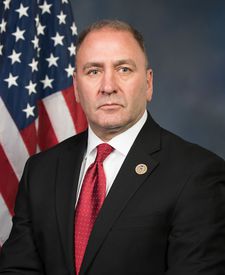
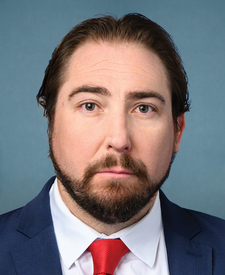
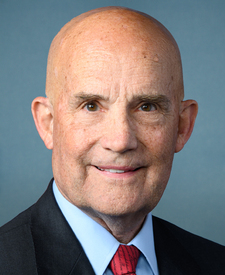
Legislative Progress
In CommitteeReferred to the Committee on the Judiciary, and in addition …
Introduced in House
Mr. Biggs of Arizona (for himself, Mr. Crane, and Mr. …
Stakeholder Effects
cui bono?How this legislation distributes effects. Mention counts reflect frequency, not effect magnitude.
Attorney General privacy compliance staff, Attorney General surveillance staff, Congressional intelligence committees
Foreign Intelligence Surveillance Court judges, Justice Department surveillance attorneys face effects in multiple directions
Positive-direction: Congressional intelligence committees, Congressional judiciary committees, Foreign Intelligence Surveillance Court of Review, Intelligence agencies producing classified records
Negative-direction: Attorney General privacy compliance staff, Attorney General surveillance staff, Director of National Intelligence staff, Federal Bureau of Investigation analysts, Federal judges reviewing third-party demands, Government officials issuing emergency certifications, Intelligence agencies purchasing covered records, Intelligence agencies seeking third-party records, Justice Department emergency surveillance staff, Law enforcement agencies purchasing covered records, Law enforcement agencies seeking online records, Law enforcement agencies seeking third-party records, National Security Agency analysts, National Security Agency collection programs
Civil plaintiffs challenging unlawful assistance, Cleared counsel for covered providers, Criminal prosecutors using Section 702 evidence
Positive-direction: Civil plaintiffs challenging unlawful assistance, Cleared counsel for covered providers, FISA amici with privacy expertise, Privacy attorneys challenging emergency surveillance, Privacy attorneys challenging purchased evidence, Privacy compliance vendors
Negative-direction: Criminal prosecutors using Section 702 evidence, Criminal prosecutors using purchased records, Government surveillance attorneys
Communications users whose records are held by third parties, Internet users whose browsing history is sought, Internet users whose search history is sought
People inside the United States subject to collection, Political organizations subject to FISA proceedings, Religious organizations subject to FISA proceedings
Communications providers assisting emergency interceptions, Providers in the temporary expanded Section 702 category, Providers receiving temporary Section 702 directives
Positive-direction: Providers in the temporary expanded Section 702 category, Providers receiving temporary Section 702 directives
Negative-direction: Communications providers assisting emergency interceptions
People facing imminent threats of serious harm, People facing urgent threats requiring interception
Cybersecurity analysts using known threat signatures, Online service providers handling government demands
Positive-direction: Cybersecurity analysts using known threat signatures
Negative-direction: Online service providers handling government demands
Data brokers selling covered records, Third parties receiving government data demands
Positive-direction: Third parties receiving government data demands
Negative-direction: Data brokers selling covered records
Bill Structure & Actor Mappings
Who is "The Secretary" in each section?
- "dni"
- → Director of National Intelligence coordinating directives and declassification
- "amicus"
- → Cleared FISA amicus providing privacy and civil-liberties advocacy
- "us_person"
- → United States person whose communications or records are queried or acquired
- "fisa_court"
- → Foreign Intelligence Surveillance Court reviewing queries and directives
- "data_broker"
- → Third party selling covered records to government
- "federal_officer"
- → Federal employee conducting a Section 702 query
- "online_provider"
- → Provider subject to expanded confidentiality and disclosure rules
- "attorney_general"
- → Attorney General issuing procedures, notices, certifications, and reports
Note: {'scope_ids': ['fisa_queries_and_data_brokers'], 'description': 'The Act sharply tightens U.S.-person query and commercial-data acquisition rules and expands adversarial oversight, but it extends Title VII surveillance authority until April 20, 2028; the special directive regime and expanded provider categories end earlier on December 31, 2026.'}
Key Definitions
Terms defined in this bill
A manual or automated Section 702 data query using U.S.-person terms, intended in whole or part to retrieve U.S.-person information, or conducted with specific reason to expect such information.
Reidentifiable U.S.-person communications, account, device, transactional, content, or location data disclosed to or collected by a third party.
An electronic communication, remote computing, information, shared-server, internet-access, library, or educational online service covered by the expanded privacy provisions.
We use a combination of our own taxonomy and classification in addition to large language models to assess meaning and potential beneficiaries. High confidence means strong textual evidence. Always verify with the original bill text.
Learn more about our methodology