NOAA Weather Radio Modernization Act
Summary
What This Bill Does
The NOAA Weather Radio Modernization Act amends the Weather Research and Forecasting Innovation Act of 2017. It requires the Under Secretary of Commerce for Oceans and Atmosphere to establish or maintain NOAA Weather Radio as a nationwide, 24-hour, seven-day weather radio network broadcasting weather information, emergency weather watches, warnings, geological hazards, and other hazard information. NOAA must keep existing systems operating before new technologies are implemented, especially where cellular service is missing or poor, and must ensure transmitter-site maintenance, monitoring, and timely repairs.
The bill creates a modernization initiative to expand coverage, improve hazardous-weather risk communication, amplify non-weather emergency messages through IPAWS when needed, add transmitters for rapid-onset disaster areas, underserved communities, and federal lands, and add satellite, internet-protocol, or emerging-technology alert capability. NOAA must upgrade telecommunications infrastructure, accelerate Advanced Weather Interactive Processing System software improvements for partial-county alerts, improve data and feed accessibility, develop backup continuity options, research microwave or other remote-transmitter options, transition critical applications to the Integrated Dissemination Program, and work with the General Services Administration on priority tower and space capacity. It authorizes $20,000,000 for each fiscal year 2026 through 2031 for operation and $100,000,000 in fiscal year 2026 for modernization and assessment work.
The bill also allows the Under Secretary of Commerce for Standards and Technology to support national standards for flash-flood emergency alert systems in 100-year floodplains, especially for communities lacking broadband, state or local warning systems, or satellite coverage. Finally, NOAA must coordinate with OMB to categorize NOAA meteorology, hydrology, physical science, electronics technician, and IT management positions as protective service occupations, and NOAA may not make staffing changes in those occupations until congressional committees have had 30 days to review a report on the change.
Who Benefits and How
NOAA Weather Radio listeners benefit from a statutory requirement for continuous nationwide broadcasts and modernization of warning delivery. Communities lacking broadband benefit from transmitter expansion and standards designed for emergency alerts where internet access is weak. National Weather Service forecast offices benefit from upgraded communications infrastructure, partial-county alert software, and continuity options. Federal lands visitors benefit if NOAA expands coverage to National Park System, National Forest System, and National Recreation Area lands. State emergency managers and local emergency managers benefit from stronger flash-flood alert standards and better coordination. NOAA meteorologists, hydrologists, electronics technicians, physical scientists, and IT managers benefit from protective-service occupation classification and staffing-change notice requirements.
Who Bears the Burden and How
NOAA Weather Radio program staff must maintain existing systems, modernize coverage, repair transmitters, conduct assessments, and implement technology upgrades. Department of Commerce budget staff and federal taxpayers bear the cost of the $20 million annual operations authorization and the $100 million fiscal year 2026 modernization authorization if appropriated. NIST standards staff must support flash-flood alert standards if the authority is used and report to Congress within one year. OMB classification staff and OPM classification staff must coordinate on protective-service occupation categorization. NOAA managers must wait 30 days after congressional receipt of staffing-change reports before changing specified weather, hydrology, science, electronics, or IT positions. Tower and land-capacity providers may need to negotiate priority space arrangements with GSA and NOAA.
Key Provisions
- Requires NOAA to maintain NOAA Weather Radio as a nationwide 24-hour emergency weather radio network.
- Directs NOAA to preserve existing service before deploying new technologies and to make timely transmitter repairs.
- Authorizes modernization for coverage expansion, IPAWS amplification, satellite or internet-protocol alerts, partial-county warnings, backup continuity, and remote-transmitter research.
- Requires a one-year NOAA Weather Radio access assessment with recommendations to House and Senate science and commerce committees.
- Authorizes $20,000,000 annually for fiscal years 2026 through 2031 for operations and $100,000,000 in fiscal year 2026 for modernization and assessment work.
- Authorizes NIST-supported flash-flood emergency alert standards for 100-year floodplain communities lacking communications coverage.
- Requires NOAA weather, hydrology, science, electronics, and IT positions to be categorized as protective service occupations.
- Requires congressional reporting and a 30-day waiting period before staffing changes in specified NOAA occupations.
Evidence Chain:
This summary is generated from the full bill text using AI analysis. Expand "Detailed Analysis" below for identified beneficiaries/burden bearers with clause-level evidence links.
At a Glance
What This Bill Does
Requires NOAA to maintain and modernize NOAA Weather Radio, authorizes $20 million annually for fiscal years 2026 through 2031 plus $100 million in fiscal year 2026 for modernization and assessment work, supports flash-flood alert standards for underserved floodplain communities, and requires protective-service classification and staffing-change reporting for specified NOAA weather, hydrology, electronics, science, and IT positions.
Key Policy Areas
Weather, Emergency Communications, Federal Workforce
Primary Purpose
Requires NOAA to maintain and modernize NOAA Weather Radio, authorizes $20 million annually for fiscal years 2026 through 2031 plus $100 million in fiscal year 2026 for modernization and assessment work, supports flash-flood alert standards for underserved floodplain communities, and requires protective-service classification and staffing-change reporting for specified NOAA weather, hydrology, electronics, science, and IT positions.
Policy Domains
Bill provisions
Identified Gains
- NOAA Weather Radio listeners
- Communities lacking broadband
- National Weather Service forecast offices
- Federal lands visitors
- State emergency managers
- Local emergency managers
- NOAA meteorologists
- NOAA electronics technicians
Identified Costs
- NOAA Weather Radio program staff
- Department of Commerce budget staff
- Federal taxpayers
- NIST standards staff
- OMB classification staff
- OPM classification staff
- NOAA managers
- Tower capacity providers
Sponsors


Legislative Progress
ReportedOrdered to be Reported (Amended) by Voice Vote.
Committee Consideration and Mark-up Session Held
Referred to the House Committee on Science, Space, and Technology.
Introduced in House
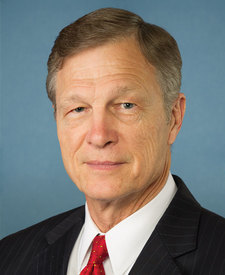
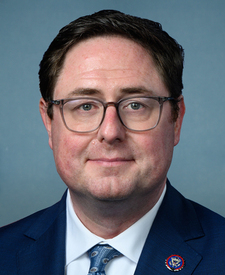
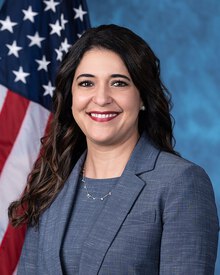
Mr. Babin (for himself, Mr. Flood, Mr. Sorensen, Mrs. Bice, …
Stakeholder Effects
cui bono?How this legislation distributes effects. Mention counts reflect frequency, not effect magnitude.
NIST standards staff, NOAA IT managers, NOAA electronics technicians
Positive-direction: NOAA IT managers, NOAA electronics technicians, NOAA hydrologists, NOAA meteorologists
Negative-direction: NIST standards staff, NOAA managers, OMB classification staff
Local emergency managers, State emergency managers
Bill Structure & Actor Mappings
Who is "The Secretary" in each section?
- "omb"
- → Director of the Office of Management and Budget
- "opm"
- → Director of the Office of Personnel Management
- "under_secretary_oceans"
- → Under Secretary of Commerce for Oceans and Atmosphere
- "under_secretary_standards"
- → Under Secretary of Commerce for Standards and Technology
We use a combination of our own taxonomy and classification in addition to large language models to assess meaning and potential beneficiaries. High confidence means strong textual evidence. Always verify with the original bill text.
Learn more about our methodology