HR7797-119

In Committee

Toll Evasion Prevention and Plate Visibility Act of 2026

119th Congress Introduced Mar 4, 2026

Summary

What This Bill Does

The Toll Evasion Prevention and Plate Visibility Act prohibits a person from selling, offering, or facilitating the sale of goods designed or marketed to impair license-plate readability. It also covers fraudulent, counterfeit, or altered plates; unauthorized year-of-manufacture plates; and legitimate state-issued plates sold without state authorization. Ordinary-course receipt, storage, or transportation alone does not make a carrier or intermediary a sale facilitator.

Violations are enforced by the Federal Trade Commission as unfair or deceptive practices, with the Federal Trade Commission Act's powers, penalties, privileges, and immunities. The sales prohibition takes effect 90 days after enactment, and the FTC may issue implementing rules. A savings clause preserves state and local authority over the use, installation, or operation of plate-obstruction devices.

Within 90 days, the Federal Highway Administration must consult industry associations, motor-vehicle agencies, tolling authorities, law enforcement, and other organizations and publish advisory guidance on plate appearance, digital imaging, frames, and covers. The guidance cannot force states to redesign plates or adopt a technical standard.

FHWA must also establish grants for technology identifying repeat toll evaders, law-enforcement training, interagency data sharing, and other readability enforcement. Eligible recipients include states, local governments, law-enforcement bodies, multijurisdictional organizations, and toll-facility owners. The bill authorizes $10 million per year for fiscal years 2027 through 2030, subject to appropriation.

Who Benefits and How

Toll-facility owners and governments may recover more unpaid tolls. Law-enforcement agencies receive training and technology support. Plate-imaging vendors and data-system contractors gain grant-funded demand. Legitimate plate owners benefit from reduced misuse, while ordinary-course carriers receive a safe harbor from facilitation liability based only on transport or storage.

Who Bears the Burden and How

Sellers of obstruction products and unauthorized plates lose lawful sales. Online marketplaces must police facilitated transactions. FTC and FHWA staff must enforce the prohibition, issue guidance, and administer grants. Applicants must prepare submissions and operate data-sharing systems. Federal accounts bear up to $40 million in authorized funding, and expanded vehicle-identification sharing creates privacy and data-security risks.

Key Provisions

  • Prohibits sales of goods marketed to impair plate readability.
  • Prohibits sales of fraudulent, counterfeit, altered, or unauthorized plates.
  • Protects ordinary-course carriers from automatic facilitation liability.
  • Authorizes FTC unfair-practice enforcement and optional regulations.
  • Preserves state and local plate-use authority.
  • Requires advisory FHWA plate-readability guidance within 90 days.
  • Creates FHWA grants for repeat toll-evasion technology and training.
  • Authorizes $10 million annually for fiscal years 2027 through 2030.
  • Limits the federal guidance so it cannot require state plate redesign.

Evidence Chain:

This summary is generated from the full bill text using AI analysis. Expand "Detailed Analysis" below for identified beneficiaries/burden bearers with clause-level evidence links.

At a Glance

What This Bill Does

Prohibits commercial sales and facilitation of license-plate obstruction goods and unauthorized, fraudulent, counterfeit, or altered plates; assigns FTC enforcement; directs advisory plate-readability guidance; and creates a four-year FHWA toll-evasion technology grant program.

Key Policy Areas

License Plate Readability, Toll Evasion Enforcement, Federal Trade Commission Enforcement, Transportation Technology Grants, State Vehicle Registration

Primary Purpose

Prohibits commercial sales and facilitation of license-plate obstruction goods and unauthorized, fraudulent, counterfeit, or altered plates; assigns FTC enforcement; directs advisory plate-readability guidance; and creates a four-year FHWA toll-evasion technology grant program.

Policy Domains

License Plate Readability Toll Evasion Enforcement Federal Trade Commission Enforcement Transportation Technology Grants State Vehicle Registration

Section 2 sales prohibition, FTC enforcement, guidance, and grants

Identified Gains
  • Toll-facility owners recovering unpaid charges
  • State toll agencies receiving technology grants
  • Local law-enforcement agencies receiving training
  • Plate-imaging vendors supplying grant systems
  • Data-system contractors building enforcement tools
  • Legitimate plate owners protected from replication
  • Ordinary-course carriers receiving a safe harbor
Model: codex-gpt-5 | Version: bill_summary_v2 | Source: ih
Plate-imaging vendors supplying grant systems:
Toll-facility owners recovering unpaid charges:
State toll agencies receiving technology grants:
Ordinary-course carriers receiving a safe harbor:
Local law-enforcement agencies receiving training:
Data-system contractors building enforcement tools:
Legitimate plate owners protected from replication:
Identified Costs
  • Plate-obstruction product sellers
  • Unauthorized license-plate sellers
  • Online marketplaces policing facilitated sales
  • FTC staff enforcing the sales prohibition
  • FHWA staff issuing guidance and grants
  • Grant applicants preparing federal submissions
  • Federal accounts funding toll-evasion grants
  • Drivers exposed to expanded vehicle data sharing
Model: codex-gpt-5 | Version: bill_summary_v2 | Source: ih
Plate-obstruction product sellers:
Unauthorized license-plate sellers:
FHWA staff issuing guidance and grants:
FTC staff enforcing the sales prohibition:
Federal accounts funding toll-evasion grants:
Grant applicants preparing federal submissions:
Online marketplaces policing facilitated sales:
Drivers exposed to expanded vehicle data sharing:

Legislative Progress

In Committee
Introduced Committee Passed
Mar 5, 2026

Referred to the Subcommittee on Highways and Transit.

Mar 4, 2026

Referred to the Committee on Transportation and Infrastructure, and in …

Mar 4, 2026

Introduced in House

Mar 4, 2026

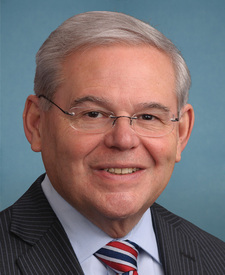
Mr. Menendez introduced the following bill; which was referred to …

Stakeholder Effects

cui bono?

How this legislation distributes effects. Mention counts reflect frequency, not effect magnitude.

State & Local Government
4 mentions across 1 clause
+2 positive -1 negative ~1 mixed

Local law-enforcement agencies, State motor-vehicle agencies, State toll agencies

Positive-direction: Local law-enforcement agencies, State toll agencies

Negative-direction: Toll-evasion grant applicants

Government
3 mentions across 1 clause
-3 negative

FHWA grant-administration staff, FTC enforcement staff, Federal transportation accounts

Transportation
2 mentions across 1 clause
+2 positive

Ordinary-course freight carriers, Toll-facility owners

Technology
2 mentions across 1 clause
+2 positive

Enforcement data-system contractors, Plate-imaging technology vendors

Automotive
2 mentions across 1 clause
-2 negative

Plate-obstruction product sellers, Unauthorized license-plate sellers

General Public
1 mention across 1 clause
+1 positive

Legitimate license-plate owners

Retail
1 mention across 1 clause
-1 negative

Online marketplaces facilitating covered sales

Privacy
1 mention across 1 clause
-1 negative

Drivers tracked by plate-data systems

1/2
sections analyzed
Full impact breakdown

Bill Structure & Actor Mappings

Who is "The Secretary" in each section?

Domains
License Plate Readability Toll Evasion Enforcement Federal Trade Commission Enforcement Transportation Technology Grants State Vehicle Registration
Actor Mappings
"seller"
→ Seller of a plate-obstruction good or unauthorized plate
"enforcer"
→ Federal Trade Commission
"recipient"
→ Eligible toll-evasion grant applicant
"toll_operator"
→ Owner of a toll facility
"grant_administrator"
→ Federal Highway Administration

Note: {'scope_ids': ['plate_readability_toll_evasion'], 'description': 'The bill regulates commercial sale and facilitation rather than directly federalizing plate use; state and local use laws are preserved, ordinary transport is protected, FHWA guidance is advisory, and authorized grant amounts still require appropriations.'}

Key Definitions

Terms defined in this bill

3 terms
"toll-evasion technology grant" §grant_program

FHWA assistance for repeat-violator identification, training, data sharing, or other plate-readability enforcement activities.

"prohibited readability good" §prohibited_good

A product designed or marketed to impair license-plate readability or a covered fraudulent, altered, counterfeit, or unauthorized plate.

"ordinary-course safe harbor" §carrier_safe_harbor

Protection against facilitation status based solely on receiving, holding, or transporting a covered item in the ordinary course of business.

We use a combination of our own taxonomy and classification in addition to large language models to assess meaning and potential beneficiaries. High confidence means strong textual evidence. Always verify with the original bill text.

Learn more about our methodology