Protecting Our Communities Act
Summary
What This Bill Does
The Protecting Our Communities Act requires DHS within 90 days to issue a department-wide directive requiring body cameras for all federal immigration-enforcement personnel and dashboard cameras for all vehicles used in immigration operations. Audio and video must run throughout an operation, except when an immediate life or safety threat makes activation impossible or dangerous; the officer must activate at the first reasonable opportunity.
Body cameras must capture at least the officer's field of view. They cannot collect intelligence based on First Amendment speech, associations, or religion, record activity unrelated to an immigration operation, or use facial recognition. DHS retains body and dashboard footage for one year and then permanently deletes it. During that year, subjects, specified family representatives, counsel, recording officers, supervisors, and defense counsel with a sworn exculpatory basis can inspect footage. The bill does not create general public access or state that litigation automatically extends retention.
During a border-security or immigration detention or arrest, DHS officers must identify their employing component, visibly display official insignia or uniform, and not conceal their faces. Policy-compliant tactical gear remains allowed. DHS must report tactical-gear policy within 30 days and after changes, and develop technologies improving insignia visibility under different location, time, and weather conditions.
Within 180 days, DHS must develop or identify de-escalation and alternatives-to-force curricula with scenario exercises, testing, follow-up evaluation, and consultation across law enforcement, immigrant, disability, labor, mental-health, family, and civil-liberties groups. The text requires curricula but does not expressly require every officer to complete them.
Federal immigration enforcement must notify local law enforcement of impending operations, but the bill states no lead time, emergency exception, notice content, or remedy. Beginning within three months, DHS must report every six months on nondeadly force, improper force and accountability, assaults on personnel, threat criteria, and operations conducted without visible insignia.
The bill creates operational and reporting duties but states no appropriation, private damages action, exclusionary rule, discipline schedule, public-footage release rule, or exception to the one-year deletion deadline for pending claims.
Who Benefits and How
Immigrants, families, defense counsel, journalists, and civil-rights investigators gain evidence, officer identification, privacy limits, and force transparency. Local police gain advance notice. Officers may gain exculpatory footage, clearer protocols, de-escalation tools, and reporting on assaults.
Who Bears the Burden and How
ICE, CBP, and other DHS personnel must activate equipment, remain identifiable, uncover faces, preserve records, and document incidents. DHS bears camera, vehicle, storage, access, training, research, reporting, and cybersecurity costs. Undercover personnel may face safety risks, and subjects may lose useful footage after one year.
Key Provisions
- Requires body cameras for all federal immigration personnel.
- Requires dashboard cameras for immigration-operation vehicles.
- Requires continuous operation recording with a safety exception.
- Prohibits First Amendment intelligence gathering by body camera.
- Prohibits facial-recognition use.
- Limits footage retention to one year.
- Grants inspection rights to specified subjects and counsel.
- Requires visible DHS component identification and insignia.
- Prohibits face coverings during detention or arrest.
- Preserves policy-compliant tactical gear.
- Directs officer-visibility technology research.
- Requires de-escalation and alternatives-to-force curricula.
- Requires notice to local law enforcement.
- Requires six-month force and assault reports.
- Requires reports on operations without insignia.
- Creates no general public footage right or private damages action.
Evidence Chain:
This summary is generated from the full bill text using AI analysis. Expand "Detailed Analysis" below for identified beneficiaries/burden bearers with clause-level evidence links.
At a Glance
What This Bill Does
Mandates body and dashboard cameras throughout federal immigration enforcement, sets activation, privacy, retention, and inspection rules, requires visible officer identification and uncovered faces during detention or arrest, develops de-escalation curricula, requires local-operation notice and recurring force, assault, and insignia reports, and directs officer-visibility research.
Key Policy Areas
Immigration Enforcement, Body-Worn Cameras, Law Enforcement Identification, Use of Force, DHS Oversight
Primary Purpose
Mandates body and dashboard cameras throughout federal immigration enforcement, sets activation, privacy, retention, and inspection rules, requires visible officer identification and uncovered faces during detention or arrest, develops de-escalation curricula, requires local-operation notice and recurring force, assault, and insignia reports, and directs officer-visibility research.
Policy Domains
Sections 2 through 6 camera directive and protocols, privacy, one-year retention, inspection, visible identification, face-covering bar, tactical-gear reporting, visibility research, de-escalation curricula, local notice, and recurring force, assault, and insignia reports
Identified Gains
- Immigrants recorded during enforcement operations
- People detained by DHS immigration officers
- Defense counsel seeking exculpatory footage
- Families of deceased recorded subjects
- Civil-rights investigators reviewing arrests
- Local law-enforcement agencies receiving notice
- Immigration officers using exculpatory footage
- Congressional homeland-security committees
Identified Costs
- ICE officers operating body cameras
- CBP agents operating body cameras
- DHS camera-program administrators
- DHS digital-evidence storage staff
- Undercover immigration officers
- DHS training-development staff
- DHS congressional-reporting staff
- Recorded subjects losing footage after one year
Sponsors
Legislative Progress
In CommitteeReferred to the Subcommittee on Border Security and Enforcement.
Referred to the Committee on the Judiciary, and in addition …
Introduced in House
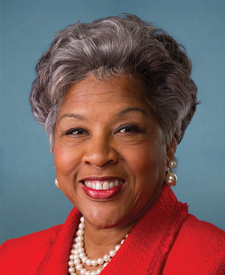
Mrs. Beatty introduced the following bill; which was referred to …
Stakeholder Effects
cui bono?How this legislation distributes effects. Mention counts reflect frequency, not effect magnitude.
CBP agents conducting arrests, CBP agents operating body cameras, CBP force-review officials
Positive-direction: Congressional homeland-security committees, Immigration officers assaulted during operations, Immigration officers receiving de-escalation tools, Immigration officers using exculpatory footage
Negative-direction: CBP agents conducting arrests, CBP agents operating body cameras, CBP force-review officials, DHS Science and Technology Directorate, DHS camera-program administrators, DHS congressional-reporting staff, DHS digital-evidence storage staff, DHS tactical-policy staff, DHS training-development staff, ICE force-review officials, ICE officers conducting detentions, ICE officers operating body cameras, Immigration officers named in force records, Undercover immigration officers
Families of deceased recorded subjects, Immigrants detained by DHS officers, Immigrants encountering enforcement personnel
Positive-direction: Families of deceased recorded subjects, Immigrants detained by DHS officers, Immigrants encountering enforcement personnel, Immigrants recorded during enforcement operations, Immigrants subjected to nondeadly force, People arrested during immigration enforcement
Negative-direction: Recorded subjects losing footage after one year
Civil-rights investigators reviewing arrests, Civil-rights investigators reviewing force, Consulted civil-liberties groups
Attorneys identifying immigration officers, Defense counsel seeking exculpatory footage
Body-camera equipment vendors, Officer-identification technology vendors
People with disabilities encountering officers
Bill Structure & Actor Mappings
Who is "The Secretary" in each section?
- "counsel"
- → Lawyer inspecting potentially relevant footage
- "officer"
- → Federal immigration officer subject to camera and identification rules
- "subject"
- → Person recorded, detained, or arrested during enforcement
- "secretary"
- → DHS Secretary issuing directives, curricula, and reports
- "local_agency"
- → Local law-enforcement body receiving operation notice
- "research_office"
- → DHS Science and Technology unit developing visibility tools
Note: {'scope_ids': ['immigration_enforcement_camera_identification_and_oversight'], 'description': 'The camera rules are broad but use a safety exception, limit access to listed people, delete footage after one year, and prohibit unrelated or facial-recognition use; the training provision creates curricula rather than an express attendance mandate, and local notice lacks timing and emergency rules.'}
Key Definitions
Terms defined in this bill
Access during the retention period for listed subjects, representatives, officers, supervisors, and qualifying defense counsel.
Body-camera audio and video activated during an immigration operation until the operation ends and the officer leaves, subject to an immediate safety exception.
Component identification plus visible official insignia or uniform and no face covering during a covered detention or arrest.
We use a combination of our own taxonomy and classification in addition to large language models to assess meaning and potential beneficiaries. High confidence means strong textual evidence. Always verify with the original bill text.
Learn more about our methodology