To provide economic empowerment opportunities in the United States through the modernization of public housing, and for other purposes.
Analysis under review: This bill has generated analysis that may be too generic or incomplete. Clause-level evidence remains available below.
Summary
What This Bill Does
This bill creates a comprehensive program to modernize all U.S. public housing by rehabilitating buildings, upgrading to energy-efficient and renewable energy systems, and transitioning to all-electric appliances. It establishes workforce development grants to train public housing residents for jobs in the renovation and clean energy sectors, and strengthens resident participation through mandatory resident councils.
Who Benefits and How
Public housing residents benefit from improved living conditions, job training programs, and employment preferences (40-90% of jobs must go to low-income persons). Construction workers and trades benefit from substantial new contracts for rehabilitation work. Clean energy manufacturers and installers benefit from requirements for U.S.-made renewable energy equipment. Labor unions benefit from preferences for registered apprenticeship partnerships. Native American tribes and Hawaiian home lands are explicitly included as eligible entities.
Who Bears the Burden and How
Federal taxpayers fund the large-scale rehabilitation and grant programs. Public housing agencies must comply with extensive new requirements for resident councils, workforce development, and environmental standards. Contractors must meet progressive hiring quotas (40% rising to 90% low-income workers). HUD faces expanded administrative responsibilities for overseeing the program.
Key Provisions
- Establishes Green New Deal grant program for public housing modernization with renewable energy and energy efficiency upgrades
- Requires 40-90% of generated jobs go to low- and very low-income persons through Section 3 program amendments
- Mandates resident councils for public housing projects with 50+ units with democratic governance
- Expands Family Self-Sufficiency program to include digital literacy and services for seniors/disabled
- Declares federal policy to guarantee the right to housing for every individual
Evidence Chain:
This summary is generated from the full bill text using AI analysis. Expand "Detailed Analysis" below for identified beneficiaries/burden bearers with clause-level evidence links.
At a Glance
What This Bill Does
Modernizes and rehabilitates U.S. public housing through green energy upgrades, workforce development programs, and expanded resident participation, establishing a 'Green New Deal' approach to public housing.
Key Policy Areas
Housing, Workforce Development, Energy, Environmental Justice
Primary Purpose
Modernizes and rehabilitates U.S. public housing through green energy upgrades, workforce development programs, and expanded resident participation, establishing a 'Green New Deal' approach to public housing.
Policy Domains
Green New Deal for Public Housing Act
Identified Gains
- Public housing residents
- Low-income workers
- Construction trades workers
- Labor unions
- Clean energy manufacturers
- Native American tribes
- Resident-owned businesses
Identified Costs
- Federal taxpayers
- Public housing agencies
- HUD
- Contractors working on public housing
Sponsors


Legislative Progress
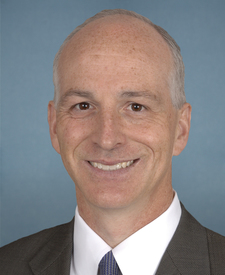
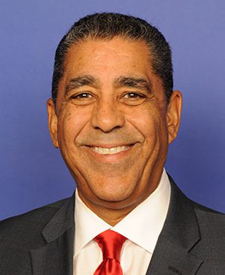
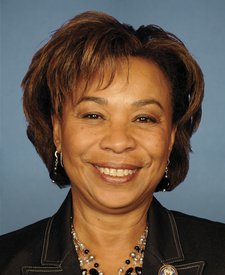
IntroducedMs. Ocasio-Cortez (for herself, Mrs. Ramirez, Ms. Schakowsky, Mr. Bowman, …
Stakeholder Effects
cui bono?How this legislation distributes effects. Mention counts reflect frequency, not effect magnitude.
All Americans seeking housing, Environmental justice communities, Older adults and individuals with disabilities in public housing
Indian tribes and tribally designated housing entities, Public housing agencies
Public housing agencies faces effects in multiple directions
Architects and designers, Architects specializing in accessible design
Construction contractors on public housing projects, Low- and very low-income persons seeking construction jobs
Positive-direction: Low- and very low-income persons seeking construction jobs
Negative-direction: Construction contractors on public housing projects
U.S. manufacturers of appliances and renewable energy equipment
Bill Structure & Actor Mappings
Who is "The Secretary" in each section?
- "the_secretary"
- → Secretary of Housing and Urban Development
- "eligible_entity"
- → Public housing agencies, Indian tribes, tribally designated housing entities, and Department of Hawaiian Home Lands
Key Definitions
Terms defined in this bill
A public housing agency, Indian tribe, tribally designated housing entity, or the Department of Hawaiian Home Lands
A community with significant representation of communities of color, low-income communities, or Tribal and indigenous communities that experiences higher or more adverse human health or environmental effects
As defined in 42 U.S.C. 1437a(b), including dwelling units owned by Indian tribes, low-income housing under NAHASDA, and Hawaiian housing
Solar (photovoltaic and thermal), wind, geothermal, microturbine hydroelectricity, energy efficiency, building electrification, energy storage, microgrids, and modern distribution grid infrastructure
A business that provides economic opportunities as defined in HUD Act section 3(e)
We use a combination of our own taxonomy and classification in addition to large language models to assess meaning and potential beneficiaries. High confidence means strong textual evidence. Always verify with the original bill text.
Learn more about our methodology