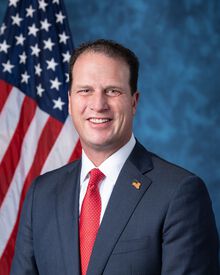
HR7773-119

In Committee

Field Integration of Homeland Intelligence Act of 2026

119th Congress Introduced Mar 3, 2026

Summary

What This Bill Does

The Field Integration of Homeland Intelligence Act states congressional findings favoring a field-centric DHS intelligence model and requires the Department to implement one within two years. The Office of Intelligence and Analysis must transition its primary analytic functions from a centralized headquarters model to a decentralized structure aligned with the ten FEMA regions.

Every fusion center must receive at least one I&A Intelligence Officer and one separate Intelligence Analyst. Every joint or interagency task force must receive at least one Intelligence Officer as its primary I&A liaison. The same person cannot fill both required fusion-center roles. DHS may also place staff at other strategic locations.

Before field service, assigned personnel must receive training on civil rights, civil liberties, privacy, the Privacy Act, regulations, and information practices. Fusion centers provide input on assignments. A fusion-center term lasts three years and may be extended up to two, with rotations staggered so an I&A representative remains. Field personnel report operationally to the regional I&A director and coordinate with FEMA, CISA, ICE, CBP, and other DHS leads.

Within 180 days, I&A must give Congress a staffing and resource plan covering reassignment, retained headquarters roles, rotations, hiring, training, and realignment. DHS must preserve headquarters resources justified by that plan. A one-year progress report is followed by annual impact, integration, efficiency, and training reports for five years.

Who Benefits and How

Fusion centers, state and local agencies, tribal and territorial partners, and interagency task forces gain dedicated federal analysts and real-time support. Regional DHS components may coordinate intelligence faster. Congress gains implementation and performance data, while communities gain required rights and privacy training for deployed personnel.

Who Bears the Burden and How

I&A headquarters staff may be reassigned or required to rotate, and DHS must fund field offices, travel, training, hiring, and reporting. Regional directors and fusion centers must supervise and integrate new personnel. Concentrating intelligence sharing at local nodes may increase privacy, civil-liberties, and mission-creep risks despite training. Headquarters capacity may decline if the staffing plan misjudges functions that need central expertise.

Key Provisions

  • Requires field decentralization within two years.
  • Assigns separate Intelligence Officers and Analysts to every fusion center.
  • Assigns Intelligence Officers to joint or interagency task forces.
  • Prohibits one person from filling both fusion-center roles.
  • Requires civil-rights, civil-liberties, and privacy training.
  • Establishes three-year assignments with limited extensions.
  • Requires staggered rotations to maintain continuous representation.
  • Requires a staffing and resource plan within 180 days.
  • Preserves justified headquarters functions under the plan.
  • Requires progress and annual impact reports to Congress.

Evidence Chain:

This summary is generated from the full bill text using AI analysis. Expand "Detailed Analysis" below for identified beneficiaries/burden bearers with clause-level evidence links.

At a Glance

What This Bill Does

Requires DHS Intelligence and Analysis within two years to decentralize primary analytic functions into ten FEMA regions, staff every fusion center and joint task force with specified field personnel, train them on rights and privacy, manage rotations and regional reporting lines, and submit implementation plans and annual reports.

Key Policy Areas

Homeland Security Intelligence, Fusion Centers, Federal Regional Staffing, Civil Liberties Training, Intelligence Oversight

Primary Purpose

Requires DHS Intelligence and Analysis within two years to decentralize primary analytic functions into ten FEMA regions, staff every fusion center and joint task force with specified field personnel, train them on rights and privacy, manage rotations and regional reporting lines, and submit implementation plans and annual reports.

Policy Domains

Homeland Security Intelligence Fusion Centers Federal Regional Staffing Civil Liberties Training Intelligence Oversight

Sections 2 and 3 findings, regional staffing, training, rotations, and reports

Identified Gains
  • State fusion centers receiving I&A officers
  • Local fusion centers receiving I&A analysts
  • Tribal homeland-security partners
  • Territorial homeland-security partners
  • Joint task forces receiving intelligence liaisons
  • Regional DHS components
  • Congressional intelligence oversight committees
Model: codex-gpt-5 | Version: bill_summary_v2 | Source: ih
Regional DHS components: ,
Tribal homeland-security partners: ,
Territorial homeland-security partners: ,
Local fusion centers receiving I&A analysts: ,
State fusion centers receiving I&A officers: ,
Congressional intelligence oversight committees: ,
Joint task forces receiving intelligence liaisons: ,
Identified Costs
  • I&A headquarters staff facing reassignment
  • DHS accounts funding field placements
  • Regional directors supervising added personnel
  • Fusion centers integrating federal staff
  • I&A training administrators
  • DHS reporting staff
  • Individuals affected by expanded intelligence sharing
  • Privacy advocates monitoring fusion centers
Model: codex-gpt-5 | Version: bill_summary_v2 | Source: ih
DHS reporting staff: ,
I&A training administrators: ,
DHS accounts funding field placements: ,
Fusion centers integrating federal staff: ,
I&A headquarters staff facing reassignment: ,
Privacy advocates monitoring fusion centers: ,
Regional directors supervising added personnel: ,
Individuals affected by expanded intelligence sharing: ,

Legislative Progress

In Committee
Introduced Committee Passed
Mar 4, 2026

Referred to the Subcommittee on Counterterrorism and Intelligence.

Mar 3, 2026

Referred to the House Committee on Homeland Security.

Mar 3, 2026

Introduced in House

Mar 3, 2026

Mr. Pfluger introduced the following bill; which was referred to …

Stakeholder Effects

cui bono?

How this legislation distributes effects. Mention counts reflect frequency, not effect magnitude.

Government
16 mentions across 2 clauses
+4 positive -6 negative ?6 uncertain

CISA regional offices, Congressional intelligence oversight committees, DHS Office of Intelligence and Analysis

Positive-direction: Congressional intelligence oversight committees, Regional DHS component leads, Territorial homeland-security partners, Tribal homeland-security partners

Negative-direction: DHS field-placement accounts, DHS implementation-report staff, Headquarters analytic-support programs, I&A civil-liberties trainers, I&A headquarters staff facing reassignment, I&A regional directors

State & Local Government
6 mentions across 2 clauses
+2 positive -1 negative ?3 uncertain

Fusion-center personnel managers, Local fusion centers receiving I&A analysts, Local homeland-security partners

Positive-direction: Local fusion centers receiving I&A analysts, State fusion centers receiving I&A officers

Negative-direction: Fusion-center personnel managers

General Public
2 mentions across 2 clauses
+1 positive ?1 uncertain

Interagency task forces, Joint task forces receiving I&A liaisons

Privacy
1 mention across 1 clause
-1 negative

Individuals in expanded intelligence systems

Advocacy Groups
1 mention across 1 clause
-1 negative

Privacy advocates monitoring fusion centers

2/3
sections analyzed
Full impact breakdown

Bill Structure & Actor Mappings

Who is "The Secretary" in each section?

Domains
Homeland Security Intelligence Fusion Centers Federal Regional Staffing Civil Liberties Training Intelligence Oversight
Actor Mappings
"analyst"
→ I&A Intelligence Analyst assigned to a fusion center
"officer"
→ I&A Intelligence Officer assigned to the field
"overseer"
→ Congressional intelligence or homeland-security committee
"implementer"
→ DHS Office of Intelligence and Analysis
"field_partner"
→ State or local fusion center

Note: {'scope_ids': ['ia_field_decentralization'], 'description': 'The mandate decentralizes primary analytic functions but requires a staffing plan to retain justified headquarters capacity; extensive field sharing may improve responsiveness while increasing privacy and civil-liberties risk.'}

Key Definitions

Terms defined in this bill

3 terms
"field-centric intelligence model" §field_model

A decentralized I&A structure placing primary analytic personnel in the ten FEMA regions and partner sites.

"field rotation rule" §rotation_rule

Three-year fusion-center assignments, extendable by up to two years, with headquarters rotation and nonconcurrent departures.

"fusion-center staffing minimum" §fusion_staffing

At least one separate Intelligence Officer and Intelligence Analyst assigned to every fusion center.

We use a combination of our own taxonomy and classification in addition to large language models to assess meaning and potential beneficiaries. High confidence means strong textual evidence. Always verify with the original bill text.

Learn more about our methodology