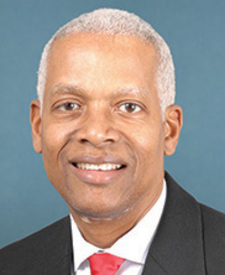
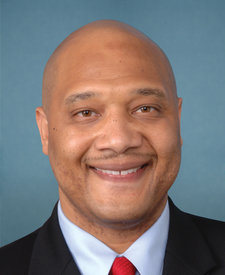
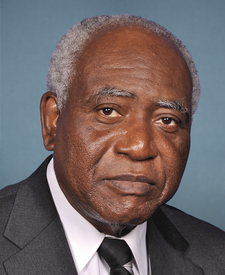
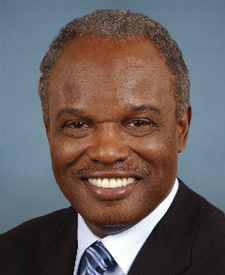
HR7766-119

In Committee

Stop Militarizing Law Enforcement Act

119th Congress Introduced Mar 3, 2026

Summary

What This Bill Does

The Stop Militarizing Law Enforcement Act narrows the Defense Department's 1033 excess-property program from counterdrug, disaster-preparedness, border-security, and counterterrorism uses to counterterrorism. A requesting agency must describe its planned use, promise to return surplus property, provide at least 30 days of public notice through a website and prominent physical postings, and obtain approval from its city council or other local governing body.

The bill generally bars transfers of controlled firearms, ammunition, bayonets, grenade launchers, grenades, explosives, listed military vehicles, armored or weaponized drones, combat-configured aircraft, aircraft without a commercial application, silencers, long-range acoustic devices, and other banned supply classes. A law-enforcement agency may receive nonautomatic controlled firearms or specified vehicles only for a particular public-safety, disaster, or emergency purpose, after approved training, and with a promise against routine patrol use.

DOD may waive some vehicle restrictions, excluding mine-resistant ambush-protected vehicles, for disaster, rescue, or life-safety purposes, with congressional and public notice. It may exempt maintenance parts for an existing aircraft fleet. Transfer restrictions follow property when it moves between agencies.

An agency must return transferred property within 30 days after becoming the subject of a DOJ civil-liberties investigation involving the property or after an oversight process finds a pattern or practice of widespread civil-liberties abuse involving it. Controlled property remains federally owned.

Program spending is conditioned on annual certification and in-person inventory of 100 percent of controlled property. Agencies with missing property must be suspended, and uncertifiable agencies cannot receive more transfers. State coordinators and DOD must certify compliance. The bill protects existing federal employees from displacement.

DOD must report or notify Congress about proposed transfers, classification downgrades, cannibalization, waivers, quarterly controlled-equipment use, lost property, and transfers of new property. The changes apply to transfers after enactment.

Who Benefits and How

Residents receive advance notice and local-government review before nonfederal agencies obtain military property. People affected by civil-liberties abuses gain mandatory return triggers and reduced routine-policing access to controlled equipment. Local governing bodies gain approval authority. Congress gains inventory, use, loss, waiver, and transfer records. Federal employees are protected from displacement. Emergency responders retain narrow access to selected vehicles or nonautomatic firearms after demonstrating need and training.

Who Bears the Burden and How

Federal, state, Tribal, and local law-enforcement agencies lose access to many equipment categories and must satisfy use, training, notice, approval, inventory, return, and reporting conditions for remaining transfers. Agencies that cannot account for every controlled item are suspended. State coordinators must conduct in-person inventories and certify each agency. DOD and Defense Logistics Agency staff must classify property, review exceptions, track ownership, administer returns, and submit frequent reports. Agencies implicated in specified civil-liberties matters must return property within 30 days.

Key Provisions

  • Narrows 1033-program purposes to counterterrorism.
  • Requires planned-use descriptions, public notice, and local governing-body approval.
  • Bans transfers of listed weapons, military vehicles, drones, aircraft, silencers, and acoustic devices.
  • Allows limited trained emergency use of selected firearms and vehicles.
  • Requires return after specified civil-liberties investigations or findings.
  • Conditions program funding on complete annual inventories and certifications.
  • Suspends agencies that cannot account for all controlled property.
  • Prohibits recipients from taking ownership of controlled property.
  • Protects federal employees from displacement.
  • Requires recurring congressional reports and public waiver notices.

Evidence Chain:

This summary is generated from the full bill text using AI analysis. Expand "Detailed Analysis" below for identified beneficiaries/burden bearers with clause-level evidence links.

At a Glance

What This Bill Does

Restricts the Defense Department's 1033 excess-property program to counterterrorism, bans or conditions transfers of military-grade weapons and vehicles, requires local approval and public notice, mandates complete inventories and suspensions, compels returns after specified civil-liberties events, and adds extensive congressional reporting.

Key Policy Areas

Law Enforcement Equipment, Defense Excess Property, Police Militarization, Civil Liberties, Local Government Oversight, Federal Property Accountability

Primary Purpose

Restricts the Defense Department's 1033 excess-property program to counterterrorism, bans or conditions transfers of military-grade weapons and vehicles, requires local approval and public notice, mandates complete inventories and suspensions, compels returns after specified civil-liberties events, and adds extensive congressional reporting.

Policy Domains

Law Enforcement Equipment Defense Excess Property Police Militarization Civil Liberties Local Government Oversight Federal Property Accountability

Section 3 inventory, suspension, ownership, and civil-liberties rules

Identified Gains
  • DOD controlled-property inventory programs
  • Communities affected by missing military equipment
  • People affected by civil-liberties abuses
  • Congressional defense-property overseers
  • Compliant law-enforcement recipients
Model: codex-gpt-5 | Version: bill_summary_v2 | Source: ih
Compliant law-enforcement recipients:
Congressional defense-property overseers:
People affected by civil-liberties abuses:
DOD controlled-property inventory programs:
Communities affected by missing military equipment:
Identified Costs
  • State 1033-program coordinators
  • Federal agency inventory staff
  • Nonfederal agency inventory staff
  • Agencies unable to account for controlled property
  • Agencies under qualifying civil-liberties investigations
  • Agencies found to have widespread abuse patterns
  • DOD program-certification staff
Model: codex-gpt-5 | Version: bill_summary_v2 | Source: ih
Federal agency inventory staff:
DOD program-certification staff:
State 1033-program coordinators:
Nonfederal agency inventory staff:
Agencies found to have widespread abuse patterns:
Agencies unable to account for controlled property:
Agencies under qualifying civil-liberties investigations:

Section 3 request, notice, return, and local approval rules

Identified Gains
  • Residents receiving equipment-request notice
  • Local governing bodies approving transfers
  • Community police-oversight organizations
  • Taxpayers monitoring military-property use
  • Federal employees protected from displacement
Model: codex-gpt-5 | Version: bill_summary_v2 | Source: ih
Community police-oversight organizations:
Local governing bodies approving transfers:
Taxpayers monitoring military-property use:
Residents receiving equipment-request notice:
Federal employees protected from displacement:
Identified Costs
  • Local law-enforcement equipment applicants
  • State law-enforcement equipment applicants
  • Tribal law-enforcement equipment applicants
  • Agency public-notice staff
  • Local governing-body review staff
  • DOD transfer-agreement staff
Model: codex-gpt-5 | Version: bill_summary_v2 | Source: ih
Agency public-notice staff:
DOD transfer-agreement staff:
Local governing-body review staff:
Local law-enforcement equipment applicants:
State law-enforcement equipment applicants:
Tribal law-enforcement equipment applicants:

Section 3 prohibited property and emergency exceptions

Identified Gains
  • Residents exposed to routine militarized policing
  • Demonstrators exposed to controlled equipment
  • Civil-liberties protection programs
  • Disaster-response agencies qualifying for exceptions
  • Rescue agencies qualifying for vehicle waivers
  • Existing aircraft fleets receiving maintenance parts
Model: codex-gpt-5 | Version: bill_summary_v2 | Source: ih
Civil-liberties protection programs:
Demonstrators exposed to controlled equipment:
Rescue agencies qualifying for vehicle waivers:
Residents exposed to routine militarized policing:
Disaster-response agencies qualifying for exceptions:
Existing aircraft fleets receiving maintenance parts:
Identified Costs
  • Agencies seeking military-grade firearms
  • Agencies seeking mine-resistant vehicles
  • Agencies seeking weaponized drones
  • Agencies seeking combat-configured aircraft
  • Agencies seeking silencers
  • Law-enforcement equipment training staff
  • DOD waiver-review staff
Model: codex-gpt-5 | Version: bill_summary_v2 | Source: ih
DOD waiver-review staff:
Agencies seeking silencers:
Agencies seeking weaponized drones:
Agencies seeking military-grade firearms:
Agencies seeking mine-resistant vehicles:
Law-enforcement equipment training staff:
Agencies seeking combat-configured aircraft:

Section 3 congressional and public reports

Identified Gains
  • Congressional armed-services committees
  • Congressional civil-liberties overseers
  • Public police-equipment watchdogs
  • Residents receiving vehicle-waiver notice
  • Defense property-accountability auditors
Model: codex-gpt-5 | Version: bill_summary_v2 | Source: ih
Public police-equipment watchdogs:
Congressional armed-services committees:
Congressional civil-liberties overseers:
Defense property-accountability auditors:
Residents receiving vehicle-waiver notice:
Identified Costs
  • DOD congressional-reporting staff
  • Defense Logistics Agency property staff
  • Recipient controlled-equipment use staff
  • Recipient lost-property reporting staff
  • Agency vehicle-waiver notice staff
Model: codex-gpt-5 | Version: bill_summary_v2 | Source: ih
DOD congressional-reporting staff:
Agency vehicle-waiver notice staff:
Defense Logistics Agency property staff:
Recipient lost-property reporting staff:
Recipient controlled-equipment use staff:

Legislative Progress

In Committee
Introduced Committee Passed
Mar 3, 2026

Referred to the House Committee on Armed Services.

Mar 3, 2026

Introduced in House

Mar 3, 2026

Mr. Johnson of Georgia (for himself, Mr. Carson, Mr. Davis …

Stakeholder Effects

cui bono?

How this legislation distributes effects. Mention counts reflect frequency, not effect magnitude.

State & Local Government
7 mentions across 1 clause
+1 positive -6 negative

Agencies seeking military-grade firearms, Agencies seeking mine-resistant vehicles, Agencies seeking weaponized drones

Positive-direction: Local governing bodies approving transfers

Negative-direction: Agencies seeking military-grade firearms, Agencies seeking mine-resistant vehicles, Agencies seeking weaponized drones, Agencies unable to account for controlled property, Agencies under qualifying civil-liberties investigations, State 1033-program coordinators

Government
4 mentions across 1 clause
+2 positive -2 negative

Congressional armed-services committees, DOD program-certification staff, Defense Logistics Agency property staff

Positive-direction: Congressional armed-services committees, Federal employees protected from displacement

Negative-direction: DOD program-certification staff, Defense Logistics Agency property staff

Rural Communities
2 mentions across 1 clause
+2 positive

Residents exposed to routine militarized policing, Residents receiving equipment-request notice

Civil Society
1 mention across 1 clause
+1 positive

Demonstrators exposed to controlled equipment

General Public
1 mention across 1 clause
+1 positive

People affected by civil-liberties abuses

Emergency Services
1 mention across 1 clause
+1 positive

Disaster-response agencies qualifying for exceptions

2/3
sections analyzed
Full impact breakdown

Bill Structure & Actor Mappings

Who is "The Secretary" in each section?

Domains
Defense Excess Property Local Government Oversight Public Notice
Actor Mappings
"approver"
→ City council or other local governing body
"resident"
→ Member of the requesting agency's local community
"requester"
→ Federal, Tribal, state, or local law-enforcement agency
"administrator"
→ Secretary of Defense and Defense Logistics Agency
Domains
Law Enforcement Equipment Police Militarization Emergency Response
Actor Mappings
"trainee"
→ Officer completing DOD-approved equipment training
"recipient"
→ Law-enforcement agency seeking controlled property
"transferor"
→ Secretary of Defense
"exception_recipient"
→ Agency demonstrating a specific emergency or life-safety need
Domains
Federal Property Accountability Civil Liberties Program Suspension
Actor Mappings
"owner"
→ Department of Defense retaining title to controlled property
"certifier"
→ Secretary of Defense or state coordinator
"investigator"
→ Department of Justice civil-liberties office
"inventory_subject"
→ Agency receiving controlled property
Domains
Congressional Oversight Government Transparency Defense Excess Property
Actor Mappings
"public"
→ Community receiving waiver or transfer notice
"reporter"
→ Secretary of Defense
"recipient"
→ Congress
"data_provider"
→ Agency using, losing, or requesting controlled property

Note: {'scope_ids': ['controlled_equipment_limits'], 'description': 'Listed controlled equipment is generally prohibited, but selected nonautomatic firearms and vehicles may be transferred after need and training certifications, and some non-MRAP vehicles or aircraft maintenance parts have narrower exceptions.'}

Key Definitions

Terms defined in this bill

3 terms
"limited emergency transfer" §limited_transfer

A transfer of nonautomatic controlled firearms or selected vehicles after certification of a specific public-safety, disaster, or emergency need, approved training, and no routine patrol use.

"controlled property" §controlled_property

DOD excess property subject to enhanced controls, including specified weapons, explosives, vehicles, aircraft, drones, silencers, acoustic devices, and related military-grade items.

"civil-liberties return trigger" §civil_liberties_return

A DOJ investigation involving transferred property or an oversight finding of a pattern or practice of widespread civil-liberties abuse involving that property.

We use a combination of our own taxonomy and classification in addition to large language models to assess meaning and potential beneficiaries. High confidence means strong textual evidence. Always verify with the original bill text.

Learn more about our methodology