Afghanistan Vetting and Accountability Act of 2026
Summary
What This Bill Does
The Afghanistan Vetting and Accountability Act requires the Secretary of Homeland Security to verify personal and biometric information and conduct in-person vetting for every covered person evacuated from Afghanistan into the United States between January 20, 2021, and January 20, 2022, including Operation Allies Welcome evacuees. United States citizens and members of the Armed Forces are excluded from the covered group.
DHS must maintain a database for each evacuee containing name, birth date, biometrics, any post-entry criminal record, applications for or receipt of unemployment compensation or federal means-tested benefits, and current vetting status. Until the Secretary certifies completion, DHS must report at least quarterly to Congress with a list of covered evacuees, each person's vetting and benefits status, available Afghan and United States arrest or criminal records, and the estimated time remaining to finish all cases. The Secretary must certify completion within 30 days after finishing.
GAO must audit DHS compliance within two years of enactment and again within one year after certification, then report each result to Congress within 30 days. A covered evacuee who has not supplied personal and biometric information and completed in-person vetting becomes ineligible for unemployment compensation and federal means-tested public benefits.
Who Benefits and How
DHS security-screening officials and federal benefit administrators benefit from a centralized database and a statutory basis for obtaining updated identity, criminal-record, and benefits information. Congress receives recurring person-level oversight data and two independent GAO reviews. Residents concerned about incomplete post-evacuation screening may experience reduced security risk if reverification identifies disqualifying information.
Who Bears the Burden and How
Covered Afghan evacuees must provide personal and biometric information and appear for in-person vetting; those who do not comply lose unemployment compensation and federal means-tested benefits. Their privacy interests bear additional risk from a database and person-level congressional reporting containing criminal, benefits, and vetting information. DHS vetting staff must process the full covered population, maintain the database, report quarterly, and certify completion. Federal benefit administrators must enforce the eligibility bar. GAO audit staff must complete two investigations and reports.
Key Provisions
- Covers noncitizens and nonmilitary personnel evacuated from Afghanistan during the specified 2021-2022 period.
- Requires personal-information verification, biometric verification, and in-person vetting for every covered evacuee.
- Creates a DHS database with identity, biometric, criminal-record, benefit, and vetting-status fields.
- Requires quarterly person-level reports to Congress until completion.
- Requires a DHS completion certification within 30 days after all vetting is finished.
- Requires two GAO compliance audits and reports.
- Denies unemployment compensation to evacuees who do not complete the information and vetting requirements.
- Denies federal means-tested public benefits to the same noncompliant evacuees.
Evidence Chain:
This summary is generated from the full bill text using AI analysis. Expand "Detailed Analysis" below for identified beneficiaries/burden bearers with clause-level evidence links.
At a Glance
What This Bill Does
Requires DHS to reverify personal and biometric information and conduct in-person vetting for people evacuated from Afghanistan in 2021, report person-level status to Congress, undergo GAO audits, and withhold federal means-tested benefits or unemployment compensation until compliance.
Key Policy Areas
Homeland Security, Immigration, Refugee Vetting, Federal Benefits, Privacy, Congressional Oversight
Primary Purpose
Requires DHS to reverify personal and biometric information and conduct in-person vetting for people evacuated from Afghanistan in 2021, report person-level status to Congress, undergo GAO audits, and withhold federal means-tested benefits or unemployment compensation until compliance.
Policy Domains
Section 2 Afghan evacuee verification and benefit conditions
Identified Gains
- DHS security-screening officials
- Federal benefit program administrators
- Congressional homeland-security staff
- Residents concerned about incomplete evacuee screening
Identified Costs
- Afghan evacuees awaiting reverification
- Afghan evacuees applying for federal benefits
- DHS evacuee-vetting staff
- Federal benefit eligibility staff
- GAO homeland-security audit staff
- Afghan evacuees subject to person-level reporting
Sponsors


Legislative Progress
In CommitteeReferred to the House Committee on the Judiciary.
Introduced in House
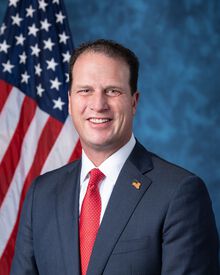
Mr. Barr (for himself, Mr. Biggs of Arizona, and Mr. …
Stakeholder Effects
cui bono?How this legislation distributes effects. Mention counts reflect frequency, not effect magnitude.
Congressional homeland-security staff, DHS evacuee-vetting staff, DHS security-screening officials
Afghan evacuees applying for federal benefits, Afghan evacuees awaiting reverification, Afghan evacuees subject to person-level reporting
Bill Structure & Actor Mappings
Who is "The Secretary" in each section?
- "secretary"
- → Secretary of Homeland Security
- "covered_individual"
- → Noncitizen and nonmilitary person evacuated from Afghanistan during the covered period
- "comptroller_general"
- → Comptroller General of the United States
Key Definitions
Terms defined in this bill
A federal means-tested public benefit within section 403 of the 1996 welfare reform law.
A noncitizen and non-Armed-Forces person moved from Afghanistan into the United States with federal coordination between January 20, 2021, and January 20, 2022, including Operation Allies Welcome evacuees.
Unemployment compensation as defined in section 85(b) of the Internal Revenue Code.
We use a combination of our own taxonomy and classification in addition to large language models to assess meaning and potential beneficiaries. High confidence means strong textual evidence. Always verify with the original bill text.
Learn more about our methodology