HR7739-119

In Committee

Rural Emergency Response Support Act

119th Congress Introduced Feb 26, 2026

Summary

What This Bill Does

The Rural Emergency Response Support Act changes the Fair Labor Standards Act overtime provision for emergency services. A public agency that is a political subdivision of a state with fewer than 100,000 residents is not deemed to violate the federal overtime subsection for employing an emergency medical technician or paramedic.

The same protection applies to a private entity serving that political subdivision under a contract. The amendment is tied to EMT and paramedic employment and the population of the political subdivision served.

The bill changes federal overtime liability; it does not exempt these employers from every wage, safety, licensing, collective-bargaining, state-law, or contract requirement. It does not apply by its terms to a political subdivision with 100,000 or more residents or to a private employer lacking the required service contract.

Who Benefits and How

Small local governments and contracted rural EMS providers can schedule EMTs and paramedics without federal overtime liability under the amended subsection, reducing staffing cost and potentially sustaining round-the-clock coverage. Local taxpayers may face lower emergency-service budgets. Rural residents may retain service where overtime expense threatens operations.

Who Bears the Burden and How

EMTs and paramedics serving covered areas may lose overtime compensation while still working long schedules. Their households bear lost income and fatigue-related risk may rise. Rural EMS employers must verify population and contract coverage. Labor Department staff and courts must distinguish covered political subdivisions and contractors from ineligible employers. Competing urban or noncontract providers remain subject to ordinary overtime rules.

Key Provisions

  • Exempts qualifying rural public agencies from federal overtime liability.
  • Extends the exemption to contracted private EMS providers.
  • Limits coverage to political subdivisions below 100,000 residents.
  • Limits covered workers to EMTs and paramedics.
  • Reduces covered employer overtime cost.
  • Preserves other federal and state employment requirements.
  • Excludes larger political subdivisions from the new protection.
  • Requires a qualifying service contract for private entities.

Evidence Chain:

This summary is generated from the full bill text using AI analysis. Expand "Detailed Analysis" below for identified beneficiaries/burden bearers with clause-level evidence links.

At a Glance

What This Bill Does

Exempts public agencies in political subdivisions with fewer than 100,000 residents, and private entities serving them by contract, from Fair Labor Standards Act overtime liability for emergency medical technicians and paramedics.

Key Policy Areas

Rural Emergency Medical Services, Fair Labor Standards Act, Paramedic Overtime, Local Government Labor Costs, Contract Emergency Services

Primary Purpose

Exempts public agencies in political subdivisions with fewer than 100,000 residents, and private entities serving them by contract, from Fair Labor Standards Act overtime liability for emergency medical technicians and paramedics.

Policy Domains

Rural Emergency Medical Services Fair Labor Standards Act Paramedic Overtime Local Government Labor Costs Contract Emergency Services

Section 2 rural EMT and paramedic overtime exception

Identified Gains
  • Small local governments operating EMS
  • Contracted rural ambulance providers
  • Local taxpayers funding emergency response
  • Rural residents relying on ambulance coverage
  • EMS agencies maintaining extended schedules
  • County budgets facing overtime pressure
Model: codex-gpt-5 | Version: bill_summary_v2 | Source: ih
Contracted rural ambulance providers:
Small local governments operating EMS:
County budgets facing overtime pressure:
Local taxpayers funding emergency response:
EMS agencies maintaining extended schedules:
Rural residents relying on ambulance coverage:
Identified Costs
  • EMTs losing federal overtime compensation
  • Paramedics losing federal overtime compensation
  • Families of rural emergency workers
  • Workers facing longer uncompensated schedules
  • Labor Department exemption-review staff
  • Courts resolving population eligibility
  • Noncovered EMS providers facing wage competition
Model: codex-gpt-5 | Version: bill_summary_v2 | Source: ih
Families of rural emergency workers:
Courts resolving population eligibility:
Labor Department exemption-review staff:
EMTs losing federal overtime compensation:
Workers facing longer uncompensated schedules:
Paramedics losing federal overtime compensation:
Noncovered EMS providers facing wage competition:

Legislative Progress

In Committee
Introduced Committee Passed
Feb 26, 2026

Referred to the House Committee on Education and Workforce.

Feb 26, 2026

Introduced in House

Feb 26, 2026

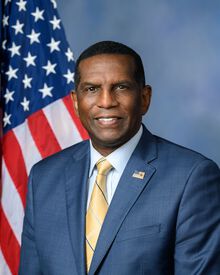
Ms. Maloy (for herself, Mr. Moore of Utah, Mr. Kennedy …

Stakeholder Effects

cui bono?

How this legislation distributes effects. Mention counts reflect frequency, not effect magnitude.

Emergency Services
6 mentions across 1 clause
+2 positive -4 negative

Contracted rural ambulance providers, EMS agencies maintaining extended schedules, EMTs losing federal overtime compensation

Positive-direction: Contracted rural ambulance providers, EMS agencies maintaining extended schedules

Negative-direction: EMTs losing federal overtime compensation, Noncovered EMS providers facing wage competition, Paramedics losing federal overtime compensation, Workers facing longer uncompensated schedules

State & Local Government
2 mentions across 1 clause
+2 positive

County budgets facing overtime pressure, Small local governments operating EMS

Rural Communities
2 mentions across 1 clause
+2 positive

Local taxpayers funding emergency response, Rural residents relying on ambulance coverage

Low-Income Households
1 mention across 1 clause
-1 negative

Families of rural emergency workers

Government
1 mention across 1 clause
-1 negative

Labor Department exemption-review staff

Judiciary
1 mention across 1 clause
-1 negative

Courts resolving population eligibility

1/2
sections analyzed
Full impact breakdown

Bill Structure & Actor Mappings

Who is "The Secretary" in each section?

Domains
Rural Emergency Medical Services Fair Labor Standards Act Paramedic Overtime Local Government Labor Costs Contract Emergency Services
Actor Mappings
"worker"
→ Emergency medical technician or paramedic
"resident"
→ Resident relying on rural emergency response
"administrator"
→ Department of Labor
"public_employer"
→ Political subdivision with fewer than 100,000 residents
"private_employer"
→ Contractor serving a qualifying political subdivision

Note: {'scope_ids': ['rural_ems_overtime_exemption'], 'description': 'The exception addresses federal overtime liability for EMT and paramedic work only; it does not waive minimum wage, licensing, safety, state overtime, contract, or collective-bargaining duties and does not cover larger jurisdictions.'}

Key Definitions

Terms defined in this bill

3 terms
"covered private entity" §contract_provider

A private entity serving a qualifying political subdivision under contract.

"covered employment" §covered_employment

Employment of an individual as an emergency medical technician or paramedic by a qualifying employer.

"qualifying political subdivision" §qualifying_subdivision

A state political subdivision with fewer than 100,000 residents.

We use a combination of our own taxonomy and classification in addition to large language models to assess meaning and potential beneficiaries. High confidence means strong textual evidence. Always verify with the original bill text.

Learn more about our methodology