Government Surveillance Transparency Act of 2026
Summary
What This Bill Does
The Government Surveillance Transparency Act creates a new Federal framework for criminal surveillance orders, including warrants, wiretap orders, pen-register and trap-and-trace orders, electronic-record orders, tracking orders, delayed-notice orders, and orders compelling third-party assistance. Applications, orders, and inventories generally may remain sealed only until the order is executed or the surveillance ends.
The government may seek an initial sealing period of up to 180 days by certifying that disclosure could endanger a person, cause flight, destroy evidence, intimidate witnesses, jeopardize an investigation, or unduly delay a trial. One renewed 180-day extension may rest on a renewed certification. Later extensions require a particularized showing of likely harm, case-specific details, and consideration of whether redaction would be sufficient. The government must notify the court when the need for sealing ends. Any person may seek unsealing or challenge redactions, and a substantially prevailing requester may recover reasonable fees and costs.
Courts must create publicly accessible, machine-readable dockets for criminal surveillance matters, with unique case numbers and captions, bulk access, accessibility compliance, electronic filing, and automatic unsealing procedures. Courts may protect information only upon the statutory showing and may use redactions when sufficient. The bill also requires inventories identifying when a provider disclosed data outside an order or the government searched, seized, or collected information beyond what the court authorized.
Government entities generally must notify subscribers, customers, or other surveillance subjects before conducting covered electronic surveillance. If contact information is unavailable, notice is due within seven days after adequate information arrives. Covered voluntary emergency disclosures also trigger notice within seven days. Delayed notice for warrants and orders follows the new sealing framework; subpoenas and emergency requests receive comparable 180-day certification, extension, revocation, and reporting rules.
After two years, or four years for specified courts needing more time, State and Tribal surveillance orders receive specified Federal recognition and authorities only when the issuing court certifies compliance with the new transparency chapter. The Attorney General may award up to $25 million in grants over five years to help State and Tribal court systems implement the requirements.
Judges must submit annual data on electronic-record orders, warrants, pen registers, trap-and-trace devices, and notice-preclusion orders. The Administrative Office of the United States Courts must publish annual aggregate reports and machine-readable reporting forms, in consultation with NIST, GSA, court organizations, and case-management vendors. The bill authorizes, but does not directly appropriate, $1 million for the Administrative Office and $25 million for implementation grants. A severability clause preserves the remainder if one provision is invalidated.
Who Benefits and How
People whose communications or records are searched gain earlier notice, inventories, and a path to challenge secrecy or redactions. Defendants, journalists, researchers, and the public gain access to surveillance dockets and aggregate statistics. State and Tribal court systems may receive implementation grants. Courts gain standardized reporting forms and clearer sealing rules.
Who Bears the Burden and How
Federal law-enforcement agencies must justify secrecy, notify courts when the need ends, serve surveillance subjects, document overcollection, and submit reportable information. Judges and court clerks must review extensions, maintain public dockets, process challenges, and report annually. The Administrative Office must publish data and forms. Electronic service providers may be identified in reports and must provide information needed for notice and inventories. State and Tribal courts must implement the framework to retain specified Federal recognition and surveillance authority.
Key Provisions
- Defines a broad category of criminal surveillance orders.
- Limits sealing to execution or completion absent a statutory showing.
- Restricts repeated 180-day secrecy extensions.
- Requires automatic unsealing and machine-readable public dockets.
- Allows any person to request unsealing or challenge redactions.
- Requires inventories when surveillance exceeds court authorization.
- Requires notice to electronic-surveillance subjects.
- Governs delayed notice for warrants, subpoenas, and emergency requests.
- Conditions specified State and Tribal authorities on compliance.
- Requires annual judicial and public surveillance reports.
- Authorizes up to $25 million in implementation grants.
- Preserves the remainder of the Act through severability.
Evidence Chain:
This summary is generated from the full bill text using AI analysis. Expand "Detailed Analysis" below for identified beneficiaries/burden bearers with clause-level evidence links.
At a Glance
What This Bill Does
Makes criminal surveillance orders, applications, inventories, notice delays, and aggregate court statistics more transparent by limiting sealing, requiring notice and inventories, enabling public unsealing challenges, conditioning interstate recognition on court compliance, and funding State and Tribal court implementation.
Key Policy Areas
Electronic Surveillance, Court Records Transparency, Criminal Procedure, Electronic Communications Privacy, State and Tribal Court Administration, Judicial Reporting
Primary Purpose
Makes criminal surveillance orders, applications, inventories, notice delays, and aggregate court statistics more transparent by limiting sealing, requiring notice and inventories, enabling public unsealing challenges, conditioning interstate recognition on court compliance, and funding State and Tribal court implementation.
Policy Domains
Sections 2 through 10 criminal surveillance sealing, dockets, unsealing, inventories, subject notice, delayed notice, court incentives, reporting, grants, authorizations, and severability
Identified Gains
- People subject to electronic surveillance
- Subscribers receiving delayed surveillance notice
- Defendants reviewing surveillance inventories
- Public requesters seeking unsealed records
- Journalists examining surveillance dockets
- Researchers using machine-readable court data
- State court systems receiving implementation grants
- Tribal court systems receiving implementation grants
Identified Costs
- Federal law-enforcement agencies seeking surveillance orders
- Federal prosecutors requesting delayed notice
- Judges reviewing surveillance secrecy
- Court clerks maintaining public dockets
- Administrative Office reporting staff
- Electronic communication service providers
- State courts implementing transparency requirements
- Tribal courts implementing transparency requirements
- Federal taxpayers financing court grants
Sponsors
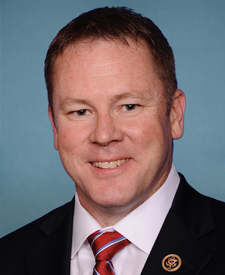
Ted Lieu
D-CA | Primary Sponsor
Legislative Progress
In CommitteeReferred to the House Committee on the Judiciary.
Introduced in House
Mr. Lieu (for himself and Mr. Davidson) introduced the following …
Stakeholder Effects
cui bono?How this legislation distributes effects. Mention counts reflect frequency, not effect magnitude.
Administrative Office reporting staff, Attorney General grant administrators, Congressional appropriations committees
Administrative Office reporting staff faces effects in multiple directions
Positive-direction: Tribal court systems receiving implementation grants
Negative-direction: Attorney General grant administrators, Congressional appropriations committees, Court clerks maintaining public dockets, Federal agencies defending surveillance redactions, Federal courts reviewing constitutional challenges, Federal law-enforcement agencies applying surviving rules, Federal law-enforcement agencies conducting surveillance, Federal law-enforcement agencies seeking surveillance orders, Federal law-enforcement agencies serving notice, Federal law-enforcement agencies using emergency requests, General Services Administration, Government agencies paying requester fees, Judges applying surveillance definitions, Judges deciding unsealing requests, Judges issuing pen-register orders, Judges reporting surveillance applications, Judges reviewing notice-preclusion orders, Judges reviewing surveillance inventories, Judges reviewing surveillance secrecy, Law-enforcement agencies applying for pen registers, National Institute of Standards and Technology, Tribal courts implementing transparency requirements, Tribal prosecutors seeking surveillance orders
Customers receiving surveillance notice, People affected by unauthorized surveillance, People protected by surviving transparency provisions
Defendants reviewing surveillance inventories, Federal prosecutors requesting delayed notice, Federal prosecutors requesting sealed orders
Positive-direction: Defendants reviewing surveillance inventories, Public requesters seeking unsealed records, Public users of electronic court dockets, Public users of surviving surveillance records
Negative-direction: Federal prosecutors requesting delayed notice, Federal prosecutors requesting sealed orders, Federal prosecutors seeking delayed notice
Public users of notice-delay statistics, Public users of pen-register statistics, Public users of surveillance statistics
State court systems receiving implementation grants, State courts implementing transparency requirements, State prosecutors seeking surveillance orders
Positive-direction: State court systems receiving implementation grants
Negative-direction: State courts implementing transparency requirements, State prosecutors seeking surveillance orders
Electronic communication service providers
Journalists analyzing surveillance trends, Journalists challenging surveillance redactions, Journalists examining surveillance dockets
Court technology vendors, Electronic case-management software vendors
Bill Structure & Actor Mappings
Who is "The Secretary" in each section?
- "judges"
- → Judges issuing, extending, denying, or unsealing surveillance orders
- "providers"
- → Electronic communication and remote computing service providers receiving orders
- "court_clerks"
- → Court clerks maintaining public surveillance dockets
- "state_courts"
- → State court systems implementing the transparency chapter
- "tribal_courts"
- → Tribal court systems implementing the transparency chapter
- "attorney_general"
- → Attorney General awarding implementation grants
- "federal_agencies"
- → Federal investigative and law-enforcement agencies seeking surveillance authority
- "public_requesters"
- → People seeking unsealing or challenging redactions
- "administrative_office"
- → Administrative Office of the United States Courts publishing reports and forms
- "surveillance_subjects"
- → Subscribers, customers, and other people subject to covered surveillance
Note: {'scope_ids': ['surveillance_transparency'], 'description': 'The bill favors public access and prompt notice but permits temporary secrecy where the government certifies defined harms; later extensions demand stronger proof and redaction analysis, while State and Tribal compliance is encouraged through grants and conditions on specified Federal legal benefits.'}
Key Definitions
Terms defined in this bill
A court return disclosing unauthorized provider production or government searching, seizure, or collection beyond the order.
A request for a criminal surveillance order together with supporting affidavits and exhibits.
Specified risks to safety, flight, evidence, witnesses, an investigation, or timely trial that can justify temporary secrecy.
A covered Federal, State, Tribal, military, or territorial warrant or order authorizing specified communications, records, tracking, pen-register, wiretap, assistance, or delayed-notice surveillance.
We use a combination of our own taxonomy and classification in addition to large language models to assess meaning and potential beneficiaries. High confidence means strong textual evidence. Always verify with the original bill text.
Learn more about our methodology