Promoting Innovation in Blockchain Development Act
Summary
What This Bill Does
The Promoting Innovation in Blockchain Development Act adds a custody-or-control element to the federal crime of operating an unlicensed money transmitting business. Current section 1960(a) applies to a person who knowingly conducts, controls, manages, supervises, directs, or owns all or part of such a business. The amendment requires that the person also exercise control over currency, funds, or other value that substitutes for currency.
That added element narrows criminal exposure for people who build or support payment and blockchain infrastructure without controlling users' assets. Depending on the facts, noncustodial software developers, protocol publishers, node operators, validators, miners, communications providers, and interface providers may be harder to prosecute under section 1960 when they cannot direct the value being transmitted.
The bill does not create a general blockchain immunity, define "exercises control," repeal state licensing laws, amend Bank Secrecy Act obligations, protect a service that actually controls funds, or change liability under sanctions, fraud, conspiracy, money-laundering, or other statutes. Prosecutors still need not necessarily prove knowledge of a state licensing requirement because the amendment changes subsection (a)'s conduct element rather than the definitions in subsection (b).
Who Benefits and How
Noncustodial blockchain developers and infrastructure providers gain a clearer argument that software activity without asset control is outside section 1960. Open-source projects, decentralized-network participants, and investors may face lower criminal uncertainty. Courts receive a more concrete control question for covered prosecutions.
Who Bears the Burden and How
Federal prosecutors and investigators must prove asset control in addition to the existing elements. Enforcement agencies may lose cases against decentralized services whose operators influence a system but do not control value. Victims and anti-money-laundering programs may face greater risk if illicit transmitters structure operations to avoid custody. Courts must define control across smart contracts, multisignature systems, and distributed governance.
Key Provisions
- Adds asset control as an element of section 1960(a).
- Covers currency, funds, and substitute value.
- Narrows liability for noncustodial infrastructure providers.
- Requires prosecutors to prove control beyond operational involvement.
- Preserves liability for businesses that actually control transmitted value.
- Leaves the term exercises control undefined.
- Preserves state licensing and other federal financial laws.
- Provides no general immunity for blockchain software or digital assets.
- Leaves sanctions, fraud, and money-laundering offenses unchanged.
Evidence Chain:
This summary is generated from the full bill text using AI analysis. Expand "Detailed Analysis" below for identified beneficiaries/burden bearers with clause-level evidence links.
At a Glance
What This Bill Does
Narrows the federal unlicensed-money-transmitting-business offense by requiring prosecutors to prove that a defendant exercised control over currency, funds, or substitute value in addition to knowingly conducting, controlling, managing, supervising, directing, or owning the business.
Key Policy Areas
Blockchain Development, Money Transmission, Federal Criminal Law, Digital Asset Infrastructure, Anti-Money Laundering Enforcement
Primary Purpose
Narrows the federal unlicensed-money-transmitting-business offense by requiring prosecutors to prove that a defendant exercised control over currency, funds, or substitute value in addition to knowingly conducting, controlling, managing, supervising, directing, or owning the business.
Policy Domains
Section 2 asset-control element for unlicensed money transmission
Identified Gains
- Noncustodial blockchain developers
- Open-source wallet developers
- Blockchain node operators
- Digital-asset validators
- Decentralized protocol publishers
- Investors in noncustodial infrastructure
- Courts applying a concrete control element
Identified Costs
- Federal money-transmission prosecutors
- Financial-crime investigators
- Anti-money-laundering enforcement programs
- Victims of noncustodial illicit transfers
- Courts defining control over digital assets
- Custodial blockchain businesses remaining covered
- State regulators addressing federal enforcement gaps
Sponsors
Legislative Progress
In CommitteeReferred to the House Committee on the Judiciary.
Introduced in House
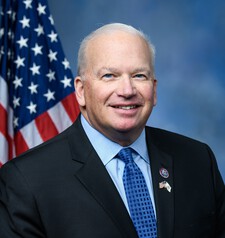
Mr. Fitzgerald (for himself, Ms. Lofgren, and Mr. Cline) introduced …
Stakeholder Effects
cui bono?How this legislation distributes effects. Mention counts reflect frequency, not effect magnitude.
Blockchain node operators, Custodial blockchain businesses, Decentralized protocol publishers
Anti-money-laundering enforcement programs, Courts defining digital-asset control, Federal financial-crime investigators
Bill Structure & Actor Mappings
Who is "The Secretary" in each section?
- "court"
- → Court interpreting control over substitute value
- "operator"
- → Operator of a money transmitting business
- "developer"
- → Noncustodial blockchain software developer
- "prosecutor"
- → Federal prosecutor bringing a section 1960 case
- "investigator"
- → Federal financial-crime investigator
Note: {'scope_ids': ['money_transmission_control_element'], 'description': 'The amendment narrows only section 1960(a), leaves control undefined, and does not displace state licensing, Bank Secrecy Act, sanctions, fraud, conspiracy, or money-laundering liability when separately applicable.'}
Key Definitions
Terms defined in this bill
The new requirement that a defendant exercise control over currency, funds, or value substituting for currency.
The existing prohibition on knowingly conducting, controlling, managing, supervising, directing, or owning an unlicensed money transmitting business, now coupled with asset control.
A developer or infrastructure participant that facilitates a system without possessing or directing user value.
We use a combination of our own taxonomy and classification in addition to large language models to assess meaning and potential beneficiaries. High confidence means strong textual evidence. Always verify with the original bill text.
Learn more about our methodology