HR7729-119

In Committee

SURGE Act of 2026

119th Congress Introduced Feb 26, 2026

Summary

What This Bill Does

The SURGE Act expands Federal Power Act transmission incentives beyond capital investment to operational efficiency, cost reduction, performance measures, and shared savings. FERC must issue a final rule within one year allowing jurisdictional transmitting utilities to retain part of verified savings from qualifying actions.

The initial federal framework is narrower than the bill's many examples: a qualifying action must be a covered transmission action that reduces measurable physical electricity losses. New facilities and complete reconstruction are excluded. FERC must establish standardized baselines normalized for weather, demand, other upgrades, and operating conditions, plus methods for valuing and independently verifying savings.

A utility may retain between 10 and 60 percent of attributable savings for two to five years, based on risk, baseline performance, replicability, duration, reliability, congestion, emissions, and other performance factors. An independently verified initial filing claims half of the utility's recoverable share of estimated first-year savings. Annual reports then calculate actual savings and future estimates.

FERC must provide claimed rate adjustments within 60 days. Annual true-ups let a utility recover its actual share and half of the next estimated share. If prior recovery exceeded the allowed actual share, or reporting is insufficient, FERC credits the difference to ratepayers. The bill encourages later expansion to other measurable actions but does not require it.

Within two years, DOE must publish analogous guidance for utilities outside FERC ratemaking jurisdiction, covering baselines, savings, independent evaluation, rate mechanisms, and different utility structures. States remain responsible for choosing whether to adopt a framework.

DOE must also establish a discretionary grant program for state regulators. Grants support framework development, implementation, and oversight but cannot pay utilities. No more than 70 percent supports development, at least 30 percent supports implementation or oversight, and federal administration is capped at five percent. Recipients report annually; missing reports block additional awards. The bill states no grant appropriation total.

Within three years and every five years thereafter, DOE studies rate-design inefficiencies and alternatives including shared savings, decoupling, return-on-equity adjustments, multiyear plans, earnings sharing, total-expenditure models, and performance scorecards. Definitions cover advanced conductors, grid-enhancing technology, storage, demand reduction, pricing mechanisms, and utility categories, but those broader actions enter the initial FERC incentive only when they satisfy the physical-loss requirement.

Who Benefits and How

Utilities gain a temporary share of independently verified savings and quicker rate recovery. Ratepayers retain the balance of savings and receive credits after over-recovery or inadequate reporting. Grid-technology vendors and evaluators gain demand. State commissions receive guidance, grants, data tools, and technical assistance.

Who Bears the Burden and How

Utilities must meter or model baselines, hire independent evaluators, report annually, and repay excess recovery. Ratepayers fund the incentive share, though only from estimated or actual savings. FERC, DOE, national laboratories, and state regulators bear rulemaking, analytical, grant, and oversight work. Projects that do not measurably reduce physical losses cannot enter the initial federal framework.

Key Provisions

  • Expands Federal Power Act efficiency incentives.
  • Requires a FERC shared-savings rule within one year.
  • Limits initial qualifying actions to reduced transmission losses.
  • Requires normalized performance baselines.
  • Requires independent savings verification.
  • Sets utility recovery between 10 and 60 percent.
  • Sets recovery periods between two and five years.
  • Provides half of estimated first-year recovery initially.
  • Requires annual performance and savings reports.
  • Requires FERC rate adjustments within 60 days.
  • Credits over-recovery or insufficient support to ratepayers.
  • Directs DOE state-framework guidance within two years.
  • Requires separate guidance for utility structures.
  • Creates grants for state utility regulators.
  • Prohibits grant payments to utilities.
  • Sets grant allocation and administration percentages.
  • Requires studies after three years and every five years.
  • Defines broader grid and demand actions for state frameworks.

Evidence Chain:

This summary is generated from the full bill text using AI analysis. Expand "Detailed Analysis" below for identified beneficiaries/burden bearers with clause-level evidence links.

At a Glance

What This Bill Does

Directs FERC to reward verified reductions in transmission losses through shared-savings rate adjustments, permits utilities to retain 10 to 60 percent of attributable savings for two to five years with independent verification and ratepayer true-ups, supports analogous state frameworks through DOE guidance and grants, and requires recurring rate-design studies.

Key Policy Areas

Electric Transmission Regulation, Utility Ratemaking, Grid Efficiency, Performance-Based Regulation, State Utility Commission Grants

Primary Purpose

Directs FERC to reward verified reductions in transmission losses through shared-savings rate adjustments, permits utilities to retain 10 to 60 percent of attributable savings for two to five years with independent verification and ratepayer true-ups, supports analogous state frameworks through DOE guidance and grants, and requires recurring rate-design studies.

Policy Domains

Electric Transmission Regulation Utility Ratemaking Grid Efficiency Performance-Based Regulation State Utility Commission Grants

Sections 2 through 7 Federal Power Act incentive authority, one-year FERC physical-loss shared-savings rule, baselines and verification, 10-to-60-percent recovery, two-to-five-year period, filings and true-ups, DOE nonjurisdictional guidance, state-regulator grants, recurring studies, and definitions

Identified Gains
  • Transmitting utilities reducing physical losses
  • Electric ratepayers retaining verified savings
  • Ratepayers receiving true-up credits
  • Grid-enhancing technology vendors
  • Advanced conductor manufacturers
  • Independent utility-performance evaluators
  • State utility regulatory commissions
  • National laboratories providing technical support
Model: codex-gpt-5 | Version: bill_summary_v2 | Source: ih
Advanced conductor manufacturers: , , , , ,
Grid-enhancing technology vendors: , , , , ,
Ratepayers receiving true-up credits: , , , , ,
State utility regulatory commissions: , , , , ,
Independent utility-performance evaluators: , , , , ,
Electric ratepayers retaining verified savings: , , , , ,
Transmitting utilities reducing physical losses: , , , , ,
National laboratories providing technical support: , , , , ,
Identified Costs
  • Utilities preparing verified incentive filings
  • Utilities repaying excess recovery
  • Ratepayers funding utility incentive shares
  • Federal Energy Regulatory Commission
  • Department of Energy guidance staff
  • State regulators administering new frameworks
  • Grant recipients filing annual reports
  • Projects without measurable physical-loss savings
Model: codex-gpt-5 | Version: bill_summary_v2 | Source: ih
Utilities repaying excess recovery: , , , , ,
Department of Energy guidance staff: , , , , ,
Federal Energy Regulatory Commission: , , , , ,
Grant recipients filing annual reports: , , , , ,
Ratepayers funding utility incentive shares: , , , , ,
State regulators administering new frameworks: , , , , ,
Utilities preparing verified incentive filings: , , , , ,
Projects without measurable physical-loss savings: , , , , ,

Legislative Progress

In Committee
Introduced Committee Passed
Feb 26, 2026

Referred to the House Committee on Energy and Commerce.

Feb 26, 2026

Introduced in House

Feb 26, 2026

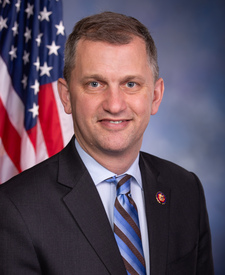
Mr. Casten introduced the following bill; which was referred to …

Stakeholder Effects

cui bono?

How this legislation distributes effects. Mention counts reflect frequency, not effect magnitude.

Utilities
20 mentions across 6 clauses
+10 positive -4 negative ~3 mixed ?3 uncertain

Customers of non-FERC utilities, Electric ratepayers in participating states, Electric ratepayers retaining verified savings

Positive-direction: Customers of non-FERC utilities, Electric ratepayers in participating states, Electric ratepayers retaining verified savings, Electric ratepayers seeking lower costs, Non-FERC electric utilities, Ratepayers receiving true-up credits, Transmitting utilities pursuing efficiency, Transmitting utilities reducing physical losses

Negative-direction: Utilities preparing verified incentive filings, Utilities repaying excess recovery, Utilities supplying study data, Utility rate-case staff

Government
9 mentions across 6 clauses
+2 positive -7 negative

Congressional energy committees, Department of Energy grant administrators, Department of Energy guidance staff

Federal Energy Regulatory Commission faces effects in multiple directions

Positive-direction: Congressional energy committees

Negative-direction: Department of Energy grant administrators, Department of Energy guidance staff, Department of Energy study staff

Technology
7 mentions across 5 clauses
+7 positive

Demand-response technology providers, Energy storage system vendors, Grid-enhancing technology vendors

State & Local Government
6 mentions across 4 clauses
+4 positive -2 negative

Grant recipients filing annual reports, State regulators adapting federal guidance, State utility regulatory commissions

Positive-direction: State utility regulatory commissions

Negative-direction: Grant recipients filing annual reports, State regulators adapting federal guidance

Professional Services
3 mentions across 3 clauses
+3 positive

Independent evaluators supporting state frameworks, Independent utility-performance evaluators, State ratemaking consultants

Manufacturing
2 mentions across 2 clauses
+2 positive

Advanced conductor manufacturers

Research & Science
2 mentions across 2 clauses
+1 positive ~1 mixed

National laboratories providing study reports, National laboratories providing technical support

General Public
1 mention across 1 clause
-1 negative

Federal taxpayers financing regulator grants

6/7
sections analyzed
Full impact breakdown

Bill Structure & Actor Mappings

Who is "The Secretary" in each section?

Domains
Electric Transmission Regulation Utility Ratemaking Grid Efficiency Performance-Based Regulation State Utility Commission Grants
Actor Mappings
"utility"
→ Jurisdictional transmitting utility claiming shared savings
"evaluator"
→ Independent party verifying baselines and savings
"ratepayer"
→ Customer retaining savings and receiving true-up credits
"secretary"
→ Energy Secretary issuing guidance, grants, and studies
"commission"
→ FERC issuing rules and rate adjustments
"state_regulator"
→ State commission developing an optional framework

Note: {'scope_ids': ['utility_shared_savings_for_grid_efficiency'], 'description': 'The bill defines many eligible technologies and rate models, but the initial mandatory FERC framework is limited to measurable transmission physical-loss reductions; utilities receive only a bounded temporary share, state adoption is optional, and grants fund regulators rather than utilities.'}

Key Definitions

Terms defined in this bill

3 terms
"qualifying action" §qualifying_action

A covered transmission efficiency, capacity, reliability, or resilience action achieved through reduced physical electricity losses.

"covered utility action" §covered_utility_action

A non-new-facility efficiency or demand action that generates ratepayer savings, used for state guidance and potentially broader future frameworks.

"recoverable percentage" §recoverable_percentage

The FERC-determined utility incentive share between 10 and 60 percent of attributable verified cost savings.

We use a combination of our own taxonomy and classification in addition to large language models to assess meaning and potential beneficiaries. High confidence means strong textual evidence. Always verify with the original bill text.

Learn more about our methodology