SOS Act of 2026
Summary
What This Bill Does
The Securing Our Streets Act of 2026 directs the Attorney General to begin a state grant program within 180 days. A state is eligible only if it requires repeat offenders to serve at least 85 percent of the imposed sentence, requires pretrial detention for a person charged with a violent crime who poses a clear public-safety threat, and requires life imprisonment after three distinct violent-crime convictions arising from conduct at different times.
Grant recipients must use the money to construct secure correctional facilities, expand capacity to incarcerate violent offenders, or train and support correctional staff. The bill authorizes $10 billion for fiscal years 2027 through 2031. That authorization permits later appropriations but does not itself guarantee the full amount will be funded or awarded.
Who Benefits and How
State correctional agencies that adopt all three sentencing and detention policies become eligible for federal grants. Correctional officers may receive training and operational support. Prison-construction firms may gain work from funded facilities. Communities and victims of violent crime may face lower repeat-offense risk if the required policies and added capacity have the intended effect.
Who Bears the Burden and How
Repeat offenders must serve a larger share of their sentences. Covered violent-crime defendants may be detained before trial, and people convicted of three distinct violent offenses face mandatory life imprisonment. State legislatures and corrections agencies must change law or policy, apply for funds, and operate added prison capacity. Justice Department grant staff must administer the program. Federal justice accounts bear costs if Congress appropriates the authorized funds.
Key Provisions
- Creates a federal corrections grant program for states.
- Requires repeat offenders to serve at least 85 percent of imposed sentences.
- Requires pretrial detention for specified violent-crime defendants who pose a clear threat.
- Requires life imprisonment after three distinct violent offenses.
- Restricts grant uses to facilities, incarceration capacity, and correctional staff support.
- Directs the Attorney General to begin the program within 180 days.
- Authorizes $10 billion for fiscal years 2027 through 2031.
- Provides authorization without guaranteeing a later appropriation.
Evidence Chain:
This summary is generated from the full bill text using AI analysis. Expand "Detailed Analysis" below for identified beneficiaries/burden bearers with clause-level evidence links.
At a Glance
What This Bill Does
Creates a $10 billion state corrections grant program for fiscal years 2027 through 2031, conditioned on truth-in-sentencing, pretrial detention for specified violent-crime defendants, and life imprisonment after three distinct violent offenses.
Key Policy Areas
Criminal Sentencing, Pretrial Detention, State Corrections Grants, Violent Crime, Correctional Facilities
Primary Purpose
Creates a $10 billion state corrections grant program for fiscal years 2027 through 2031, conditioned on truth-in-sentencing, pretrial detention for specified violent-crime defendants, and life imprisonment after three distinct violent offenses.
Policy Domains
Section 3061 state eligibility and grant uses
Identified Gains
- State correctional agencies meeting grant conditions
- Correctional officers receiving grant-funded support
- Prison-construction firms
- Victims of violent crime
- Communities exposed to repeat violent offenses
Identified Costs
- Repeat offenders subject to the 85-percent rule
- Violent-crime defendants posing a clear public-safety threat
- People convicted of three distinct violent offenses
- State legislatures seeking grant eligibility
- State corrections administrators
- Justice Department grant staff
Section 3062 authorization of appropriations
Identified Gains
- Eligible state corrections grant programs
- State correctional facility projects
- State correctional staff programs
Identified Costs
- Federal justice grant accounts
- Congressional appropriations committees
- Justice Department financial-management staff
Sponsors

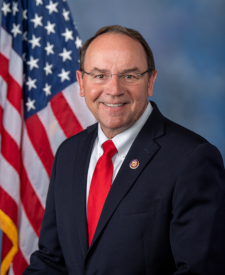
Legislative Progress
In CommitteeReferred to the House Committee on the Judiciary.
Introduced in House
Mr. Wied (for himself and Mr. Tiffany) introduced the following …
Stakeholder Effects
cui bono?How this legislation distributes effects. Mention counts reflect frequency, not effect magnitude.
Correctional officers receiving grant-funded support, People convicted of three distinct violent offenses, Repeat offenders subject to the 85-percent rule
Positive-direction: Correctional officers receiving grant-funded support, State correctional facility projects, State correctional staff programs
Negative-direction: People convicted of three distinct violent offenses, Repeat offenders subject to the 85-percent rule, Violent-crime defendants posing a clear public-safety threat
Eligible state corrections grant programs, State correctional agencies meeting grant conditions, State corrections administrators
Federal justice grant accounts, Justice Department financial-management staff, Justice Department grant staff
Bill Structure & Actor Mappings
Who is "The Secretary" in each section?
- "applicant"
- → State seeking a repeat-offender grant
- "administrator"
- → Attorney General administering state grants
- "covered_person"
- → Person subject to a required sentencing or detention policy
- "corrections_agency"
- → State agency using funds for correctional capacity
- "recipient"
- → Eligible state correctional agency
- "appropriator"
- → Congress
- "administrator"
- → Justice Department grant program
Key Definitions
Terms defined in this bill
$10 billion authorized across fiscal years 2027 through 2031, subject to later appropriations.
A state law or policy requiring life imprisonment after three distinct violent offenses arising from different conduct at different times.
A state law or policy requiring repeat offenders to serve at least 85 percent of the sentence imposed.
We use a combination of our own taxonomy and classification in addition to large language models to assess meaning and potential beneficiaries. High confidence means strong textual evidence. Always verify with the original bill text.
Learn more about our methodology