Federal Retirement Safety Act
Summary
What This Bill Does
The Federal Retirement Safety Act creates parallel domestic-violence safety procedures for lump-sum retirement credits under FERS and CSRS. OPM regulations must allow notice to a spouse or former spouse to be waived to the extent necessary for safety when the applicant establishes that the spouse committed a federal domestic-violence crime and that notice poses a safety risk to the applicant or another person.
OPM must also permit payment without spousal consent when the applicable court order allows it, the waiver is necessary for safety, and the same criteria are met. If a court order still requires consent, OPM must provide a method of obtaining consent that protects the applicant's safety.
An employee or Member establishes the domestic-violence criterion through a written self-certification that the spouse or former spouse engaged in qualifying conduct during the one-year period ending on the lump-sum application date. The safety-risk criterion must also be established to OPM's satisfaction.
The bill preserves pre-enactment notice and consent requirements for a lump-sum credit to the extent they would have applied before enactment, but OPM must use safe procedures where the new amendments would otherwise affect those requirements. OPM must issue regulations within one year. The Act takes effect one year after enactment.
Who Benefits and How
Federal employees and Members experiencing domestic violence can seek retirement funds without disclosing location or initiating unsafe contact when statutory and court-order conditions permit. Other people exposed to danger through notice or consent also receive protection. Survivors whose consent is still legally required gain a safer contact process. Advocates and agency safety personnel gain defined OPM procedures.
Who Bears the Burden and How
OPM must write parallel CSRS and FERS rules, review self-certifications and safety risk, interpret court orders, arrange protected consent, and modify payment systems. Spouses or former spouses accused through self-certification may lose ordinary notice or consent protections to the extent allowed. Retirement administrators and counsel must protect sensitive records. The self-certification approach creates fraud and contested-property risk that OPM must manage.
Key Provisions
- Allows safety-based waiver of spouse or former-spouse notice.
- Allows consent waiver only to the extent a court order permits.
- Requires a safe consent procedure when consent remains necessary.
- Requires domestic-violence conduct and a safety risk.
- Accepts written self-certification of conduct within the preceding year.
- Extends parallel procedures to FERS and CSRS lump-sum credits.
- Preserves specified pre-enactment notice and consent requirements.
- Requires OPM regulations within one year.
- Delays the Act's effective date for one year.
Evidence Chain:
This summary is generated from the full bill text using AI analysis. Expand "Detailed Analysis" below for identified beneficiaries/burden bearers with clause-level evidence links.
At a Glance
What This Bill Does
Allows federal employees and Members who self-certify recent domestic violence and safety risk to obtain safety-based waivers or protected procedures for spouse or former-spouse notice and consent on CSRS or FERS lump-sum retirement credits, subject to court-order limits, OPM regulations, and a one-year delayed effective date.
Key Policy Areas
Federal Retirement Benefits, Domestic Violence Safety, Spousal Notice and Consent, CSRS Lump-Sum Credits, FERS Lump-Sum Credits
Primary Purpose
Allows federal employees and Members who self-certify recent domestic violence and safety risk to obtain safety-based waivers or protected procedures for spouse or former-spouse notice and consent on CSRS or FERS lump-sum retirement credits, subject to court-order limits, OPM regulations, and a one-year delayed effective date.
Policy Domains
Section 2 federal retirement notice and consent safety procedures
Identified Gains
- Federal employees surviving domestic violence
- Members of Congress surviving domestic violence
- Former federal employees seeking lump-sum credits
- Other people exposed by unsafe notice
- Survivors requiring protected consent procedures
- Domestic-violence advocates assisting applicants
Identified Costs
- OPM retirement-rulemaking staff
- OPM adjudicators reviewing self-certifications
- Retirement staff interpreting court orders
- Spouses losing ordinary notice protections
- Former spouses losing consent protections
- OPM privacy-security staff
- Courts handling contested retirement interests
- Federal plans exposed to false certification risk
Sponsors
Legislative Progress
In CommitteeReferred to the House Committee on Oversight and Government Reform.
Introduced in House
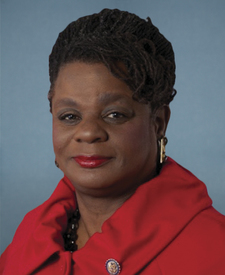
Mr. Neguse (for himself, Mrs. Bice, Ms. Moore of Wisconsin, …
Stakeholder Effects
cui bono?How this legislation distributes effects. Mention counts reflect frequency, not effect magnitude.
Federal plans exposed to false certification risk, Members of Congress surviving domestic violence, OPM adjudicators reviewing self-certifications
Positive-direction: Members of Congress surviving domestic violence
Negative-direction: Federal plans exposed to false certification risk, OPM adjudicators reviewing self-certifications, OPM privacy-security staff, OPM retirement-rulemaking staff, Retirement staff interpreting court orders
Former spouses losing consent protections, Other people exposed by unsafe notice, Spouses losing ordinary notice protections
Positive-direction: Other people exposed by unsafe notice, Survivors requiring protected consent procedures
Negative-direction: Former spouses losing consent protections, Spouses losing ordinary notice protections
Federal employees surviving domestic violence, Former federal employees seeking lump-sum credits
Domestic-violence advocates assisting applicants
Bill Structure & Actor Mappings
Who is "The Secretary" in each section?
- "court"
- → Court issuing an applicable retirement order
- "applicant"
- → Federal employee or Member applying for a lump-sum credit
- "administrator"
- → Office of Personnel Management
- "covered_spouse"
- → Spouse or former spouse accused of domestic violence
- "protected_person"
- → Other person exposed to safety risk
Note: {'scope_ids': ['retirement_domestic_violence_safety'], 'description': 'A consent waiver remains bounded by the applicable court order and safety necessity; applicants must establish qualifying conduct and risk, pre-enactment requirements receive transitional protection, and the rules begin one year after enactment.'}
Key Definitions
Terms defined in this bill
The requirement that payment without consent occur only to the extent the governing court order permits.
Conduct constituting a domestic violence crime under 18 U.S.C. 3561(b) during the year before application.
The applicant's written statement to OPM that the spouse or former spouse committed qualifying conduct within the one-year lookback.
We use a combination of our own taxonomy and classification in addition to large language models to assess meaning and potential beneficiaries. High confidence means strong textual evidence. Always verify with the original bill text.
Learn more about our methodology