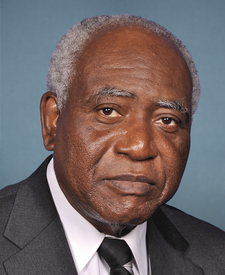
Earl N. Williams, Sr., First Chance Act
Summary
What This Bill Does
The Earl N. Williams, Sr., First Chance Act adds basic and emergency supplemental living-assistance grants to the federal Student Support Services program. Institutions receiving a Student Support Services award must provide both types to current program participants. Basic grants cover reasonable anticipated expenses needed to finish an academic year in the student's first undergraduate bachelor's program; emergency grants cover reasonable unanticipated expenses needed to remain in college that year.
The institution decides how to divide funds, the grant amounts, and which expenses qualify. Covered costs may include cost-of-attendance items, dependent care above the ordinary allowance, transportation above the ordinary allowance, and otherwise uncovered personal expenses. Emergency aid is capped at $500 for academic year 2027-2028 and then increases with estimated CPI changes.
No more than two percent of a recipient's Student Support Services funds may be used for these grants, and both basic and emergency aid must be offered. The assistance generally does not reduce the student's need for other federal grant or work aid, subject to an overall cost-of-attendance limit. Program and financial-aid offices must consult, funds must supplement rather than replace nonfederal support, and availability from growth above fiscal year 2027 is also limited to two percent of that excess.
Who Benefits and How
Current Student Support Services participants benefit from cash assistance for planned living costs and unexpected emergencies that could otherwise interrupt college. Student parents may receive help for dependent-care costs above existing allowances, and students with high transportation costs may receive supplemental support. Institutions gain a defined tool to improve persistence among participating students.
Who Bears the Burden and How
Student Support Services grant recipients must offer both grant types, assess individual expenses, administer the caps, and limit use to two percent of funds. College financial-aid officers and program staff must coordinate awards and ensure total aid stays within the statutory ceiling. Institutions may redirect a small share of existing or increased program funds from other support activities. Federal education administrators must update oversight and annual inflation calculations.
Key Provisions
- Requires basic and emergency living-assistance grants for current Student Support Services participants.
- Covers anticipated expenses needed to complete an academic year.
- Covers unanticipated expenses needed to persist in college.
- Allows support for attendance, dependent-care, transportation, and personal costs.
- Caps emergency grants at $500 in 2027-2028 and indexes the cap afterward.
- Limits institutional use to two percent of Student Support Services funds.
- Protects other aid eligibility subject to an overall cost-of-attendance ceiling.
- Requires financial-aid consultation and supplement-not-supplant compliance.
Evidence Chain:
This summary is generated from the full bill text using AI analysis. Expand "Detailed Analysis" below for identified beneficiaries/burden bearers with clause-level evidence links.
At a Glance
What This Bill Does
Requires institutions receiving federal Student Support Services grants to provide current program participants with basic and emergency living-assistance grants, subject to a two-percent funding limit, a $500 initial emergency cap, inflation indexing, and coordination safeguards.
Key Policy Areas
Higher Education, Student Support Services, Student Financial Aid, Emergency Grants, College Persistence, Dependent Care
Primary Purpose
Requires institutions receiving federal Student Support Services grants to provide current program participants with basic and emergency living-assistance grants, subject to a two-percent funding limit, a $500 initial emergency cap, inflation indexing, and coordination safeguards.
Policy Domains
Section 2 Student Support Services living-assistance grants
Identified Gains
- Students participating in Student Support Services
- Student parents with excess dependent-care costs
- Students with excess transportation costs
- College students facing emergency expenses
- Universities operating Student Support Services programs
Identified Costs
- Student Support Services grant administrators
- College financial-aid officers
- University program compliance staff
- Existing Student Support Services activities
- Education Department grant-oversight staff
- Education Department inflation-calculation staff
Legislative Progress
In CommitteeReferred to the House Committee on Education and Workforce.
Introduced in House
Mr. Davis of Illinois introduced the following bill; which was …
Stakeholder Effects
cui bono?How this legislation distributes effects. Mention counts reflect frequency, not effect magnitude.
College financial-aid officers, College students facing emergency expenses, Existing Student Support Services activities
Positive-direction: College students facing emergency expenses, Student parents with excess dependent-care costs, Students participating in Student Support Services, Students with excess transportation costs
Negative-direction: College financial-aid officers, Existing Student Support Services activities, Student Support Services grant administrators, University program compliance staff
Bill Structure & Actor Mappings
Who is "The Secretary" in each section?
- "grant_recipient"
- → Institution receiving a federal Student Support Services grant
- "eligible_student"
- → Current participant in the institution's Student Support Services program
- "financial_aid_office"
- → Institutional office coordinating assistance and total-aid limits
Key Definitions
Terms defined in this bill
Aid for reasonable anticipated expenses needed to complete an academic year in a student's first undergraduate baccalaureate program.
Cost of attendance as defined by section 472 of the Higher Education Act.
Aid for reasonable unanticipated expenses needed for an eligible student to persist in college during the academic year.
We use a combination of our own taxonomy and classification in addition to large language models to assess meaning and potential beneficiaries. High confidence means strong textual evidence. Always verify with the original bill text.
Learn more about our methodology