Rural and Underserved Health Care Staffing Act
Summary
What This Bill Does
The Rural and Underserved Health Care Staffing Act creates a uniform federal independent-contractor rule for qualified locum tenens physicians and advanced care practitioners providing temporary services at one site for no more than one continuous year. For the listed federal laws and programs, the clinician is not an employee, the health facility, staffing agency, or payor is not an employer, and payment is treated as independent-contractor remuneration.
The rule applies under the Fair Labor Standards Act, National Labor Relations Act, Title VII, Americans with Disabilities Act, Family and Medical Leave Act, ERISA, Public Health Service Act, and HHS programs that require an employment-status decision for participation, certification, or compliance. It covers properly licensed physicians, dentists, podiatrists, optometrists, nurse practitioners, physician assistants, and certified registered nurse anesthetists working under a written agreement. The parties may instead sign a written contract expressly creating an employer-employee relationship.
The bill preserves state professional licensing and scope-of-practice law, federal payroll and self-employment tax rules, Social Security wage and benefit rules, unemployment programs, Medicare or Medicaid eligibility and reimbursement, and treatment of services performed before enactment. Federal agencies must implement the rule in their programs, and a severability clause preserves the remainder if one provision is invalidated.
Who Benefits and How
Health facilities and locum staffing agencies benefit from a predictable federal contractor classification and reduced exposure to employer obligations under the listed statutes. Qualified temporary clinicians benefit from clearer contracting status and continued ability to negotiate written employment when desired. Rural and underserved health facilities may find it easier to obtain temporary licensed clinicians when classification rules are uniform across federal programs.
Who Bears the Burden and How
Locum tenens clinicians classified as contractors lose employee-based protections or benefits under the listed federal labor, antidiscrimination, leave, and retirement statutes unless they negotiate written employment. Federal labor and HHS program administrators must revise employment-status guidance and compliance decisions. Health facilities and staffing agencies must maintain written agreements and confirm each assignment meets the profession, licensure, site, and one-year conditions.
Key Provisions
- Establishes independent-contractor status for qualified locum tenens clinicians under specified federal laws.
- Provides that the facility, staffing agency, or payor is not the clinician's employer for those purposes.
- Limits a qualifying temporary assignment to one site for no more than one continuous year.
- Expands the rule across specified physicians, dental professionals, podiatrists, optometrists, nurse practitioners, physician assistants, and nurse anesthetists.
- Authorizes the parties to choose employment through an express written contract.
- Extends the classification rule across major federal labor, civil-rights, leave, retirement, public-health, and HHS program rules.
- Protects existing tax, Social Security, unemployment, licensing, Medicare, Medicaid, and other supported-health-program rules.
- Requires prospective implementation and protects the remaining provisions through severability.
Evidence Chain:
This summary is generated from the full bill text using AI analysis. Expand "Detailed Analysis" below for identified beneficiaries/burden bearers with clause-level evidence links.
At a Glance
What This Bill Does
Classifies qualified temporary locum tenens physicians and advanced care practitioners as independent contractors rather than employees under specified federal labor, civil-rights, benefits, and HHS program rules unless the parties expressly choose employment in writing.
Key Policy Areas
Healthcare Workforce, Labor Law, Independent Contractors, Rural Health, Federal Benefits, HHS Programs
Primary Purpose
Classifies qualified temporary locum tenens physicians and advanced care practitioners as independent contractors rather than employees under specified federal labor, civil-rights, benefits, and HHS program rules unless the parties expressly choose employment in writing.
Policy Domains
Section 2 federal treatment of locum tenens clinical roles
Identified Gains
- Health facilities using locum clinicians
- Locum tenens staffing agencies
- Qualified locum tenens physicians
- Locum tenens advanced care practitioners
- Rural facilities seeking temporary clinicians
Identified Costs
- Locum clinicians seeking employee protections
- Federal labor enforcement agencies
- HHS program participation staff
- Health facility contract administrators
- Locum staffing contract administrators
Sponsors
Legislative Progress
In CommitteeReferred to the Committee on Education and Workforce, and in …
Introduced in House
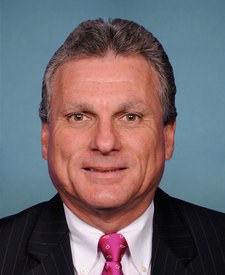
Mr. Carter of Georgia introduced the following bill; which was …
Stakeholder Effects
cui bono?How this legislation distributes effects. Mention counts reflect frequency, not effect magnitude.
Health facilities using locum clinicians, Health facility contract administrators, Locum tenens staffing agencies
Positive-direction: Health facilities using locum clinicians, Locum tenens staffing agencies, Rural facilities seeking temporary clinicians
Negative-direction: Health facility contract administrators
Locum clinicians seeking employee protections, Locum tenens advanced care practitioners, Qualified locum tenens physicians
Federal labor enforcement agencies, HHS program participation staff
Bill Structure & Actor Mappings
Who is "The Secretary" in each section?
- "hhs_secretary"
- → Secretary of Health and Human Services
- "contracting_agency"
- → Agency arranging temporary clinical services
- "qualified_clinician"
- → Qualified locum tenens physician or advanced care practitioner
- "health_care_facility"
- → Facility receiving temporary clinical services
Key Definitions
Terms defined in this bill
An express written agreement between the clinician and facility, or its contracting agent, to create an employer-employee relationship.
A listed, state-authorized clinician providing temporary services at one site for no more than one continuous year under a written facility or agency agreement.
The states, District of Columbia, territories, and possessions of the United States.
We use a combination of our own taxonomy and classification in addition to large language models to assess meaning and potential beneficiaries. High confidence means strong textual evidence. Always verify with the original bill text.
Learn more about our methodology