To require a study on Holocaust education efforts of States, local educational agencies, and public elementary and secondary schools, and for other purposes.
Analysis under review: This bill has generated analysis that may be too generic or incomplete. Clause-level evidence remains available below.
Summary
What This Bill Does
The Holocaust Education and Antisemitism Lessons Act (HEAL Act) directs the U.S. Holocaust Memorial Museum to conduct a nationwide study of how the Holocaust is taught in public schools. The study must examine State and local requirements for Holocaust education, the quality and comprehensiveness of curricula, teacher training and resources, instructional methods, and how student learning is assessed. The Museum Director must report findings to Congress within 3 years.
Who Benefits and How
- U.S. Holocaust Memorial Museum: Receives a formal Congressional mandate and authority to survey Holocaust education nationwide, elevating its role as the central resource hub.
- Students in public schools: May benefit from improved and more comprehensive Holocaust education if Congress acts on the study findings.
- Holocaust education organizations (museums, cultural centers): The study inventories their involvement, potentially increasing their visibility and resources.
- Educators and pre-service teachers: The study identifies training gaps and needed resources, which could lead to better professional development opportunities.
Who Bears the Burden and How
- U.S. Holocaust Memorial Museum: Must design, fund, and execute a large-scale national study across all 50 states, a representative sample of local agencies, and schools within 3 years.
- State educational agencies and local educational agencies: Must cooperate with and provide data for the study, creating administrative overhead.
- Public elementary and secondary schools: Must participate in the study, respond to surveys and provide information about their Holocaust education practices.
Key Provisions
- Mandates a comprehensive national study of Holocaust education in public K-12 schools
- Requires examination of all 50 states and representative samples of local agencies and schools
- Study must cover curriculum requirements, teacher training, instructional materials, assessment methods, and resource adoption
- Director must submit report to Congress within the earlier of 180 days after study completion or 3 years after enactment
- Defines Holocaust education as activities intended to improve awareness, prevent genocide and bigotry, and study the history of antisemitism
Evidence Chain:
This summary is generated from the full bill text using AI analysis. Expand "Detailed Analysis" below for identified beneficiaries/burden bearers.
At a Glance
What This Bill Does
Requires the Director of the United States Holocaust Memorial Museum to conduct a comprehensive study on Holocaust education efforts across States, local educational agencies, and public elementary and secondary schools, and to submit a report to Congress within 3 years.
Key Policy Areas
Education
Primary Purpose
Requires the Director of the United States Holocaust Memorial Museum to conduct a comprehensive study on Holocaust education efforts across States, local educational agencies, and public elementary and secondary schools, and to submit a report to Congress within 3 years.
Policy Domains
Whole Bill - Holocaust Education Study
Identified Gains
Contextual inference, no direct clause citation- U.S. Holocaust Memorial Museum
- Holocaust education organizations
- Students in public schools
- Educators teaching about the Holocaust
Contextual inference, no direct clause citation
Identified Costs
Contextual inference, no direct clause citation- U.S. Holocaust Memorial Museum (study execution)
- State and local educational agencies (data provision)
- Public schools (participation)
Contextual inference, no direct clause citation
Sponsors
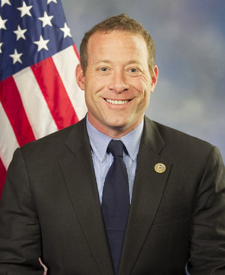

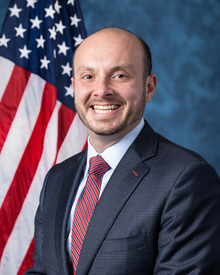

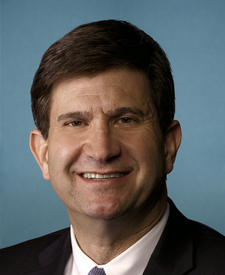
Legislative Progress
IntroducedMr. Gottheimer (for himself, Mr. McCaul, Mr. Goldman of New …
Stakeholder Effects
cui bono?How this legislation distributes effects. Mention counts reflect frequency, not effect magnitude.
State and local educational agencies, U.S. Holocaust Memorial Museum
Holocaust education organizations (museums, cultural centers), Public elementary and secondary schools
Positive-direction: Holocaust education organizations (museums, cultural centers)
Negative-direction: Public elementary and secondary schools
Bill Structure & Actor Mappings
Who is "The Secretary" in each section?
- "the_director"
- → Director of the United States Holocaust Memorial Museum
Key Definitions
Terms defined in this bill
Have the meanings given in section 8101 of the Elementary and Secondary Education Act of 1965 (20 U.S.C. 7801)
Has the meaning given in section 3 of the Never Again Education Act (Public Law 116-141; 36 U.S.C. 2301 note)
Educational activities specifically intended to improve students awareness and understanding of the Holocaust, educate on lessons to prevent genocide/hate/bigotry, and study the history of antisemitism
A teaching method through which students learn by actively engaging in real-world and personally meaningful projects
We use a combination of our own taxonomy and classification in addition to large language models to assess meaning and potential beneficiaries. High confidence means strong textual evidence. Always verify with the original bill text.
Learn more about our methodology