HR7678-119

In Committee

Gun Owner Registration Information Protection Act

119th Congress Introduced Feb 25, 2026

Summary

What This Bill Does

The Gun Owner Registration Information Protection Act bars a federal agency from funding or otherwise supporting the establishment or maintenance of a state firearm-ownership database. A covered database may be comprehensive or partial and may be operated by a state or one of its political subdivisions.

The prohibition applies when the database lists firearms lawfully owned or possessed by individuals, or lists individuals who lawfully own or possess firearms. "State" is defined broadly to include the 50 states, District of Columbia, Puerto Rico, Northern Mariana Islands, American Samoa, Guam, the U.S. Virgin Islands, and any other U.S. territory or possession.

Federal support remains allowed for a database that lists firearms reported lost or stolen or the people who reported them. The exception does not expressly cover broader licensing, permit, sales, tracing, prohibited-person, ballistic, or crime-gun databases; whether one is a partial ownership database depends on its contents. The bill restricts federal support but does not directly prohibit a state from operating a registry entirely with its own resources.

Who Benefits and How

Lawful firearm owners gain protection against federal resources expanding state ownership lists. Gun-rights and privacy advocates gain a funding barrier against registration systems. States maintaining only lost-and-stolen records retain federal support, and theft victims or police using those records are not cut off by the core prohibition.

Who Bears the Burden and How

States and localities using federal grants, data systems, personnel, or technical support for firearm registries must replace that support or reduce the database. Federal agencies must audit grants and distinguish protected lost-and-stolen records from partial ownership lists. Law-enforcement investigators, researchers, and violence-prevention officials may lose access to federally supported ownership data, while jurisdictions face system-separation and compliance costs.

Key Provisions

  • Prohibits federal funding for state firearm-ownership databases.
  • Prohibits other federal support for establishing or maintaining registries.
  • Covers databases listing lawfully owned firearms.
  • Covers databases listing lawful firearm owners.
  • Includes partial as well as comprehensive databases.
  • Expands State to districts, territories, and possessions.
  • Protects databases limited to lost or stolen firearms.
  • Protects records identifying people reporting lost or stolen firearms.
  • Preserves state-funded operation without federal support.
  • Leaves treatment of adjacent permit and tracing systems fact-dependent.

Evidence Chain:

This summary is generated from the full bill text using AI analysis. Expand "Detailed Analysis" below for identified beneficiaries/burden bearers with clause-level evidence links.

At a Glance

What This Bill Does

Prohibits federal agencies from funding or otherwise supporting state or local databases that list lawfully owned firearms or lawful firearm owners, while preserving federal support for databases limited to lost or stolen firearms and the people reporting them.

Key Policy Areas

Firearm Ownership Records, Federal Grant Conditions, State Law Enforcement Databases, Gun Owner Privacy, Lost and Stolen Firearms

Primary Purpose

Prohibits federal agencies from funding or otherwise supporting state or local databases that list lawfully owned firearms or lawful firearm owners, while preserving federal support for databases limited to lost or stolen firearms and the people reporting them.

Policy Domains

Firearm Ownership Records Federal Grant Conditions State Law Enforcement Databases Gun Owner Privacy Lost and Stolen Firearms

Section 2 federal support prohibition and lost-stolen exception

Identified Gains
  • Lawful firearm owners listed in state systems
  • Gun-owner privacy advocates
  • Firearm-rights organizations
  • People reporting stolen firearms
  • Police using lost-firearm databases
  • States maintaining lost-and-stolen records
Model: codex-gpt-5 | Version: bill_summary_v2 | Source: ih
Gun-owner privacy advocates:
Firearm-rights organizations:
People reporting stolen firearms:
Police using lost-firearm databases:
States maintaining lost-and-stolen records:
Lawful firearm owners listed in state systems:
Identified Costs
  • State agencies operating firearm registries
  • Local police departments maintaining ownership lists
  • Federal agencies auditing database support
  • Law-enforcement investigators using ownership data
  • Firearm-policy researchers using registry data
  • Violence-prevention programs using ownership records
  • Jurisdictions separating exempt data systems
Model: codex-gpt-5 | Version: bill_summary_v2 | Source: ih
Federal agencies auditing database support:
State agencies operating firearm registries:
Jurisdictions separating exempt data systems:
Firearm-policy researchers using registry data:
Law-enforcement investigators using ownership data:
Local police departments maintaining ownership lists:
Violence-prevention programs using ownership records:

Legislative Progress

In Committee
Introduced Committee Passed
Feb 25, 2026

Referred to the House Committee on the Judiciary.

Feb 25, 2026

Introduced in House

Feb 25, 2026

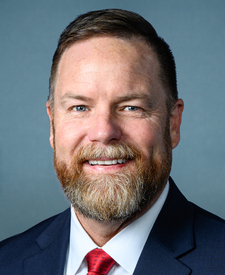
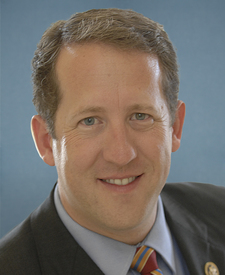
Mr. Gosar (for himself, Mr. Babin, Mr. Bean of Florida, …

Stakeholder Effects

cui bono?

How this legislation distributes effects. Mention counts reflect frequency, not effect magnitude.

General Public
4 mentions across 1 clause
-2 negative ?2 uncertain

Investigators using firearm-ownership data, People reporting stolen firearms, Police using lost-firearm databases

State & Local Government
4 mentions across 1 clause
-3 negative ?1 uncertain

Jurisdictions separating exempt databases, Local police maintaining ownership lists, State agencies operating firearm registries

Firearms
1 mention across 1 clause
+1 positive

Lawful firearm owners in state databases

Advocacy Groups
1 mention across 1 clause
+1 positive

Gun-owner privacy advocates

Nonprofits
1 mention across 1 clause
+1 positive

Firearm-rights organizations

Government
1 mention across 1 clause
-1 negative

Federal database-support auditors

Research & Science
1 mention across 1 clause
-1 negative

Firearm-policy researchers

1/2
sections analyzed
Full impact breakdown

Bill Structure & Actor Mappings

Who is "The Secretary" in each section?

Domains
Firearm Ownership Records Federal Grant Conditions State Law Enforcement Databases Gun Owner Privacy Lost and Stolen Firearms
Actor Mappings
"owner"
→ Lawful firearm owner listed in a state database
"investigator"
→ Law-enforcement official using firearm records
"federal_funder"
→ Federal agency supporting a state data system
"state_operator"
→ State agency maintaining an ownership database
"theft_reporter"
→ Person reporting a firearm lost or stolen

Note: {'scope_ids': ['state_firearm_database_funding_bar'], 'description': 'The bill removes federal support rather than directly banning a state-funded registry; its explicit exception is limited to lost-or-stolen records, leaving adjacent permit, licensing, tracing, and investigative databases dependent on whether they list lawful ownership.'}

Key Definitions

Terms defined in this bill

3 terms
"federal support prohibition" §federal_support

The bar on a federal agency funding or otherwise supporting establishment or maintenance of a covered database.

"state firearm ownership database" §ownership_database

A comprehensive or partial state or local database listing lawfully possessed firearms or individuals who lawfully possess them.

"lost-or-stolen exception" §lost_stolen_exception

Protection for databases listing lost or stolen firearms or the individuals who reported those firearms lost or stolen.

We use a combination of our own taxonomy and classification in addition to large language models to assess meaning and potential beneficiaries. High confidence means strong textual evidence. Always verify with the original bill text.

Learn more about our methodology