HR7666-119

In Committee

SOS: Sustaining Outpatient Services Act

119th Congress Introduced Feb 24, 2026

Summary

What This Bill Does

The SOS: Sustaining Outpatient Services Act changes Medicare payment for a narrow class of items and services furnished by off-campus outpatient departments of hospitals. Beginning in 2027, an item or service is included in the hospital outpatient prospective payment system when the largest total amount paid under the physician fee schedule for all such items or services furnished by physicians in the relevant specialty during the preceding year was less than $2 million.

The provision creates an exception from the lower physician-fee-schedule treatment that otherwise applies to specified off-campus departments. CMS must determine the relevant specialty-level prior-year payment total each year and apply hospital outpatient payment to qualifying services.

The bill does not restore hospital payment for every off-campus service, set a fixed payment amount, waive Medicare coverage requirements, or guarantee that a department remains open. Qualification depends on the previous year's national payment measure and begins only in 2027.

Who Benefits and How

Off-campus hospital departments providing low-volume specialty services receive hospital outpatient reimbursement rather than the site-neutral physician schedule. Hospitals may be more willing to retain services that generate limited physician-schedule spending. Patients in communities relying on those departments may preserve local access. Hospital systems and clinicians attached to qualifying departments gain revenue stability.

Who Bears the Burden and How

Medicare program spending and potentially beneficiary coinsurance may rise where outpatient prospective payments exceed physician-schedule amounts. Independent physician offices can face a payment disadvantage for comparable services. CMS must identify specialties, aggregate prior-year spending, map services, and update payment systems annually. Taxpayers and Medicare premium payers bear higher program cost.

Key Provisions

  • Expands hospital outpatient payment for qualifying off-campus services.
  • Begins the payment exception in 2027.
  • Limits qualification to off-campus provider departments.
  • Requires a prior-year physician-specialty spending test.
  • Sets the qualifying threshold below $2 million.
  • Preserves other Medicare coverage and payment requirements.
  • Requires CMS to recalculate qualification each year.
  • Limits relief to low-volume services rather than all off-campus care.

Evidence Chain:

This summary is generated from the full bill text using AI analysis. Expand "Detailed Analysis" below for identified beneficiaries/burden bearers with clause-level evidence links.

At a Glance

What This Bill Does

Beginning in 2027, restores Medicare hospital outpatient prospective-payment treatment for services furnished by off-campus hospital departments when prior-year physician-fee-schedule payments for the corresponding physician specialty were below $2 million.

Key Policy Areas

Medicare Outpatient Payments, Off-Campus Hospital Departments, Site-Neutral Payment, Low-Volume Medical Services, Hospital Reimbursement

Primary Purpose

Beginning in 2027, restores Medicare hospital outpatient prospective-payment treatment for services furnished by off-campus hospital departments when prior-year physician-fee-schedule payments for the corresponding physician specialty were below $2 million.

Policy Domains

Medicare Outpatient Payments Off-Campus Hospital Departments Site-Neutral Payment Low-Volume Medical Services Hospital Reimbursement

Section 2 OPPS treatment for low-volume off-campus services

Identified Gains
  • Off-campus departments providing low-volume services
  • Hospitals retaining qualifying outpatient specialties
  • Medicare patients relying on local departments
  • Clinicians practicing in qualifying departments
  • Communities preserving outpatient access
  • Hospital employees supporting covered services
Model: codex-gpt-5 | Version: bill_summary_v2 | Source: ih
Communities preserving outpatient access:
Hospital employees supporting covered services:
Medicare patients relying on local departments:
Clinicians practicing in qualifying departments:
Off-campus departments providing low-volume services:
Hospitals retaining qualifying outpatient specialties:
Identified Costs
  • Medicare program accounts
  • Beneficiaries paying outpatient coinsurance
  • Independent physician offices facing payment disparities
  • CMS specialty-spending analysts
  • Medicare payment-system administrators
  • Taxpayers funding higher reimbursements
  • Medicare premium payers
Model: codex-gpt-5 | Version: bill_summary_v2 | Source: ih
Medicare premium payers:
Medicare program accounts:
CMS specialty-spending analysts:
Medicare payment-system administrators:
Taxpayers funding higher reimbursements:
Beneficiaries paying outpatient coinsurance:
Independent physician offices facing payment disparities:

Legislative Progress

In Committee
Introduced Committee Passed
Feb 24, 2026

Referred to the Committee on Energy and Commerce, and in …

Feb 24, 2026

Introduced in House

Feb 24, 2026

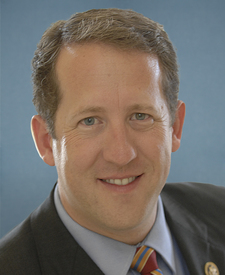
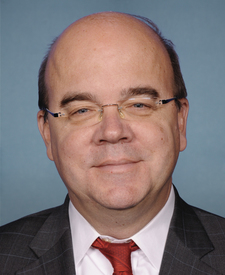
Mr. Smith of Nebraska (for himself and Mr. McGovern) introduced …

Stakeholder Effects

cui bono?

How this legislation distributes effects. Mention counts reflect frequency, not effect magnitude.

Healthcare
3 mentions across 1 clause
+3 positive

Hospital employees supporting covered services, Hospitals retaining qualifying outpatient specialties, Off-campus departments providing low-volume services

Healthcare Beneficiaries
3 mentions across 1 clause
+1 positive -2 negative

Beneficiaries paying outpatient coinsurance, Medicare patients relying on local departments, Medicare premium payers

Positive-direction: Medicare patients relying on local departments

Negative-direction: Beneficiaries paying outpatient coinsurance, Medicare premium payers

Government
3 mentions across 1 clause
-3 negative

CMS specialty-spending analysts, Medicare payment-system administrators, Medicare program accounts

Rural Communities
2 mentions across 1 clause
+1 positive -1 negative

Communities preserving outpatient access, Taxpayers funding higher reimbursements

Positive-direction: Communities preserving outpatient access

Negative-direction: Taxpayers funding higher reimbursements

Health Care
1 mention across 1 clause
+1 positive

Clinicians practicing in qualifying departments

Physician Practices
1 mention across 1 clause
-1 negative

Independent physician offices facing payment disparities

1/2
sections analyzed
Full impact breakdown

Bill Structure & Actor Mappings

Who is "The Secretary" in each section?

Domains
Medicare Outpatient Payments Off-Campus Hospital Departments Site-Neutral Payment Low-Volume Medical Services Hospital Reimbursement
Actor Mappings
"hospital"
→ Hospital system operating an off-campus department
"provider"
→ Off-campus outpatient department of a hospital
"competitor"
→ Independent physician office furnishing a comparable service
"beneficiary"
→ Medicare patient using a qualifying department
"administrator"
→ Centers for Medicare and Medicaid Services

Note: {'scope_ids': ['low_volume_off_campus_opps'], 'description': 'The bill changes payment methodology only for services meeting an annual specialty-level threshold from 2027; it does not cover every off-campus department, guarantee a facility remains open, or waive Medicare coverage rules.'}

Key Definitions

Terms defined in this bill

3 terms
"previous-year specialty test" §lookback

The annual calculation of physician-fee-schedule spending used to decide whether a service falls below the threshold.

"hospital outpatient prospective payment system" §payment_system

The Medicare hospital outpatient payment methodology restored for qualifying services beginning in 2027.

"qualifying low-volume item or service" §qualifying_service

An off-campus hospital service tied to a physician specialty whose greatest relevant prior-year physician-schedule payment total was below $2 million.

We use a combination of our own taxonomy and classification in addition to large language models to assess meaning and potential beneficiaries. High confidence means strong textual evidence. Always verify with the original bill text.

Learn more about our methodology