HR7662-119

In Committee

Railroad Safety Enhancement Act of 2026

119th Congress Introduced Feb 24, 2026

Summary

What This Bill Does

The Railroad Safety Enhancement Act of 2026 broadens Federal high-hazard train rules to trains carrying specified quantities of flammable liquids, flammable gases, explosives, inhalation hazards, spent nuclear fuel, or high-level radioactive waste. DOT must set speed limits, require real-time electronic train-consist information, provide secure access to emergency agencies and fusion centers, require commodity-flow reports, protect sensitive information, review train makeup and buffer-car rules, and require Class I railroads to maintain coordinated hazardous-material emergency plans subject to recurring review and audit.

DOT must evaluate the safety effects of long and heavy trains, collect trailing-tonnage data on accident reports, and publish accident summaries by train length and weight. A National Academy study must examine 20 frequently blocked crossings, while railroads must operate public blocked-crossing telephone services. School-bus-route crossing projects receive additional grant consideration, subject to an 85 percent Federal share cap.

Railroads may not cap the time employees need for compliant car, locomotive, or brake inspections. Class I railroads must identify inspection locations and qualified inspectors, provide additional locomotive inspections, cooperate with recurring Federal audits, correct deficiencies, and preserve collectively bargained rights. DOT must also create risk-based Class I defect-detector network rules covering detector spacing, performance, alert thresholds, maintenance, training, data sharing, public plans, recurring review, and civil penalties. Certain commuter railroads may receive formula support for required detectors.

Most Class I freight trains must carry both a certified conductor and a certified engineer. Limited exceptions exist for non-main-line activity, helper locomotives, certain light movements, and grandfathered operations, but not for high-hazard trains or trains at least 7,500 feet long. Rail-safety penalties rise to as much as $1 million for ordinary violations, $5 million for severe consequences, and double those levels for repeated or consciously indifferent conduct. Small-business penalty ceilings are lower.

After December 31, 2027, specified flammable liquids generally may move only in DOT-117-equivalent tank cars, with a possible one-year delay for manufacturing or commerce constraints. GAO must assess production and retrofit capacity. The bill authorizes $22 million for defect-detector and derailment-prevention grants and $5 million for tank-car safety research; these are authorizations, not direct appropriations.

Additional provisions require reviews of FRA safety culture, roadway-worker warning technology, inspector staffing, and Federal job classifications. Rail equipment inspectors become subject to alcohol and drug testing. A confidential close-call system must accept location and optional audio or video evidence, and Class I railroads and Amtrak must enroll for two years.

States receiving specified rail aid must notify first responders about AskRail. FRA must run a connectivity pilot using broadband, satellite, or fixed-wireless providers, supported by an authorization of $25 million per year for fiscal years 2026 through 2029. The bill separately authorizes $1.5 billion per year over those years for crossing-elimination grants, conditioned on State dangerous-crossing summaries, and requires physical train-approach warnings for roadway workers.

For hazardous-material preparedness, the bill restructures registration fees, broadens grants to equipment, exercises, gap analyses, replacement staffing, and volunteer wages, raises Federal cost shares, requires most State support to reach local responders, and creates a fee- and penalty-funded emergency set-aside available without further appropriation. After a serious qualifying incident, up to $10 million must be released quickly when the responsible party lacks an acceptable reimbursement plan. Responsible parties remain liable to repay the fund, while eligible communities may recover protective equipment, overtime, extraordinary operations, and limited responder health-assessment costs.

Who Benefits and How

Rail workers, passengers, roadway workers, motorists, school-bus riders, and communities near hazardous-material routes gain stronger prevention and emergency information. First responders gain train-consist access, AskRail connectivity, training, equipment, and rapid reimbursement. Conductors, safety researchers, equipment manufacturers, detector vendors, tank-car retrofitters, broadband providers, and crossing contractors may gain jobs or grants. State and Tribal emergency programs receive higher Federal shares and broader eligible uses.

Who Bears the Burden and How

Class I railroads must change operations, crew staffing, inspections, detector networks, emergency plans, reporting, close-call enrollment, and testing. Tank-car owners and hazardous-material shippers face upgrade and operating costs. Hazardous-material registrants finance the preparedness fund through annual fees. Responsible parties must reimburse emergency assistance. FRA, PHMSA, DOT, NASA, OPM, GAO, emergency agencies, and State transportation departments receive extensive rulemaking, grant, reporting, and oversight duties. Federal taxpayers finance any subsequently appropriated authorizations.

Key Provisions

  • Expands high-hazard train speed, information, and emergency-plan rules.
  • Requires long-train safety review and public accident data.
  • Strengthens blocked-crossing study, reporting, and telephone access.
  • Prohibits railroad-imposed inspection time caps.
  • Requires risk-based defect-detector network plans.
  • Establishes a two-person Class I freight crew standard.
  • Raises civil penalties for rail-safety violations.
  • Accelerates use of DOT-117-equivalent tank cars.
  • Funds rail-safety research and first-responder technology pilots.
  • Requires confidential close-call reporting enrollment.
  • Authorizes $1.5 billion annually for crossing-elimination grants.
  • Expands hazardous-material preparedness grants and local pass-throughs.
  • Creates rapid emergency response assistance with responsible-party repayment.

Evidence Chain:

This summary is generated from the full bill text using AI analysis. Expand "Detailed Analysis" below for identified beneficiaries/burden bearers with clause-level evidence links.

At a Glance

What This Bill Does

Tightens freight-rail and hazardous-material safety through high-hazard train rules, inspection and defect-detection standards, two-person crews, stronger tank cars and penalties, emergency information and funding, workforce reviews, first-responder technology, and grade-crossing investment.

Key Policy Areas

Railroad Safety, Hazardous Materials Transportation, Emergency Response, Rail Workforce Safety, Grade Crossing Infrastructure, Rail Equipment Standards

Primary Purpose

Tightens freight-rail and hazardous-material safety through high-hazard train rules, inspection and defect-detection standards, two-person crews, stronger tank cars and penalties, emergency information and funding, workforce reviews, first-responder technology, and grade-crossing investment.

Policy Domains

Railroad Safety Hazardous Materials Transportation Emergency Response Rail Workforce Safety Grade Crossing Infrastructure Rail Equipment Standards

Sections 101 through 204 high-hazard and long-train safety, crossings, inspections, detection, crews, penalties, tank cars, research, workforce, close calls, AskRail, grants, warnings, hazardous-material preparedness, and emergency assistance

Identified Gains
  • Rail workers protected by inspection rules
  • Freight train conductors receiving crew positions
  • Roadway workers receiving approach warnings
  • First responders receiving AskRail access
  • Communities near hazardous-material rail routes
  • State emergency response programs
  • Tribal hazardous-material programs
  • Commuter railroads installing defect detectors
  • Rail-safety research grant recipients
  • Local governments receiving crossing grants
Model: codex-gpt-5 | Version: bill_summary_v2 | Source: ih
State emergency response programs: , , , , , , , , , , , ,
Tribal hazardous-material programs: , , , , , , , , , , , ,
Rail-safety research grant recipients: , , , , , , , , , , , ,
First responders receiving AskRail access: , , , , , , , , , , , ,
Rail workers protected by inspection rules: , , , , , , , , , , , ,
Local governments receiving crossing grants: , , , , , , , , , , , ,
Roadway workers receiving approach warnings: , , , , , , , , , , , ,
Commuter railroads installing defect detectors: , , , , , , , , , , , ,
Communities near hazardous-material rail routes: , , , , , , , , , , , ,
Freight train conductors receiving crew positions: , , , , , , , , , , , ,
Identified Costs
  • Class I freight railroads
  • Tank-car owners upgrading equipment
  • Hazardous-material rail shippers
  • Hazardous-material registration fee payers
  • Responsible parties reimbursing incident costs
  • Federal Railroad Administration regulators
  • Pipeline and Hazardous Materials Safety Administration staff
  • State transportation departments filing grant summaries
  • Federal taxpayers financing authorized programs
Model: codex-gpt-5 | Version: bill_summary_v2 | Source: ih
Class I freight railroads: , , , , , , , , , , , ,
Hazardous-material rail shippers: , , , , , , , , , , , ,
Tank-car owners upgrading equipment: , , , , , , , , , , , ,
Federal Railroad Administration regulators: , , , , , , , , , , , ,
Hazardous-material registration fee payers: , , , , , , , , , , , ,
Responsible parties reimbursing incident costs: , , , , , , , , , , , ,
Federal taxpayers financing authorized programs: , , , , , , , , , , , ,
State transportation departments filing grant summaries: , , , , , , , , , , , ,
Pipeline and Hazardous Materials Safety Administration staff: , , , , , , , , , , , ,

Legislative Progress

In Committee
Introduced Committee Passed
Feb 25, 2026

Referred to the Subcommittee on Railroads, Pipelines, and Hazardous Materials.

Feb 24, 2026

Referred to the Committee on Transportation and Infrastructure, and in …

Feb 24, 2026

Introduced in House

Feb 24, 2026

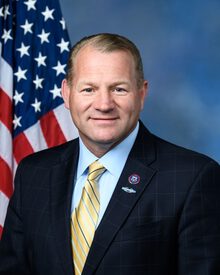
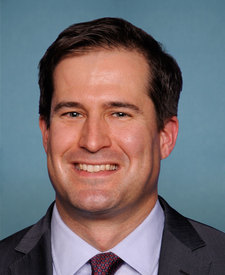
Mr. Nehls (for himself and Mr. Moulton) introduced the following …

Stakeholder Effects

cui bono?

How this legislation distributes effects. Mention counts reflect frequency, not effect magnitude.

Transportation
73 mentions across 24 clauses
+42 positive -27 negative ~4 mixed

Amtrak, Class I freight railroads, Communities crossed by long freight trains

Positive-direction: Communities crossed by long freight trains, Communities harmed by rail violations, Communities near dangerous grade crossings, Communities near flammable-liquid rail routes, Communities near freight rail lines, Communities near freight routes, Communities near hazardous-material rail routes, Commuter railroads installing detectors, Freight train conductors, Freight train crews receiving defect alerts, Locomotive engineers, Motorists delayed at rail crossings, Rail defect-detector developers, Rail defect-detector manufacturers, Rail employees reporting close calls, Rail mechanical inspectors, Rail passengers, Rail workers affected by FRA oversight, Rail workers protected by Federal inspections, Rail workers protected by corrective action, Rail workers protected by safety rules, Rail workers using inspected equipment, Railcar owners sharing defect data, Railroad employees using inspected equipment, Railroad roadway workers, Residents near high-hazard train routes, Residents of urbanized rail corridors, Responsible parties causing hazardous-material incidents, Roadway-worker warning technology vendors, Small responsible businesses unable to reimburse fully, Tank-car manufacturers, Tank-car retrofit providers, Tank-car safety researchers

Negative-direction: Amtrak, Class I freight railroads, Flammable-liquid shippers, Freight railroads operating long trains, Freight-car owners, Hazardous-material rail shippers, Hazardous-material registrants financing the fund, Large hazardous-material registrants, Owners of noncompliant tank cars, Rail carriers administering testing programs, Rail carriers operating blocked crossings, Rail carriers scheduling inspections, Rail carriers supplying warning equipment, Rail carriers violating safety requirements, Rail equipment inspectors subject to testing, Rail managers setting inspection metrics, Railroad hazardous-material coordinators, Railroads seeking crew-size waivers, Small hazardous-material registrants, Small railroads violating safety requirements

Government
48 mentions across 25 clauses
+14 positive -33 negative ~1 mixed

Attorney General collection staff, Congressional oversight committees, Congressional transportation committees

Federal Railroad Administration grant staff, Federal rail safety inspectors face effects in multiple directions

Positive-direction: Attorney General collection staff, Congressional oversight committees, Congressional transportation committees, Federal taxpayers financing crossing grants, Hazardous Materials Emergency Preparedness Fund, Transportation Department emergency-fund staff, Tribal hazardous-material programs

Negative-direction: Federal Railroad Administration analysts, Federal Railroad Administration enforcement staff, Federal Railroad Administration managers, Federal Railroad Administration pilot staff, Federal Railroad Administration plan reviewers, Federal Railroad Administration safety analysts, Federal Railroad Administration waiver staff, Federal Railroad Administration workforce managers, Federal courts hearing rail penalty actions, Federal taxpayers financing AskRail connectivity, Federal taxpayers financing rail research, Federal taxpayers financing tank-car research, Government Accountability Office analysts, Homeland Security information-protection staff, National Aeronautics and Space Administration, Office of Personnel Management, Pipeline and Hazardous Materials Safety Administration, Transportation Department Inspector General, Transportation Department crossing administrators, Transportation Department rail regulators, Transportation Department rulemaking staff, Transportation Department tank-car regulators, Transportation Department testing regulators, Transportation Secretary

Emergency Services
10 mentions across 7 clauses
+10 positive

Communities responding to hazardous-material incidents, Emergency responders delayed by trains, Emergency responders receiving health assessments

Research & Science
7 mentions across 6 clauses
+6 positive -1 negative

Hazardous-material derailment researchers, National Academy of Sciences, Public users of FRA safety plans

Positive-direction: Hazardous-material derailment researchers, Public users of FRA safety plans, Public users of defect-network plans, Public users of rail accident data, Public users of rail inspection reports, Rail-safety research grant recipients

Negative-direction: National Academy of Sciences

State & Local Government
5 mentions across 5 clauses
+2 positive ~3 mixed

State emergency response commissions, State hazardous-material grant administrators, State transportation departments receiving rail aid

Telecommunications
3 mentions across 1 clause
+3 positive

Fixed-wireless providers, Rural communities near rail lines, Satellite internet providers

General Public
2 mentions across 2 clauses
+1 positive -1 negative

Fusion centers receiving train data, Local law-enforcement agencies

Positive-direction: Local law-enforcement agencies

Negative-direction: Fusion centers receiving train data

Safety Equipment
2 mentions across 2 clauses
+2 positive

Personal protective equipment vendors, Rail safety-equipment vendors

26/31
sections analyzed
Full impact breakdown

Bill Structure & Actor Mappings

Who is "The Secretary" in each section?

Domains
Railroad Safety Hazardous Materials Transportation Emergency Response Rail Workforce Safety Grade Crossing Infrastructure Rail Equipment Standards
Actor Mappings
"dot"
→ Transportation Secretary issuing rail and hazardous-material rules
"fra"
→ Federal Railroad Administration administering safety oversight and grants
"phmsa"
→ Pipeline and Hazardous Materials Safety Administration administering preparedness programs
"class_i"
→ Class I freight railroads subject to the primary operating mandates
"congress"
→ Congressional transportation committees receiving oversight reports
"responders"
→ First responders receiving train information, training, equipment, and assistance
"rail_workers"
→ Conductors, engineers, inspectors, roadway workers, and maintenance employees
"state_agencies"
→ State transportation and emergency agencies administering grants and information
"hazmat_shippers"
→ Businesses transporting hazardous materials by rail
"tribal_agencies"
→ Tribal emergency agencies receiving information and Federal support
"responsible_parties"
→ Entities liable for qualifying hazardous-material incidents

Note: {'scope_ids': ['rail_safety_enhancement'], 'description': 'The bill prioritizes prevention and rapid public response over railroad operating flexibility and shipper cost, but preserves targeted waivers, small-business penalty limits, sensitive-information redactions, collective-bargaining rights, and a possible one-year tank-car phase-out delay.'}

Key Definitions

Terms defined in this bill

4 terms
"high-hazard train" §high_hazard_train

A train carrying specified threshold quantities of flammable liquids or gases, explosives, inhalation hazards, high-level radioactive waste, spent nuclear fuel, or combinations of flammable and explosive loads.

"significant hazardous materials transportation incident" §significant_incident

A rail or motor-carrier hazardous-material event meeting responder-cost and serious injury, fatality, or substantial property-damage thresholds.

"defect detection system" §defect_detection_system

Defect detectors, their data analysis, and related processes used to identify and assess known or potential rail-safety conditions.

"public emergency response organization" §public_emergency_response_organization

A covered paid, combination, or volunteer fire department or qualifying nonaffiliated nonprofit emergency medical organization.

We use a combination of our own taxonomy and classification in addition to large language models to assess meaning and potential beneficiaries. High confidence means strong textual evidence. Always verify with the original bill text.

Learn more about our methodology