American Assistance Visibility Act
Summary
What This Bill Does
The American Assistance Visibility Act amends the Foreign Assistance Act to require the United States flag to be distinctively displayed on foreign assistance. Except for authorized exceptions, the U.S. flag must be the sole visual-branding element on covered foreign assistance.
The Secretary of State may allow another visual-branding element case by case when an international agreement or partnership requires co-branding, when implementing partners need clear identification and the U.S. flag remains most prominent, or when the Secretary determines another basis is necessary. The Secretary may waive the requirement to protect personnel or beneficiaries in high-risk locations. The Secretary must issue regulations specifying flag minimum size, color accuracy, placement, and other requirements. Covered foreign assistance includes tangible items provided by the U.S. Government to a foreign country or international organization, including buildings, equipment, vehicles, project signage, food aid, medical supplies, commodities, banners, websites, social media posts, and public outreach publications. The rule applies to assistance provided after enactment.
Who Benefits and How
United States public diplomacy officials benefit because U.S.-funded aid must visibly show the U.S. flag, increasing attribution for assistance. U.S. taxpayers benefit because foreign assistance branding more clearly communicates the source of aid. Foreign aid recipients benefit from clearer identification of U.S.-provided food aid, medical supplies, buildings, equipment, vehicles, and outreach materials. Implementing partners benefit from a case-by-case exception when partner identification is necessary. Personnel in high-risk locations benefit from a safety waiver when visible U.S. branding could create danger. International partners with formal co-branding agreements benefit because the Secretary may authorize additional branding.
Who Bears the Burden and How
The Secretary of State must write implementing regulations on flag size, color accuracy, placement, and prominence. Foreign assistance implementers must update signage, packaging, websites, social media, publications, vehicles, equipment, and other covered items to display the U.S. flag. Department of State grant officers must evaluate exception and waiver requests. Implementing partners may lose visual branding space when the U.S. flag must be the sole branding element. High-risk programs must document safety concerns when seeking waivers. International organizations receiving U.S. assistance must adjust public-facing materials unless an exception applies.
Key Provisions
- Requires the United States flag to be distinctively displayed on foreign assistance.
- Makes the U.S. flag the sole visual-branding element unless the Secretary of State authorizes an exception.
- Allows co-branding for international agreements, implementing-partner identification, or other Secretary-approved bases.
- Authorizes waivers for safety or security of personnel or beneficiaries in high-risk locations.
- Directs State Department regulations for flag size, color accuracy, placement, and prominence.
- Defines foreign assistance to include physical assets, food aid, medical supplies, commodities, signage, websites, social media, and outreach publications.
- Applies the branding rule to foreign assistance provided after enactment.
Evidence Chain:
This summary is generated from the full bill text using AI analysis. Expand "Detailed Analysis" below for identified beneficiaries/burden bearers with clause-level evidence links.
At a Glance
What This Bill Does
Requires tangible U.S. foreign assistance and related public outreach materials to display the United States flag as the sole visual-branding element unless the Secretary of State authorizes co-branding or waives the rule for safety, and directs State Department regulations on flag size, color accuracy, placement, and prominence.
Key Policy Areas
Foreign Assistance, Public Diplomacy, Federal Branding
Primary Purpose
Requires tangible U.S. foreign assistance and related public outreach materials to display the United States flag as the sole visual-branding element unless the Secretary of State authorizes co-branding or waives the rule for safety, and directs State Department regulations on flag size, color accuracy, placement, and prominence.
Policy Domains
Bill provisions
Identified Gains
- United States public diplomacy officials
- United States taxpayers
- Foreign aid recipients
- Foreign assistance implementing partners
- Personnel in high-risk locations
- International co-branding partners
Identified Costs
- Secretary of State staff
- Foreign assistance implementers
- Department of State grant officers
- Implementing partners with separate branding
- High-risk assistance programs
- International organizations receiving U.S. assistance
Sponsors


Legislative Progress
ReportedOrdered to be Reported in the Nature of a Substitute …
Committee Consideration and Mark-up Session Held
Referred to the House Committee on Foreign Affairs.
Introduced in House
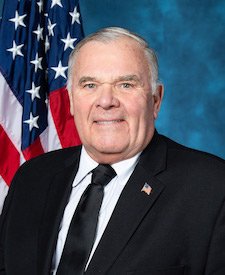
Mr. Shreve introduced the following bill; which was referred to …
Stakeholder Effects
cui bono?How this legislation distributes effects. Mention counts reflect frequency, not effect magnitude.
Foreign aid recipients, Foreign assistance implementers, Personnel in high-risk locations
Positive-direction: Personnel in high-risk locations
Negative-direction: Foreign assistance implementers
Department of State grant officers, United States public diplomacy officials
Positive-direction: United States public diplomacy officials
Negative-direction: Department of State grant officers
Bill Structure & Actor Mappings
Who is "The Secretary" in each section?
- "secretary"
- → Secretary of State
We use a combination of our own taxonomy and classification in addition to large language models to assess meaning and potential beneficiaries. High confidence means strong textual evidence. Always verify with the original bill text.
Learn more about our methodology