To repeal the provision of law that provides automatic pay adjustments for Members of Congress.
Summary
What This Bill Does
H.R. 7628 repeals paragraph 601(a)(2) of the Legislative Reorganization Act of 1946, the provision that supplies automatic pay adjustments for Members of Congress. It makes conforming edits to remove the obsolete paragraph structure and replaces the reference to automatic adjustment with language stating that Member pay is adjusted as provided by law.
After the change, a salary increase or other adjustment would require an affirmative legal basis rather than occurring through the repealed automatic mechanism. The bill takes effect on the date the 120th Congress convenes, so it does not change pay during the current Congress before that date.
The bill does not reduce the existing nominal salary, prohibit Congress from enacting a later increase or decrease, change outside-income or benefits rules, alter salaries for non-Member federal employees, or specify a new compensation amount. Constitutional limits on when changes to congressional compensation may take effect continue to apply.
Who Benefits and How
Federal taxpayers avoid future automatic salary increases unless Congress affirmatively provides them by law. Voters and government-accountability advocates gain a visible legislative decision point for Member pay. Members who oppose automatic raises no longer need recurring appropriations restrictions to block the statutory adjustment.
Who Bears the Burden and How
Members of Congress face inflation erosion unless a pay law is enacted. Future candidates and Members without substantial outside wealth may find congressional service less financially accessible over time. Legislative-pay administrators must update the statute and payroll process. Congress must spend floor and committee time if it wants to change salaries, and recruitment or retention could be affected.
Key Provisions
- Repeals automatic Member pay adjustments.
- Requires future compensation adjustments to be provided by law.
- Makes conforming paragraph and cross-reference changes.
- Delays effectiveness until the 120th Congress convenes.
- Preserves the existing salary until changed through law.
- Allows Congress to enact later increases or decreases.
- Preserves constitutional compensation timing limits.
- Leaves non-Member federal pay systems unchanged.
Evidence Chain:
This summary is generated from the full bill text using AI analysis. Expand "Detailed Analysis" below for identified beneficiaries/burden bearers.
At a Glance
What This Bill Does
Repeals the statutory mechanism for automatic annual pay adjustments for Members of Congress, requires future salary adjustments to be provided by law, and applies the change when the 120th Congress convenes.
Key Policy Areas
Congressional Compensation, Automatic Pay Adjustments, Legislative Accountability, Federal Personnel Costs, 120th Congress
Primary Purpose
Repeals the statutory mechanism for automatic annual pay adjustments for Members of Congress, requires future salary adjustments to be provided by law, and applies the change when the 120th Congress convenes.
Policy Domains
Section 1 repeal, conforming amendments, and delayed effective date
Identified Gains
Contextual inference, no direct clause citation- Federal taxpayers avoiding automatic raises
- Voters reviewing future pay legislation
- Government-accountability advocates
- Members opposing automatic salary adjustments
- Budget planners gaining nominal-pay stability
Contextual inference, no direct clause citation
Identified Costs
Contextual inference, no direct clause citation- Members experiencing salary erosion
- Prospective candidates without independent wealth
- Legislative payroll administrators
- Congressional committees considering pay laws
- Congressional recruitment efforts
- Member-retention efforts
Contextual inference, no direct clause citation
Sponsors
Legislative Progress
In CommitteeReferred to the Committee on House Administration, and in addition …
Introduced in House
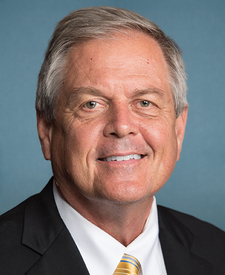
Mr. Norman introduced the following bill; which was referred to …
Bill Structure & Actor Mappings
Who is "The Secretary" in each section?
- "voter"
- → Voter evaluating a congressional pay law
- "member"
- → Member of Congress subject to the pay statute
- "taxpayer"
- → Federal taxpayer financing congressional salaries
- "candidate"
- → Prospective congressional candidate
- "administrator"
- → Official administering legislative payroll
Note: {'scope_ids': ['congressional_automatic_pay_repeal'], 'description': 'The bill removes automatic adjustments but does not cut current nominal pay or bar future salary laws; effects depend on later congressional action and constitutional timing rules.'}
Key Definitions
Terms defined in this bill
The date the 120th Congress convenes, when the repeal and conforming amendments begin to apply.
A future Member salary change supported by an enacted legal provision after the automatic mechanism is removed.
The repealed statutory mechanism that can adjust Member salaries without a new salary law.
We use a combination of our own taxonomy and classification in addition to large language models to assess meaning and potential beneficiaries. High confidence means strong textual evidence. Always verify with the original bill text.
Learn more about our methodology