HR7624-119

In Committee

Safe Shelters for Survivors Act of 2026

119th Congress Introduced Feb 20, 2026

Summary

What This Bill Does

The Safe Shelters for Survivors Act prohibits a domestic-violence or homeless shelter receiving federal funds from providing any service or shelter to a person required to register on the national sex-offender registry. A covered shelter that violates the prohibition becomes ineligible for all federal funds during the following fiscal year.

A covered sex offender may not enter a covered shelter or use its services except to seek information about shelters that do not receive federal funds. On entering for that limited purpose, the person must immediately tell an operator that the person is required to register. The operator may provide information about noncovered shelters and explain the prohibition.

A covered offender who knowingly violates the relevant entry or notification requirements in or affecting interstate commerce may be fined, imprisoned for up to five years, or both. The section takes effect 180 days after enactment. The bill defines covered offenders, covered and noncovered shelters, the national registry, and homelessness by reference to existing statutes.

The prohibition turns on current national-registry status and receipt of federal shelter funds. It does not bar a covered person from every shelter, permit temporary emergency service at a covered facility, require a noncovered shelter to admit the person, or provide replacement housing or treatment.

Who Benefits and How

Domestic-violence survivors and other residents of federally funded shelters receive a categorical separation from registered sex offenders, potentially reducing safety fears and exposure risk. Shelter operators gain a clear federal exclusion rule. Federal funding agencies and law-enforcement officials receive enforceable tools tied to grants and criminal penalties.

Who Bears the Burden and How

Registered covered offenders lose access to federally funded shelter, meals, counseling, and other services and may face greater unsheltered-homelessness risk. Covered shelters must identify prohibited users and risk losing all federal support for noncompliance. Noncovered shelters may absorb redirected demand without new funding. DOJ, courts, grant agencies, and shelter staff must implement the criminal and funding rules, while communities may bear costs associated with leaving high-risk people unsheltered.

Key Provisions

  • Prohibits covered shelters from serving registered covered offenders.
  • Bars covered offenders from entering or using covered shelters.
  • Protects entry only to seek information about noncovered shelters.
  • Requires immediate notice of national-registry status upon entry.
  • Conditions all following-year federal shelter funds on compliance.
  • Authorizes fines and imprisonment for knowing covered violations.
  • Limits imprisonment to a maximum of five years.
  • Defines covered shelters by receipt of federal funds.
  • Delays the restrictions and penalties for 180 days.
  • Provides no replacement-housing entitlement for excluded offenders.

Evidence Chain:

This summary is generated from the full bill text using AI analysis. Expand "Detailed Analysis" below for identified beneficiaries/burden bearers with clause-level evidence links.

At a Glance

What This Bill Does

Bars federally funded domestic-violence and homeless shelters from serving people required to register on the national sex-offender registry, conditions all federal funding on compliance, restricts covered offenders' entry, requires immediate registry-status notice, and creates criminal penalties after 180 days.

Key Policy Areas

Domestic Violence Shelters, Homeless Assistance, Sex Offender Restrictions, Federal Funding Conditions, Criminal Enforcement

Primary Purpose

Bars federally funded domestic-violence and homeless shelters from serving people required to register on the national sex-offender registry, conditions all federal funding on compliance, restricts covered offenders' entry, requires immediate registry-status notice, and creates criminal penalties after 180 days.

Policy Domains

Domestic Violence Shelters Homeless Assistance Sex Offender Restrictions Federal Funding Conditions Criminal Enforcement

Section 2 shelter service ban, funding condition, notice, and penalties

Identified Gains
  • Domestic-violence survivors using covered shelters
  • Homeless residents using covered shelters
  • Children residing in covered shelters
  • Shelter operators applying a categorical rule
  • Federal grant agencies enforcing shelter conditions
  • Law-enforcement officials enforcing entry restrictions
Model: codex-gpt-5 | Version: bill_summary_v2 | Source: ih
Children residing in covered shelters:
Homeless residents using covered shelters:
Shelter operators applying a categorical rule:
Domestic-violence survivors using covered shelters:
Federal grant agencies enforcing shelter conditions:
Law-enforcement officials enforcing entry restrictions:
Identified Costs
  • Registered offenders excluded from shelter services
  • Covered offenders facing criminal prosecution
  • Covered shelters screening service users
  • Shelters risking loss of all federal funds
  • Noncovered shelters receiving redirected demand
  • DOJ prosecutors enforcing knowing violations
  • Federal courts handling shelter-entry cases
  • Communities addressing unsheltered homelessness
Model: codex-gpt-5 | Version: bill_summary_v2 | Source: ih
Covered shelters screening service users:
Shelters risking loss of all federal funds:
Federal courts handling shelter-entry cases:
DOJ prosecutors enforcing knowing violations:
Covered offenders facing criminal prosecution:
Communities addressing unsheltered homelessness:
Noncovered shelters receiving redirected demand:
Registered offenders excluded from shelter services:

Legislative Progress

In Committee
Introduced Committee Passed
Feb 20, 2026

Referred to the House Committee on Financial Services.

Feb 20, 2026

Introduced in House

Feb 20, 2026

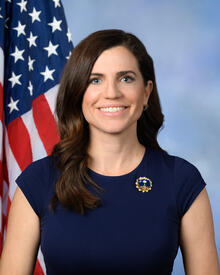
Ms. Mace introduced the following bill; which was referred to …

Stakeholder Effects

cui bono?

How this legislation distributes effects. Mention counts reflect frequency, not effect magnitude.

Social Services
10 mentions across 1 clause
+3 positive -5 negative ~2 mixed

Children residing in covered shelters, Covered shelters screening service users, Domestic-violence survivors using covered shelters

Positive-direction: Children residing in covered shelters, Domestic-violence survivors using covered shelters, Homeless residents using covered shelters

Negative-direction: Covered shelters screening service users, Noncovered shelters, Registered offenders seeking shelter services, Shelters dependent on federal funds, Unsheltered covered offenders

Government
3 mentions across 1 clause
-2 negative ~1 mixed

DOJ shelter-entry prosecutors, Federal courts handling entry cases, Federal shelter-grant agencies

General Public
1 mention across 1 clause
+1 positive

Law-enforcement officials

Law Enforcement
1 mention across 1 clause
-1 negative

Covered offenders facing prosecution

State & Local Government
1 mention across 1 clause
-1 negative

Local homelessness-response agencies

1/2
sections analyzed
Full impact breakdown

Bill Structure & Actor Mappings

Who is "The Secretary" in each section?

Domains
Domestic Violence Shelters Homeless Assistance Sex Offender Restrictions Federal Funding Conditions Criminal Enforcement
Actor Mappings
"shelter"
→ Federally funded domestic-violence or homeless shelter
"operator"
→ Individual operating a covered shelter
"resident"
→ Survivor or homeless resident using a covered shelter
"prosecutor"
→ Federal official enforcing the criminal restriction
"excluded_person"
→ Person required to register on the national sex-offender registry

Note: {'scope_ids': ['federally_funded_shelter_exclusion'], 'description': 'The exclusion applies to national-registry offenders and federally funded shelters, with only an information-seeking entry exception; it supplies no emergency-service exception, replacement placement, or duty for a noncovered shelter to admit the person.'}

Key Definitions

Terms defined in this bill

3 terms
"covered shelter" §covered_shelter

A domestic-violence shelter or homeless shelter that receives federal funds.

"covered sex offender" §covered_offender

A sex offender required to register on the national registry under the Adam Walsh Act.

"information-only entry" §information_entry

The limited permission for a covered offender to enter solely to seek information about a noncovered shelter, coupled with immediate status notice.

We use a combination of our own taxonomy and classification in addition to large language models to assess meaning and potential beneficiaries. High confidence means strong textual evidence. Always verify with the original bill text.

Learn more about our methodology