Protecting Puppies from Sharia Act
Summary
What This Bill Does
The Protecting Puppies from Sharia Act bars federal funds from being made available to any state or local government that prohibits residents of its jurisdiction from owning dogs. The text does not limit the funding consequence to an animal-control grant or to money connected with the ownership prohibition; on its face, the jurisdiction loses access to all federal funds covered by the phrase.
The bill does not define what counts as a prohibition. It does not specify whether the rule reaches only a blanket ban, a ban on particular breeds, restrictions on particular people or properties, temporary emergency rules, or violations cured after enactment. It also provides no certification process, enforcement agency, effective date, notice, hearing, or restoration procedure.
The section states Congress's view that Sharia law is a foreign concept contrary to the pursuit of happiness and that all Americans have a right to own a dog. Those statements are a sense of Congress and do not themselves create a private right, invalidate a local ordinance, compel a private landlord to permit a dog, or override generally applicable animal-welfare and public-safety laws. The operative funding condition applies by the existence of a dog-ownership prohibition, regardless of the stated rationale for that prohibition.
Who Benefits and How
Residents seeking to own dogs gain federal leverage against jurisdiction-wide prohibitions. Dog breeders, pet stores, veterinarians, trainers, and adoption organizations may gain customers where a prohibition is repealed. Dog owners and advocates gain a national policy statement supporting ownership.
Who Bears the Burden and How
States or localities with a covered prohibition must repeal it or risk losing federal support across programs. Animal-control officials must distinguish a prohibited ownership ban from permissible regulation. Federal grant agencies must identify noncompliant jurisdictions and stop awards, while residents may lose unrelated federally supported services if their government keeps a ban. Communities using restrictions for safety or health purposes lose policy flexibility.
Key Provisions
- Prohibits federal funding for jurisdictions that ban dog ownership.
- Conditions unrelated federal support on local ownership policy.
- Requires affected governments to choose between funding and a prohibition.
- Provides no statutory definition of a covered ownership ban.
- Provides no express compliance or funding-restoration process.
- States Congress's opposition to Sharia law.
- States Congress's support for Americans owning dogs.
- Limits the religious and rights language to a nonbinding sense of Congress.
- Preserves no explicit exception for safety or animal-welfare bans.
Evidence Chain:
This summary is generated from the full bill text using AI analysis. Expand "Detailed Analysis" below for identified beneficiaries/burden bearers with clause-level evidence links.
At a Glance
What This Bill Does
Makes every state or local government that prohibits residents from owning dogs ineligible for federal funds and adds nonbinding congressional statements opposing Sharia law and supporting a right of Americans to own dogs.
Key Policy Areas
Federal Funding Conditions, State and Local Government, Dog Ownership, Animal Regulation, Nonbinding Congressional Findings
Primary Purpose
Makes every state or local government that prohibits residents from owning dogs ineligible for federal funds and adds nonbinding congressional statements opposing Sharia law and supporting a right of Americans to own dogs.
Policy Domains
Section 2 federal funding bar and nonbinding dog-ownership statements
Identified Gains
- Residents seeking to own dogs
- Existing dog owners opposing ownership bans
- Dog breeders serving affected jurisdictions
- Pet stores selling dog supplies
- Veterinarians treating owned dogs
- Animal shelters arranging dog adoptions
- Dog-ownership advocacy organizations
Identified Costs
- State governments maintaining dog-ownership bans
- Local governments maintaining dog-ownership bans
- Residents relying on federally funded local services
- Federal grant staff enforcing the funding bar
- Animal-control agencies revising local rules
- Communities using dog restrictions for safety
- Religious communities addressed by congressional statements
Sponsors
Legislative Progress
In CommitteeReferred to the House Committee on Oversight and Government Reform.
Introduced in House
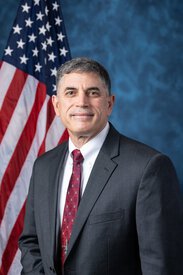
Mr. Fine (for himself, Mr. Self, Mr. Roy, Mr. Harris …
Stakeholder Effects
cui bono?How this legislation distributes effects. Mention counts reflect frequency, not effect magnitude.
Communities using ownership restrictions, Existing dog owners, Residents seeking to own dogs
Positive-direction: Existing dog owners, Residents seeking to own dogs
Negative-direction: Communities using ownership restrictions, Residents using federally funded local services
Animal-control agencies, Local governments with dog-ownership bans, State governments with dog-ownership bans
Religious communities addressed by the findings
Bill Structure & Actor Mappings
Who is "The Secretary" in each section?
- "business"
- → Pet-sector business serving dog owners
- "resident"
- → Resident seeking to own a dog
- "regulator"
- → Animal-control official administering ownership rules
- "jurisdiction"
- → State or local government prohibiting resident dog ownership
- "administrator"
- → Federal grant official applying the funding bar
Note: {'scope_ids': ['dog_ownership_funding_condition'], 'description': 'The funding bar is operative but leaves the triggering prohibition and enforcement process undefined; the Sharia and ownership-right statements are nonbinding and do not themselves create an enforceable individual right.'}
Key Definitions
Terms defined in this bill
The prohibition on making federal funds available to a state or locality that prohibits residents from owning dogs.
The nonbinding statements about Sharia law and a right of Americans to own dogs.
The undefined type of state or local dog-ownership ban that triggers the federal funding consequence.
We use a combination of our own taxonomy and classification in addition to large language models to assess meaning and potential beneficiaries. High confidence means strong textual evidence. Always verify with the original bill text.
Learn more about our methodology