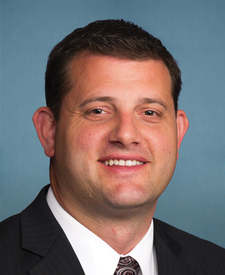
HR7609-119

In Committee

Rural Development Modernization Act

119th Congress Introduced Feb 20, 2026

Summary

What This Bill Does

The Rural Development Modernization Act updates several rural development statutes. It harmonizes population thresholds for rural water supply projects by adding projects serving areas described in the Consolidated Farm and Rural Development Act rural-area provisions, covering certain authorized rural water projects, and including projects authorized for Indian Tribes under the Omnibus Public Land Management Act.

The bill clarifies that rural broadband, electrification, business, and housing provisions cover communities in U.S. territories and possessions. It adds territorial references, adds the Commonwealth of the Northern Mariana Islands in one business program provision, replaces outdated Trust Territory of the Pacific Islands language with the Republic of the Marshall Islands, Federated States of Micronesia, and Republic of Palau under the Compacts of Free Association, and updates Housing Act territory and population references. It also makes technical and conforming amendments across rural electrification, rural development, housing, and reclamation statutes.

Finally, the bill requires the Secretary of Agriculture to reassess every year, and adjust if necessary, the numerical thresholds used to determine whether an area is rural under the amended laws. The Secretary must consider Census population and density trends, OMB metropolitan and non-metropolitan classifications, Rural-Urban Commuting Area codes, and regional differences.

Who Benefits and How

Rural water supply projects benefit because more authorized projects and tribal water projects can fit the rural water framework. Communities in U.S. territories and possessions benefit from clearer eligibility for rural broadband, electrification, business, and housing programs. The Republic of the Marshall Islands, Federated States of Micronesia, and Republic of Palau benefit from updated statutory references tied to the Compacts of Free Association. Rural communities near population thresholds benefit from annual reassessment that can adjust eligibility as population and density patterns change.

Who Bears the Burden and How

USDA Rural Development, Rural Utilities Service, Rural Housing Service, and Bureau of Reclamation staff must update program guidance, eligibility systems, forms, and statutory references. The Secretary of Agriculture must conduct annual threshold reassessments using Census, OMB, and Economic Research Service data. Existing applicants may face changed competition if newly clarified territorial, tribal, or threshold-eligible communities enter programs.

Key Provisions

  • Expands rural water supply project coverage to additional rural areas, authorized rural water projects, and tribal water projects.
  • Clarifies rural broadband and rural electrification eligibility for communities in U.S. territories and possessions.
  • Updates rural development and housing statute references for the Northern Mariana Islands and freely associated states.
  • Makes technical and conforming amendments across rural electrification, rural development, housing, and reclamation laws.
  • Requires annual reassessment and adjustment of rural-area population thresholds using Census, OMB, and Rural-Urban Commuting Area data.
  • Authorizes consideration of regional differences when adjusting rural-area thresholds.

Evidence Chain:

This summary is generated from the full bill text using AI analysis. Expand "Detailed Analysis" below for identified beneficiaries/burden bearers with clause-level evidence links.

At a Glance

What This Bill Does

Modernizes rural development eligibility by harmonizing rural water population thresholds, clarifying coverage for U.S. territories and freely associated states, making technical corrections across rural development statutes, and requiring annual reassessment of rural-area population thresholds.

Key Policy Areas

Rural Development, Rural Water, Territories, Freely Associated States, USDA

Primary Purpose

Modernizes rural development eligibility by harmonizing rural water population thresholds, clarifying coverage for U.S. territories and freely associated states, making technical corrections across rural development statutes, and requiring annual reassessment of rural-area population thresholds.

Policy Domains

Rural Development Rural Water Territories Freely Associated States USDA

Sections 4 and 5 rural water thresholds and territorial clarifications

Identified Gains
  • Rural water supply projects
  • Indian Tribes with authorized water projects
  • Communities in U.S. territories
  • Northern Mariana Islands rural development applicants
  • Freely associated state communities
Model: codex-gpt-5 | Version: bill_summary_v2 | Source: ih
Rural water supply projects:
Communities in U.S. territories:
Freely associated state communities:
Indian Tribes with authorized water projects:
Northern Mariana Islands rural development applicants:
Identified Costs
  • Rural Utilities Service administrators
  • USDA Rural Development eligibility staff
  • Rural Housing Service administrators
Model: codex-gpt-5 | Version: bill_summary_v2 | Source: ih
Rural Housing Service administrators:
Rural Utilities Service administrators:
USDA Rural Development eligibility staff:

Sections 6 and 7 technical corrections and annual population threshold reassessment

Identified Gains
  • Rural communities near population thresholds
  • USDA rural program applicants
  • Regional rural development planners
Model: codex-gpt-5 | Version: bill_summary_v2 | Source: ih
USDA rural program applicants:
Regional rural development planners:
Rural communities near population thresholds:
Identified Costs
  • Secretary of Agriculture threshold review staff
  • Economic Research Service rural data staff
  • Bureau of the Census data users
  • Office of Management and Budget classification users
Model: codex-gpt-5 | Version: bill_summary_v2 | Source: ih
Bureau of the Census data users:
Economic Research Service rural data staff:
Secretary of Agriculture threshold review staff:
Office of Management and Budget classification users:

Legislative Progress

In Committee
Introduced Committee Passed
Feb 20, 2026

Referred to the Committee on Agriculture, and in addition to …

Feb 20, 2026

Introduced in House

Feb 20, 2026

Mr. Costa (for himself, Mr. Crawford, Mr. Riley of New …

Stakeholder Effects

cui bono?

How this legislation distributes effects. Mention counts reflect frequency, not effect magnitude.

Government
8 mentions across 3 clauses
+3 positive -5 negative

Bureau of Reclamation rural water staff, Communities in U.S. territories, Indian Tribes with authorized water projects

Positive-direction: Communities in U.S. territories, Indian Tribes with authorized water projects, Northern Mariana Islands rural development applicants

Negative-direction: Bureau of Reclamation rural water staff, Rural Housing Service administrators, Rural Utilities Service administrators, Secretary of Agriculture threshold review staff, USDA Rural Development eligibility staff

Rural Communities
1 mention across 1 clause
+1 positive

Rural communities near population thresholds

Utilities
1 mention across 1 clause
+1 positive

Rural water supply projects

International Development
1 mention across 1 clause
+1 positive

Freely associated state communities

4/7
sections analyzed
Full impact breakdown

Bill Structure & Actor Mappings

Who is "The Secretary" in each section?

Domains
Rural Water Territories Freely Associated States Rural Development
Actor Mappings
"tribe"
→ Indian Tribe with authorized water projects
"secretary"
→ Secretary administering rural development statutes
"territory"
→ Territory or possession of the United States
Domains
Rural Development USDA Population Thresholds
Actor Mappings
"ers"
→ Economic Research Service
"omb"
→ Office of Management and Budget
"census"
→ Bureau of the Census
"secretary"
→ Secretary of Agriculture

We use a combination of our own taxonomy and classification in addition to large language models to assess meaning and potential beneficiaries. High confidence means strong textual evidence. Always verify with the original bill text.

Learn more about our methodology