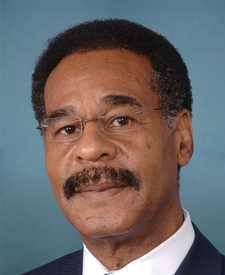
HR7607-119

In Committee

METRIC Act

119th Congress Introduced Feb 20, 2026

Summary

What This Bill Does

The METRIC Act modernizes how the federal government measures national energy inputs. It finds that traditional primary-energy metrics were built for combustion-based fuels and can misrepresent noncombustion sources such as solar, wind, hydroelectric, geothermal, and other systems. DOE, with EIA support, must study the validity and limits of current primary-energy indicators, assess how those metrics affect understanding of efficiency, electrification, decarbonization, and economic productivity, review alternatives and international best practices, and recommend improvements or replacements. DOE must report to the House Energy and Commerce Committee and Senate Energy and Natural Resources Committee within 18 months. The bill also amends EIA's statutory duties to require incident-energy statistics. EIA must collect survey or reporting data where feasible, develop annual model-based estimates where direct collection is not feasible, use data from manufacturers, operators, users, physical models, federal research institutions, national laboratories, NASA, NOAA, and comparable observational sources, integrate incident-energy data into existing EIA products with primary and final energy statistics, publish machine-readable data, assumptions, and methods, and disclose uncertainty.

Who Benefits and How

Energy modelers, renewable-energy analysts, researchers comparing combustible and noncombustible systems, market participants, policymakers, and public users of EIA data benefit from incident-energy statistics, better comparability, public assumptions, machine-readable methods, and uncertainty disclosure.

Who Bears the Burden and How

DOE must complete the primary-energy accounting study and report recommendations within 18 months, while EIA must collect incident-energy data, create annual model-based estimates, integrate the new statistics into existing products, and publish machine-readable assumptions, methods, and uncertainty levels. Energy-conversion technology operators, manufacturers responding to surveys, national laboratories, NASA data providers, NOAA data providers, and federal energy-statistics staff must provide data, modeling inputs, remote-sensing information, and documentation.

Key Provisions

  • Directs DOE and EIA to study current primary-energy indicators, their limitations, alternatives, international practices, and recommended improvements within 18 months.
  • Requires EIA to develop, collect, analyze, and report incident-energy statistics.
  • Requires survey or reporting data where feasible and annual model-based estimates where direct data collection is not feasible.
  • Directs EIA to use manufacturers, operators, physical models, federal research institutions, national laboratories, NASA, NOAA, and remote-sensing sources.
  • Requires machine-readable public data, assumptions, methods, uncertainty disclosure, and side-by-side comparison with primary and final energy statistics.

Evidence Chain:

This summary is generated from the full bill text using AI analysis. Expand "Detailed Analysis" below for identified beneficiaries/burden bearers with clause-level evidence links.

At a Glance

What This Bill Does

Requires DOE and EIA to study limitations of primary-energy accounting, recommend alternatives, and add incident-energy statistics to EIA reporting with survey data, model-based estimates, federal research and satellite inputs, machine-readable public methods, uncertainty disclosure, and side-by-side comparison with primary and final energy statistics.

Key Policy Areas

Energy, Data, Science, Transparency

Primary Purpose

Requires DOE and EIA to study limitations of primary-energy accounting, recommend alternatives, and add incident-energy statistics to EIA reporting with survey data, model-based estimates, federal research and satellite inputs, machine-readable public methods, uncertainty disclosure, and side-by-side comparison with primary and final energy statistics.

Policy Domains

Energy Data Science Transparency

Bill-wide scope

Identified Gains
  • Energy modelers
  • Renewable-energy analysts
  • Market participants
  • Public users of EIA data
  • Energy policymakers
  • Energy researchers
Model: codex-gpt-5 | Version: bill_summary_v2 | Source: ih
Energy modelers: ,
Energy researchers: ,
Energy policymakers: ,
Market participants: ,
Public users of EIA data: ,
Renewable-energy analysts: ,
Identified Costs
  • Department of Energy
  • Energy Information Administration
  • Energy-conversion technology operators
  • National laboratories
  • NASA data providers
  • NOAA data providers
Model: codex-gpt-5 | Version: bill_summary_v2 | Source: ih
NASA data providers: ,
NOAA data providers: ,
Department of Energy: ,
National laboratories: ,
Energy Information Administration: ,
Energy-conversion technology operators: ,

Legislative Progress

In Committee
Introduced Committee Passed
Feb 20, 2026

Referred to the House Committee on Energy and Commerce.

Feb 20, 2026

Introduced in House

Feb 20, 2026

Mr. Casten (for himself, Ms. Castor of Florida, and Mr. …

Stakeholder Effects

cui bono?

How this legislation distributes effects. Mention counts reflect frequency, not effect magnitude.

Energy
6 mentions across 2 clauses
+4 positive -2 negative

Energy Information Administration, Energy modelers, Energy-conversion technology operators

Positive-direction: Energy modelers, Renewable-energy analysts

Negative-direction: Energy Information Administration, Energy-conversion technology operators

Research & Science
3 mentions across 1 clause
-3 negative

NASA data providers, NOAA data providers, National laboratories

Government
1 mention across 1 clause
-1 negative

Department of Energy

Financial Services
1 mention across 1 clause
+1 positive

Market participants

3/3
sections analyzed
Full impact breakdown

Bill Structure & Actor Mappings

Who is "The Secretary" in each section?

Domains
Energy Data Science Transparency
Actor Mappings
"DOE"
→ Department of Energy
"EIA"
→ Energy Information Administration
"primary_beneficiaries"
→ Energy modelers, Renewable-energy analysts, Market participants, Public users of EIA data, Energy policymakers, Energy researchers
"primary_burden_bearers"
→ Department of Energy, Energy Information Administration, Energy-conversion technology operators, National laboratories, NASA data providers, NOAA data providers

We use a combination of our own taxonomy and classification in addition to large language models to assess meaning and potential beneficiaries. High confidence means strong textual evidence. Always verify with the original bill text.

Learn more about our methodology