HR7592-119

In Committee

Zero-Based Regulatory Budgeting to Unleash American Energy Act of 2026

119th Congress Introduced Feb 17, 2026

Summary

What This Bill Does

This bill applies zero-based regulatory budgeting to specified energy regulators. Covered agencies are the Department of Energy; Interior offices including the Bureau of Land Management, Bureau of Ocean Energy Management, Bureau of Safety and Environmental Enforcement, and Office of Surface Mining Reclamation and Enforcement; and the Federal Energy Regulatory Commission. Covered regulations are tied to statutes such as the Atomic Energy Act, Energy Policy Acts, Energy Policy and Conservation Act appliance rules, Federal Land Policy and Management Act, Mining Law of 1872, Outer Continental Shelf Lands Act, Surface Mining Control and Reclamation Act, Federal Power Act, Natural Gas Act, and Powerplant and Industrial Fuel Use Act. Within 90 days, each covered agency must amend existing covered rules so they expire within one year. New covered rules generally must expire within five years, unless the agency head determines the rule has a net deregulatory effect and notifies OMB. Agencies may extend rules in five-year increments only after a public-comment opportunity on costs and benefits and a finding that extension is warranted, though net-deregulatory amendments can extend without that process. If a rule expires without extension, it has no effect, cannot be enforced, and must be removed from the CFR as soon as practicable. Severability and administrative savings clauses preserve agency statutory authority and avoid creating private enforcement rights.

Who Benefits and How

Energy producers, oil and gas developers, mining companies, electric utilities, regulated project applicants, and deregulatory policy advocates benefit from automatic sunset pressure and repeated cost-benefit review of energy and land-use regulations.

Who Bears the Burden and How

DOE, BLM, BOEM, BSEE, OSMRE, FERC, OMB, environmental regulators, public-interest commenters, and agencies maintaining the CFR must track expiration dates, run public-comment processes, justify extensions, identify net-deregulatory rules, stop enforcement after expiration, and remove expired regulations.

Key Provisions

  • Defines covered energy agencies and covered regulations under major energy, public-land, mining, offshore, power, gas, and fuel-use statutes.
  • Requires covered agencies within 90 days to amend existing covered regulations so they expire within one year.
  • Requires new covered regulations to expire within five years unless the agency determines a net deregulatory effect and notifies OMB.
  • Limits extensions to five-year periods after public comment on costs and benefits and an agency determination that extension is warranted.
  • Provides that expired regulations have no effect, cannot be enforced, and must be removed from the Code of Federal Regulations.

Evidence Chain:

This summary is generated from the full bill text using AI analysis. Expand "Detailed Analysis" below for identified beneficiaries/burden bearers with clause-level evidence links.

At a Glance

What This Bill Does

Requires DOE, BLM, BOEM, BSEE, OSMRE, and FERC to place sunset dates on covered energy and natural-resource regulations, with existing rules expiring within one year after amendment, new rules expiring within five years unless net-deregulatory, extension only after public comment and cost-benefit review, and removal from the Code of Federal Regulations when rules expire.

Key Policy Areas

Energy, Government Operations, Regulation, Public Lands

Primary Purpose

Requires DOE, BLM, BOEM, BSEE, OSMRE, and FERC to place sunset dates on covered energy and natural-resource regulations, with existing rules expiring within one year after amendment, new rules expiring within five years unless net-deregulatory, extension only after public comment and cost-benefit review, and removal from the Code of Federal Regulations when rules expire.

Policy Domains

Energy Government Operations Regulation Public Lands

Bill-wide scope

Identified Gains
  • Energy producers
  • Oil and gas developers
  • Mining companies
  • Electric utilities
  • Regulated project applicants
  • Deregulatory policy advocates
Model: codex-gpt-5 | Version: bill_summary_v2 | Source: ih
Energy producers: , , ,
Mining companies: , , ,
Electric utilities: , , ,
Oil and gas developers: , , ,
Regulated project applicants: , , ,
Deregulatory policy advocates: , , ,
Identified Costs
  • Department of Energy
  • Bureau of Land Management
  • Bureau of Ocean Energy Management
  • BSEE
  • OSMRE
  • Federal Energy Regulatory Commission
  • Office of Management and Budget
Model: codex-gpt-5 | Version: bill_summary_v2 | Source: ih
BSEE: , , ,
OSMRE: , , ,
Department of Energy: , , ,
Bureau of Land Management: , , ,
Office of Management and Budget: , , ,
Bureau of Ocean Energy Management: , , ,
Federal Energy Regulatory Commission: , , ,

Legislative Progress

In Committee
Introduced Committee Passed
Feb 17, 2026

Referred to the Committee on Energy and Commerce, and in …

Feb 17, 2026

Introduced in House

Feb 17, 2026

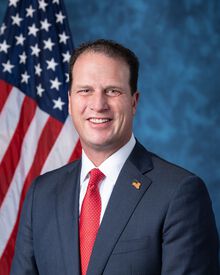
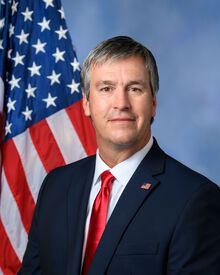
Mr. Goldman of Texas (for himself, Mr. Crenshaw, Mr. Pfluger, …

Stakeholder Effects

cui bono?

How this legislation distributes effects. Mention counts reflect frequency, not effect magnitude.

Government
9 mentions across 3 clauses
+1 positive -8 negative

BOEM, BSEE, Bureau of Land Management

Positive-direction: Executive agencies

Negative-direction: BOEM, BSEE, Bureau of Land Management, Covered energy agencies, Department of Energy, FERC, OSMRE, Office of Management and Budget

Energy
3 mentions across 2 clauses
+2 positive -1 negative

Energy producers, Oil and gas developers, Regulated parties

Positive-direction: Energy producers, Oil and gas developers

Negative-direction: Regulated parties

Mining
1 mention across 1 clause
+1 positive

Mining companies

Environment
1 mention across 1 clause
-1 negative

Environmental reviewers

4/5
sections analyzed
Full impact breakdown

Bill Structure & Actor Mappings

Who is "The Secretary" in each section?

Domains
Energy Government Operations Regulation Public Lands
Actor Mappings
"BSEE"
→ Bureau of Safety and Environmental Enforcement
"OSMRE"
→ Office of Surface Mining Reclamation and Enforcement
"primary_beneficiaries"
→ Energy producers, Oil and gas developers, Mining companies, Electric utilities, Regulated project applicants, Deregulatory policy advocates
"primary_burden_bearers"
→ Department of Energy, Bureau of Land Management, Bureau of Ocean Energy Management, BSEE, OSMRE, Federal Energy Regulatory Commission, Office of Management and Budget

We use a combination of our own taxonomy and classification in addition to large language models to assess meaning and potential beneficiaries. High confidence means strong textual evidence. Always verify with the original bill text.

Learn more about our methodology