HR7576-119

In Committee

AI Workforce Training Act

119th Congress Introduced Feb 13, 2026

Summary

What This Bill Does

This bill adds Internal Revenue Code section 45BB, a workforce artificial intelligence training credit. The credit equals 30 percent of qualified AI training expenses and is capped at $2,500 per employee per taxable year, with inflation adjustments after 2026. Qualified expenses include enrollment or attendance in accredited AI training programs, workshops, certificate programs, and courses on prompt engineering, data literacy, machine learning fundamentals, or AI ethics; employee wages while attending those programs; and expenses for developing or providing in-house AI training. Double benefits are denied by disallowing other credits or deductions and reducing basis to the extent expenses produced the credit. Treasury must issue regulations or guidance, including anti-abuse rules. Treasury, Labor, and Commerce must launch a public outreach campaign within 180 days using published information, webinars, multilingual materials, small business development centers, trade associations, and workforce boards, then report within 360 days and annually on outcomes.

Who Benefits and How

Employers providing AI training, employees receiving AI training, AI training providers, small businesses, workforce boards, and small business development centers benefit from a tax credit and outreach campaign for workforce AI skills.

Who Bears the Burden and How

The Internal Revenue Service, Treasury Department, Department of Labor, Department of Commerce, business tax departments, payroll departments, and employers claiming the credit must verify qualified expenses, wage amounts, per-employee caps, basis reductions, and anti-abuse guidance.

Key Provisions

  • Creates a 30 percent tax credit for qualified employee artificial-intelligence training expenses.
  • Caps the credit at $2,500 per employee per taxable year with inflation adjustments after 2026.
  • Defines qualified expenses to include accredited AI programs, prompt engineering, data literacy, machine learning fundamentals, AI ethics, employee wages, and in-house training development.
  • Denies double tax benefits and requires Treasury anti-abuse guidance.
  • Requires Treasury, Labor, and Commerce outreach within 180 days and annual reporting on campaign outcomes.

Evidence Chain:

This summary is generated from the full bill text using AI analysis. Expand "Detailed Analysis" below for identified beneficiaries/burden bearers with clause-level evidence links.

At a Glance

What This Bill Does

Creates a 30 percent business tax credit for employee artificial-intelligence training expenses, capped at $2,500 per employee with inflation adjustments, and requires Treasury, Labor, and Commerce outreach and annual reporting.

Key Policy Areas

Tax, Workforce, Technology, Small Business

Primary Purpose

Creates a 30 percent business tax credit for employee artificial-intelligence training expenses, capped at $2,500 per employee with inflation adjustments, and requires Treasury, Labor, and Commerce outreach and annual reporting.

Policy Domains

Tax Workforce Technology Small Business

Bill-wide scope

Identified Gains
  • Employers providing AI training
  • Employees receiving AI training
  • AI training providers
  • Small businesses
  • Workforce boards
  • Small business development centers
Model: codex-gpt-5 | Version: bill_summary_v2 | Source: ih
Small businesses: ,
Workforce boards: ,
AI training providers: ,
Employees receiving AI training: ,
Employers providing AI training: ,
Small business development centers: ,
Identified Costs
  • Internal Revenue Service
  • Treasury Department
  • Department of Labor
  • Department of Commerce
  • Business tax departments
  • Payroll departments
Model: codex-gpt-5 | Version: bill_summary_v2 | Source: ih
Department of Labor: ,
Payroll departments: ,
Treasury Department: ,
Department of Commerce: ,
Business tax departments: ,
Internal Revenue Service: ,

Legislative Progress

In Committee
Introduced Committee Passed
Feb 13, 2026

Referred to the House Committee on Ways and Means.

Feb 13, 2026

Introduced in House

Feb 13, 2026

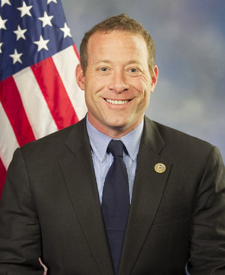
Mr. Gottheimer (for himself and Mr. Lawler) introduced the following …

Stakeholder Effects

cui bono?

How this legislation distributes effects. Mention counts reflect frequency, not effect magnitude.

Government
5 mentions across 3 clauses
-5 negative

Department of Commerce, Department of Labor, Internal Revenue Service

Small Business
2 mentions across 1 clause
+1 positive -1 negative

Small business development centers, Small businesses

Positive-direction: Small businesses

Negative-direction: Small business development centers

Labor
2 mentions across 2 clauses
+1 positive -1 negative

Employees receiving AI training, Workforce boards

Positive-direction: Employees receiving AI training

Negative-direction: Workforce boards

Technology
2 mentions across 2 clauses
+2 positive

Employers providing AI training

Professional Services
2 mentions across 1 clause
-2 negative

Business tax departments, Payroll departments

Education
1 mention across 1 clause
+1 positive

AI training providers

Taxpayers
1 mention across 1 clause
-1 negative

Taxpayers

3/4
sections analyzed
Full impact breakdown

Bill Structure & Actor Mappings

Who is "The Secretary" in each section?

Domains
Tax Workforce Technology Small Business
Actor Mappings
"primary_beneficiaries"
→ Employers providing AI training, Employees receiving AI training, AI training providers, Small businesses, Workforce boards, Small business development centers
"primary_burden_bearers"
→ Internal Revenue Service, Treasury Department, Department of Labor, Department of Commerce, Business tax departments, Payroll departments

We use a combination of our own taxonomy and classification in addition to large language models to assess meaning and potential beneficiaries. High confidence means strong textual evidence. Always verify with the original bill text.

Learn more about our methodology